The temple of Artemis at Ephesus
The Mausoleum at Halicarnassus
The Hanging Gardens of Babylon
The Porcelain Tower of Nanking
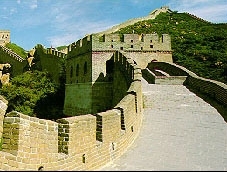
The Great Wall of China, was enlisted in the World Heritage by UNESCO in 1987. Just like a gigantic dragon, the Great Wall winds up and down across deserts, grasslands, mountains and plateaus stretching approximately 6,700 kilometers (4,163 miles ) from east to west of China. With a history of more than 2000 years, some of the section of the great wall are now in ruins or even entirely disappeared. However, it is still one of the most appealing attractions all around the world owing to its architectural grandeur and historical significance.
History
The Great Wall was originally built in the Spring, Autumn, and Warring States Periods as a defensive fortification by the three states: Yan, Zhao and Qin. In fact, it began as independent walls for different states when it was first built, and did not become the "Great" wall until the Qin Dynasty. Emperor Qin Shihuang succeeded in his effort to have the walls joined together to fend off the invasions from the Huns in the north after the unification of China. A visit to the Great Wall is like a tour through the history backwards; it brings tourists great excitement in each step of the wall
The Great Wall as we see today was mostly built during the Ming Dynasty. It starts from Shanhaiguan Pass in the east to Jiayuguan Pass in the west traversing provinces of Liaoning, Hebei, Beijing, Tianjin, Shanxi, Inner Mongolia, Ningxia, Shaanxi and Gansu.