The temple of Artemis at Ephesus
The Mausoleum at Halicarnassus
The Hanging Gardens of Babylon
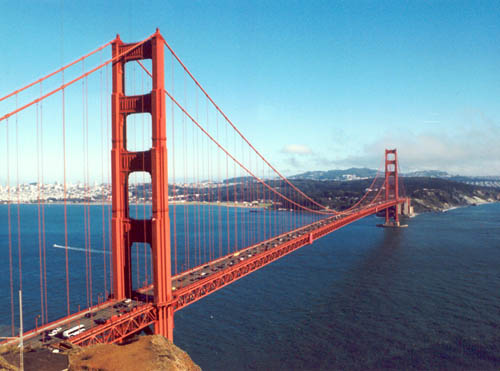
For many years before the Golden Gate Bridge was built, the only way to get across San Francisco Bay was by ferry, and by the early twentieth century the Bay was clogged with ferries. In the 1920s, engineer and bridge-builder Joseph Strauss became convinced that a bridge should be constructed across the Golden Gate.
Many groups opposed him, each for their own selfish reasons: the military, loggers, the railroads. The engineering challenge was also enormous - the Golden Gate Bridge area has winds of up to 60 miles per hour, and strong ocean currents sweep through a rugged canyon below the surface. If all that weren't enough, it was the middle of the Great Depression, funds were scarce, and the San Francisco Bay Bridge was already under construction. In spite of everything, Strauss persisted, and Golden Gate Bridge history began when San Francisco voters overwhelmingly approved $35 million in bonds to construct the Golden Gate Bridge.Building the Golden Gate Bridge
The now-familiar art deco design and International Red color were chosen, and construction began in 1933. The Golden Gate Bridge project was completed in 1937, a prominent date in San Francisco history. Strauss was a pioneer in building safety, making history with innovations including hard hats and daily sobriety tests. The Bay Bridge (which was being built at the same time) lost 24 lives while the Golden Gate Bridge lost only 12, an outstanding accomplishment in an era when one man was killed on most construction projects for every million spent.
