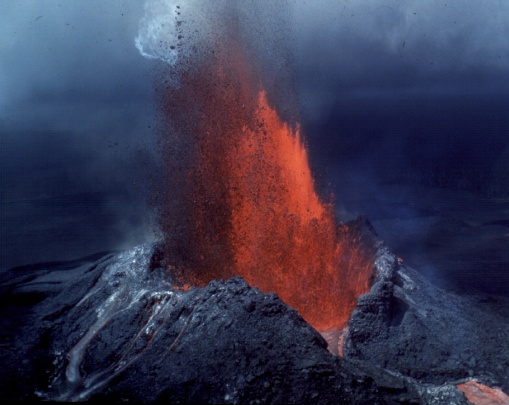
The 1980 eruption of Mount St. Helen's
Mount St. Helen's is found in the Cascade Range which is located along the west coast of the State of Washington of the United States of America. The volcano is estimated to be around 30,000 years old. According to geological standards, this is considered to be a rather young volcano. Mount St. Helen's erupts violently once every 3,000 to 4,000 years with the most recent eruption at 0832hour (GMT) on 18th May 1980. Mount St. Helen's eruption in 1980 caused a heavy ash fall, crushing building and covering fields, electronics, and machinery. Wind carried it 22,000 square miles from the volcano itself, creating a huge environmental problem for the Americans in the west.
The 1991 eruption of Mount Pinatubo
On 9 June 1991, Mount Pinatubo, a volcano in the Zambales Range, 80km (50 miles) north of Manila, the capital of the Philippines, hit the headlines. It became one of the three largest eruptions in the world in the 20th Century. From the 9 June there were many eruptions (timeline of events). However, none matched that of 12 June. Ash turned day into night. The eruption took the lives of over 700 people, destroying an estimated figure of 200 000 buildings, leaving many homeless.
Mount Pinatubo's devastating eruption on June 15, 1991 resulted in an incredible surge of sulfer dioxide gas into the stratosphere where it combined with water particles in the atmoshphere to form sulfuric acid which resulted in acid rain. The new aerosol deteriorated the Earth's ozone layer by altering the chlorine and nitrogen compounds, and it also lowered the Earth's surface temperature.
Statistics
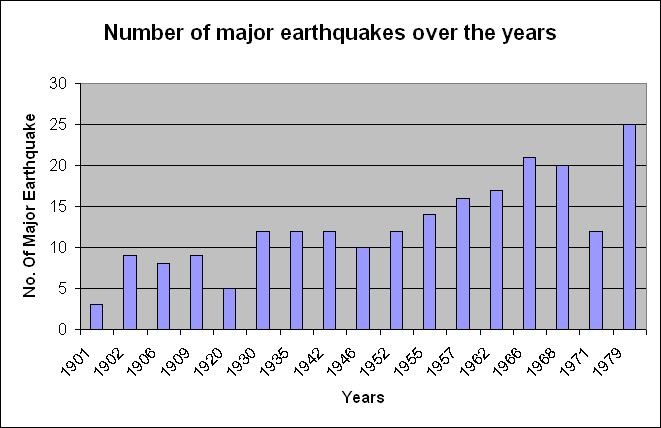
(Click on image to enlarge in new window)