  |
| Home |
 |
| Members |
| Formation Program |
| Lay Volunteers |
| Patmos Retreat |

|
| Contact Us |
|
“Patmos” is the rocky island off the coast of Asia Minor where tradition says St. John the apostle wrote the Book of Revelation, a book of consolation and hope, addressed to a persecuted Church. St. John, who stayed at the foot of the cross with Mary, the Mother of Jesus, is the patron saint of the Disciples of Hope. It is the perception of the members of the Disciples of Hope that by offering a spiritual retreat to the dying, as their principal apostolate, they can share more directly in Christ's work of redemption. Members of the Disciples of Hope believe that all are entitled to spend a period of time, even a brief one, for a thorough and careful spiritual preparation for death. There is a lot of preparation for many occasions in life. Why not for death? Most retreat contents or modules, if not all, have been developed for persons who are relatively healthy, whose future they wish to plan better by making a retreat. Examples of retreatants of this category are young adults deciding on their vocation in life, or older adults who have the time and the luxury to re-orient their lives for better service to others, or those entering a significant phase in their career. A popular spiritual writer calls such retreats a “vacation” with the Lord. For persons whose anxieties come from the shocking realization that they are dying, a “vacation with the Lord” will have very little appeal. For one thing, what they need most is preparation for a trip that is both a first time and a last time event for them. Since it is a permanent “vacation” they are preparing for, the content, therefore, must be different from that of a “vocation” retreat, a pre-wedding retreat, or an ordination, or religious profession retreat.
Patmos Retreat is a directed spiritual retreat especially designed for the terminally ill, the infirm elderly, and those threatened by imminent death. For those who can make it, a complete seven-day retreat is recommended. The themes for the seven days are arranged around the seven last words of Christ on the Cross. If taken in seven days, the themes are developed in such a way as to prepare the dying person to accept death peacefully. This is done by a series of prayerful activities that attempt to reconcile the retreatant with his/her past, present and future. The seven-day module has two highlights, namely, the endorsement of loved ones to God through Mary, and the spiritual last will and testament writing. The first highlight allows the dying person to entrust everyone and everything to God through Mary. The second highlight is to express one’s thoughts or philosophy of life for the good of others. It helps a person make his or her life more meaningful to oneself and others by bequeathing a spiritual legacy to them. Every person’s life, no matter how brief or long, however filled with pain, has a story to tell to the world. The themes of the seven-day module are outlined as follows:
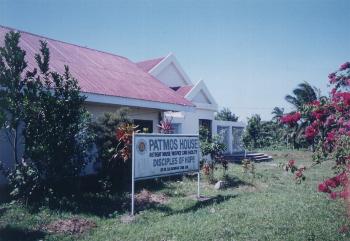
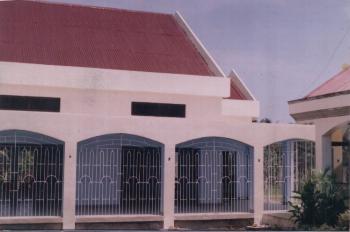
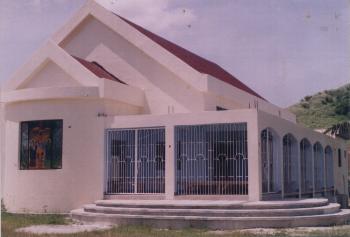
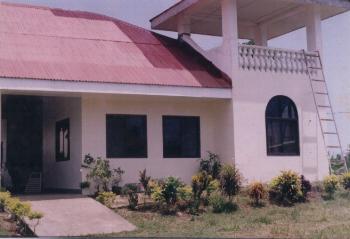
If the retreatant has not yet accepted his or her dying, this seven-day module should be reduced to only two days. In a two-day module the aim is general confession for a Catholic Christian and the reception of the Sacrament of the Sick. Therefore the principal activities are the giving and receiving of forgiveness. The Sacraments of Reconciliation and Anointing of the Sick with Viaticum are given at the end of the second day. For non-Catholics instead of the sacraments, some formality or ritual of burning of the inventory sheets is made. Mass schedule for each day in any module may be replaced by a scripture service for non-Catholic Christians, or some other form of ritual for the non-Christian. The only common requirement for all is the acceptance of the historical facts of Christ’s death on the cross, his words spoken from it, and the traditional stations of the cross that led to his crucifixion. The examination of conscience included in the First day Module is to be followed by all Christians, irrespective of their denomination, as well as Non-Christians. The Ten Commandments of God as enshrined in the Old Testament, the Laws of the Church (for Catholics) are also additional norms for examination of conscience. In the seven-day module the inventory or chart on which the names of people the retreatant has to forgive and receive forgiveness from are written is done on a daily basis, decade by decade to cover the lifespan of the retreatant. In a two-day module, the inventory of people to be forgiven and the examination of conscience on sins committed and the sins of omission are completed in the first and second day respectively. Non-Catholics may also be blessed by the Blessed Sacrament during the retreat, if they wish. The Patmos Retreat House
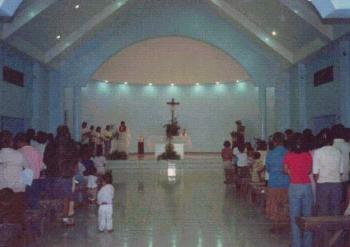
in Belen, Calabanga, Camarines Sur
Who can give or facilitate the Patmos Retreat? The members of the Disciples of Hope, its priests, permanent deacons and lay volunteers from all walks of life can be trained to give this type of retreat.
|
||||
| Email
[email protected]
if you have questions about Disciples of Hope ©Copyright 2005 - Disciples of Hope - All Rights Reserved Developed by GLOBALink Internet Inc. |
| More Info... |
| Why a New Religious Community? |
| Admission Requirements |
| Our Parish Module for pastoral care for the sick |
| Prayer
for the Sick and the Dying |