|
about South Africa *************** |
|
| GAME |
|
ART & CULTURE |
|
| OUR
ACTIVITIES
Hiking, Caving, Mountain Biking, Horse Riding, Camping |
OUR GUIDES |
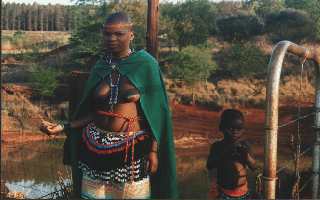
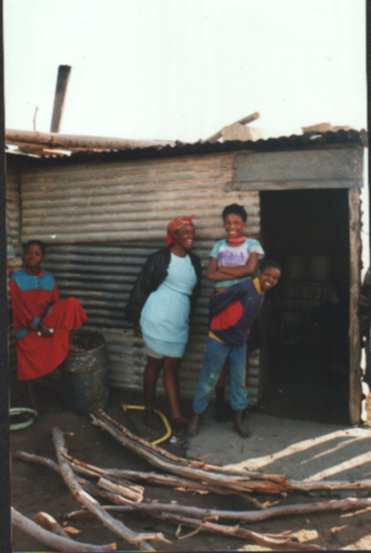
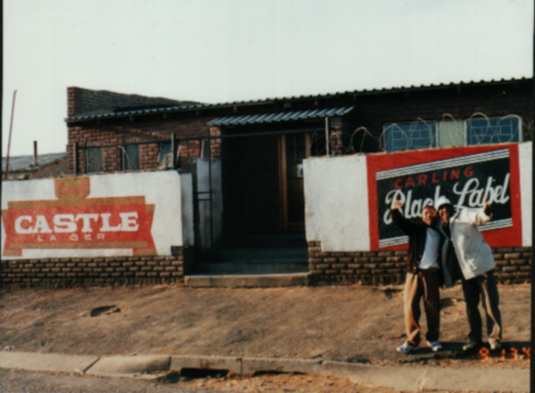
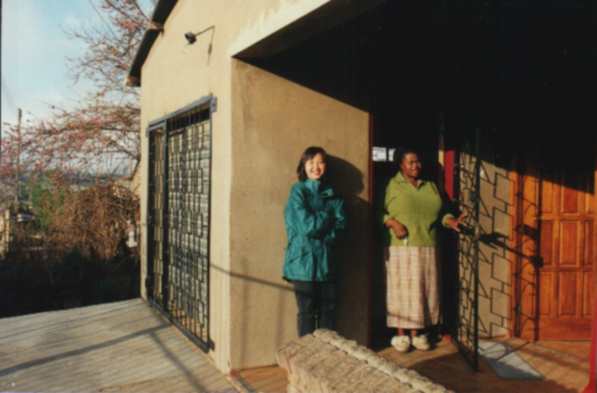
Part of the trip was educational as we had the opportunities to stay in
a Zulu Cultural Homestead at Zululand and in Intabazwe Township at Harrismith.
Such experience was really unforgettable as we really participated in the Africans' daily activities to truly feel the tune of Africa.
|
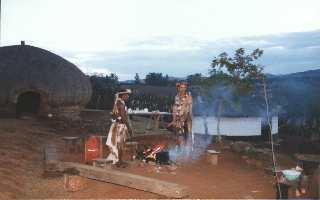
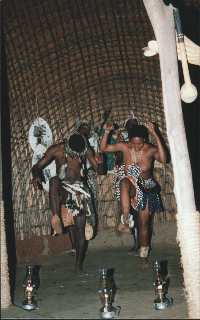
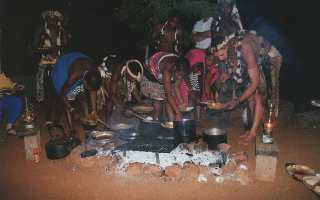
We were briefed on the Zulus living in past and present and toured their traditional village. What was more enriching was when we stayed in its traditional Rondavel hut furnished with Zulu artefacts depicting the traditional way of life. As the temperature at night fall dipped drastically, we cruddled around the fire enjoying the hospitality of traditional Zulu food which comprised of traditional meal of maize, pumpkin, potatoes etc and meat while drinking traditional African beer. A traditional Zulu dancing in the Zulu hut followed next. |
||||
|
|
|
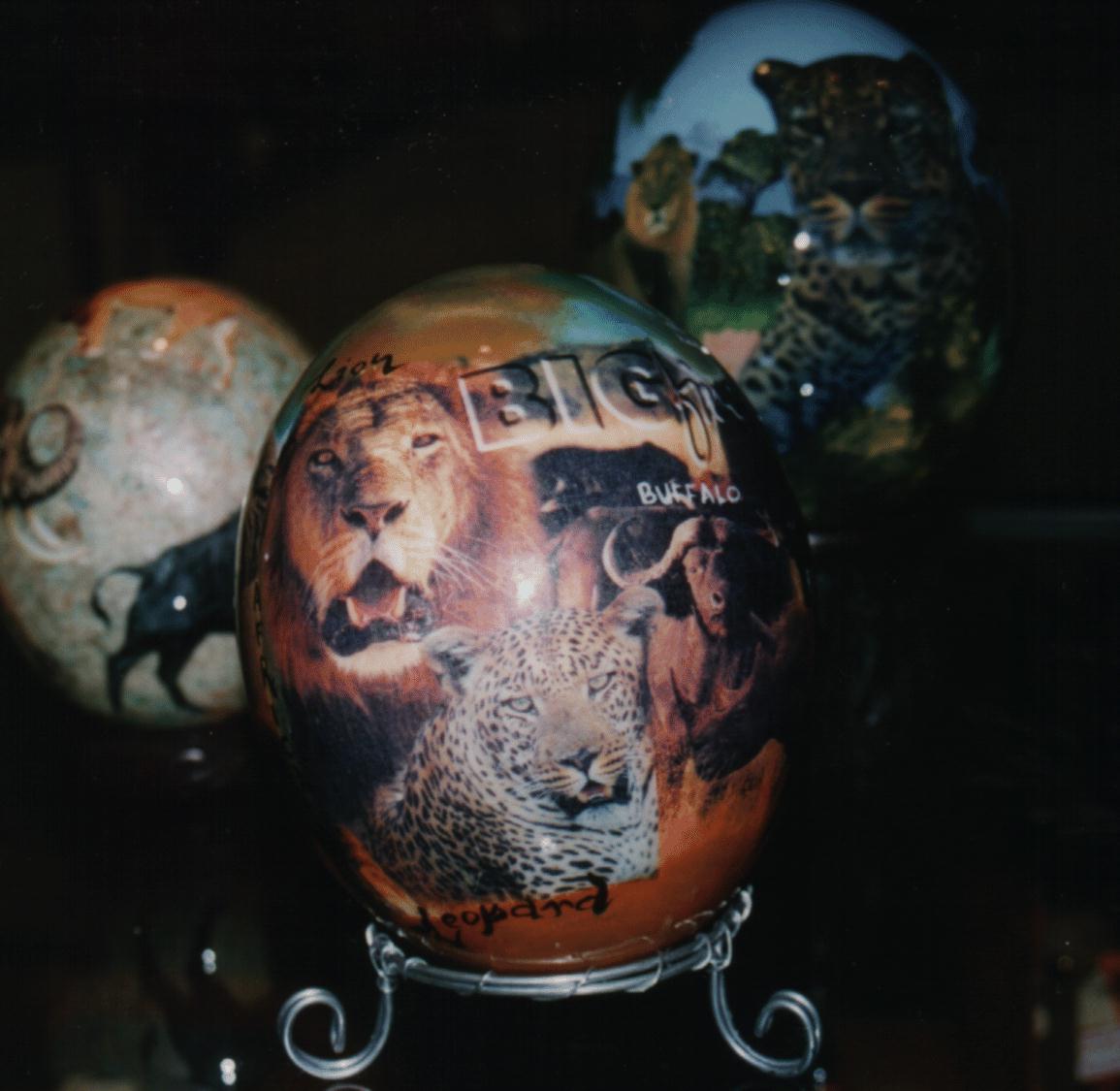
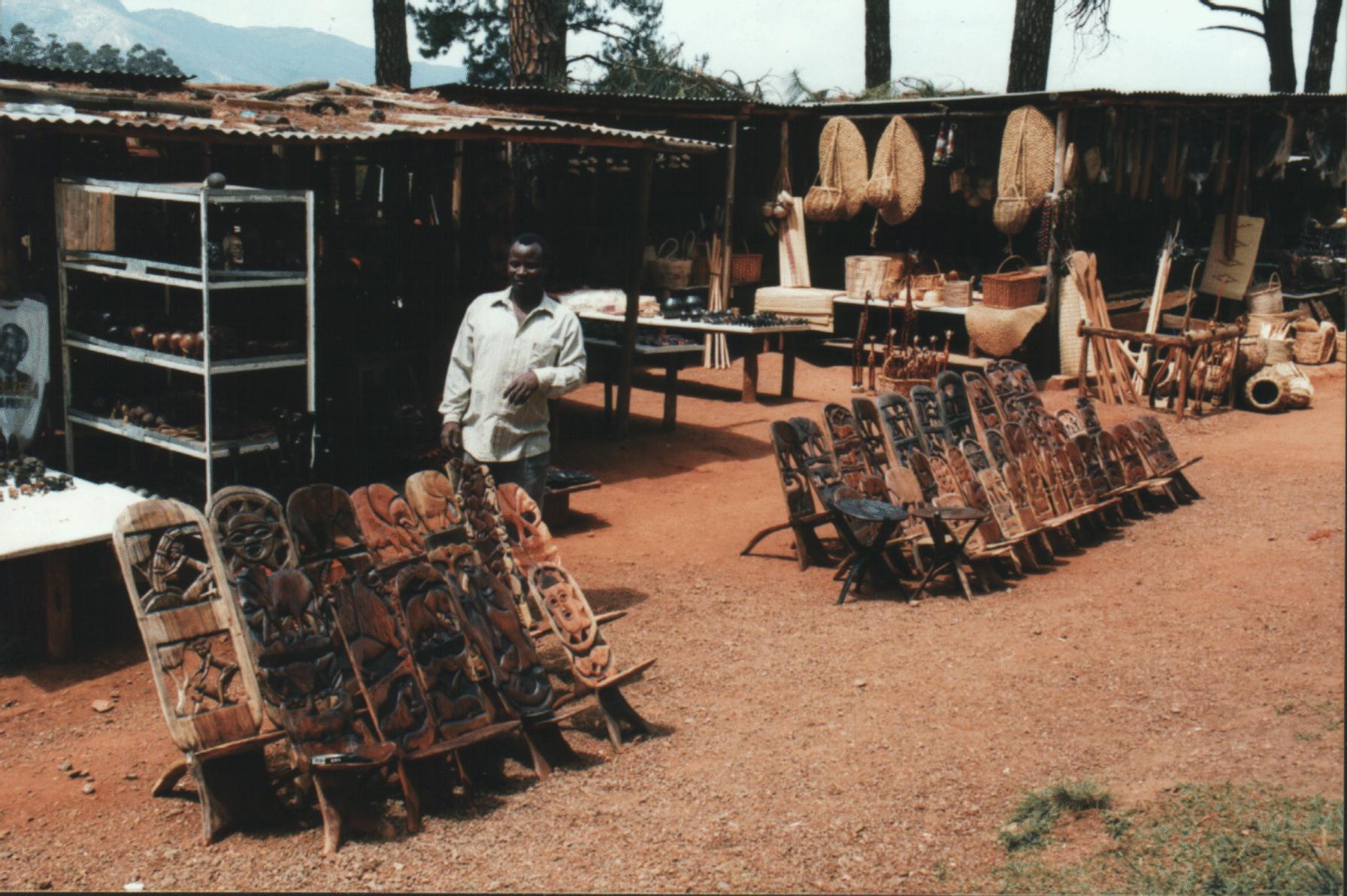
Curio shopping African crafts are "non-resistible "! They range from Zulu beadwork, woodcraving (giraffe, antelope, chairs, masks, walking stick), rockcraving (hippo, elephant, turtles), basket weaving, decorative and functional glassware, Swazi candles, Ostrich egg lamps and paintings etc. We were typical crazy shoppers. To an extent that we had "agonized" our guide because of delaying the trip schedule due to curio shopping!
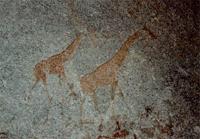
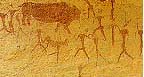
| Stone Age Art Rock paintings and engravings created by the San hunters about 40,000 years ago in South Africa are the world famous collection. This art is of great significance representing the San identification of animals they hunted and rituals they used to obtain power over them. Eland, the largest African antelopes, was always drawn as the link with the Godhead. Paintings also depicted "Trance-dancing" where a half human and half animal figure (known as shaman) was presented with women clapping and man dancing around him. That was believed to bring him to the spirit world where he possess supernatural power to alleviate any problems faced by the San thus ensuring the survival of San's society. Most vivid and detailed paintings are found in the Drakensberg mountain range. |
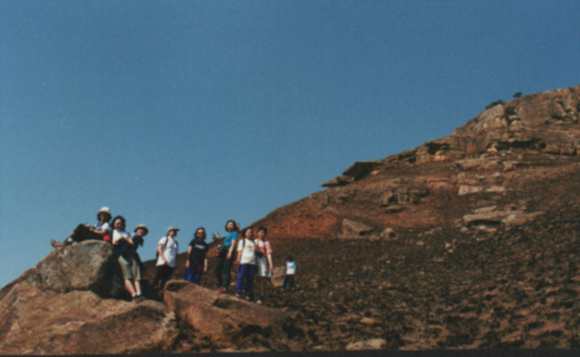
Unbelievable that we actually trekked for an hour up to view five rock paintings! |
Along the way as we stayed on camping ground, we met mostly the white. Being Asian, we had become a sort of "animals in the zoo". Many of the campers, mostly white, had mistaken us as Japanese and thought that we were unable to speak English. While they exchanged words with Garth (our guide), they revealed that they were curious about our presence in South Africa. To them, they were fascinated by our visit and were keen to get to know us. They were shocked most of the time when they heard us speaking fluent English or discovered that we understand what they were talking about. But most of them were friendly, particularly the older folks who we enjoyed talking to. I suppose the flourishing tourism has opened South Africa to the world. Asians had started flocking into the vast land of wilderness and rich culture, as curious as Africans to know about its land and people.
Life is getting better for most Africans after the abolishment of Apartheid. Diversity in race and culture is the new image of South Africa. Living standard is rising with improvement in education and housing. The whites and the blacks are more accepting of each other. Though game parks and nature reserve see more white travellers (thought to be established for the white) while mainly the black works there, there exist no conflicting interest in protecting the wildlife. Today, Africans are seeing the value in preserving its natural heritage. However, it is urgently in need to upgrade its patches of townships and tackle the high crime rates in the major cities.
