
Ecology
Dinoflagellates are considered
to be important primary producers in the oceans. They are unicellular
microscopic algae that have economic significance in the oceans. About 90% of
the plankton are marine, but they are also commonly found in freshwater
lakes, rivers, and bogs. Dinoflagellates thought to be among the most primitive
eukaryotic organisms (Speer
and Waggoner 2002, Olney
2003).
Ecological Classification:
Dinoflagellates
are capable of using many different metabolic strategies. Because of this, they
have been very difficult to classify, and often, they have been misclassified
(Taylor 1987). About half of the known dinoflagellate species are autotrophic.
This means that they are capable of synthesizing organic material from inorganic
compounds. Most of the autotrophic species are contain chloroplasts which allow
them to photosynthesize. Other Dinoflagellates are heterotrophic; they rely on other organisms for their
organic material needs. Hetertrophic dinoflagellates can be herbivorous or
carnivorous, depending on the species. These organisms eat algae, eggs, marine
plankton larvae, and other dinoflagellates (Olney
2003). A third metabolic strategy used by dinoflagellates is mixotrophy.
Mixotrophic species are able to be autotrophic or heterotrophic depending on the
environmental conditions. Some examples of mixotrophic dinoflagellates include:
Akashiwo sanguinea, Ceratium furca, Gyrodinium uncatenum, Gyrodinium
galatheanum, and Prorocentrum minium. P. minium consumes nano
and microciliate prey, and competes with macrozooplankton for food (Smalley
2001). Still other dionflagellates are parasitic. These forms are capable of
heterotrophy and mixotrophy. Amoebophrya ceratii infects other free
living dinoflagellates and affects their
capability to reproduce (Smalley
2001). Dinoflagellates also occur as symbionts with corals. These
zooxanthellae are important primary producers in the coral reef ecosystem (Benfield
2003, Olney
2003).
Bioluminescence:
Dinoflagellates belong to the Division of Pyrrhophyta, and known as "fire plants" because they glow in the dark. The dinoflagellate produce flashes light when the compound luciferin is oxidized by the enzyme luciferase in the company of ATP and oxygen (Speer and Waggoner 2002).
Figure 1. Dinoflagellate Bioluminesence (Image Quest 3D 2001)
Bioluminescence is usually
triggered by mechanical stimulation. One hypothesis as to why dinoflagellates
bioluminesce is that it is an anti-predator mechanism - or burglar alarm
response- which attracts larger predators to eat the smaller predators that are
posing a threat to the dinoflagellate. This light mechanism was first seen in
the genus Noctiluca (Speer
and Waggoner 2002).
Red Tides & Nutrients:
Red Tides are
algal blooms of high density and produce discolored waters. Red Tides are caused
by temperature and light changes and are associated with the abundance of
nutrients such as nitrates and phosphates. Upwelling may be one means by
which nutrient levels become elevated in the water. These nutrients are
also carried from the land to the sea by rivers and drainage (Speer
and Waggoner 2002).
Some algal blooms produce
neurotoxins that are poisonous to other marine organisms and even to humans (Cavanihac
2001) If humans consume poisoned seafood, especially shellfish,
serious illness or death are possible (Speer
and Waggoner 2002).
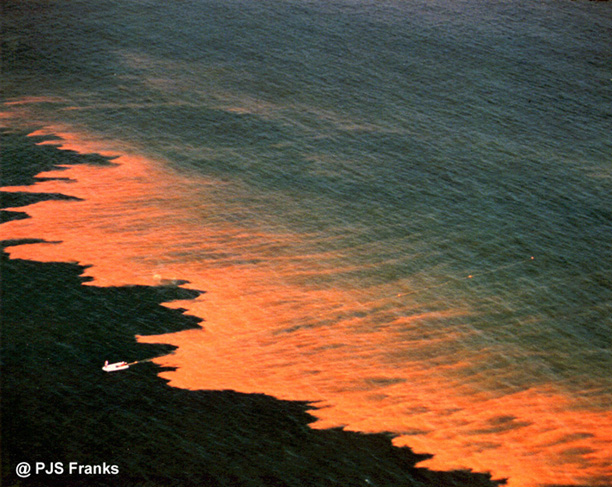
Figure 2. Dramatic image of a red tide in California (Anderson 2002)
Bacterial Interaction:
Bacteriology is
Dr. Bob Belas passion. He believes it is important to study dinoflagellates
because of harmful algal blooms like red tides which is caused by Pfiesteria
piscicida. He did research on dinoflagellates and their interaction with
bacteria. He found each bacteria has input on a dinoflagellate’s physiology
and toxigenesis. They may enhance dinoflagellate’s metabolism or metabolic
processes. In his sample, 36 culturable & non-culturable bacterial groups
were identified with Pfiesteria piscicida (Belas
2001).
Dr. Belas found that the
bacteria present have positive affects on a dinoflagellate’s growth. Dr. Belas
and his team discovered a technique for creating a bacteria free, axenic,
dinoflagellate culture. This is a growth curve that contrasts a pure axenic
dinoflagellate culture and a bacterial/dinoflagellate culture. Notice the
dinoflagellate growth was higher in the presence of bacteria. Belas also
speculates that the dinoflagellate growth is closely associated with their
ability to capture prey (Belas
2001).
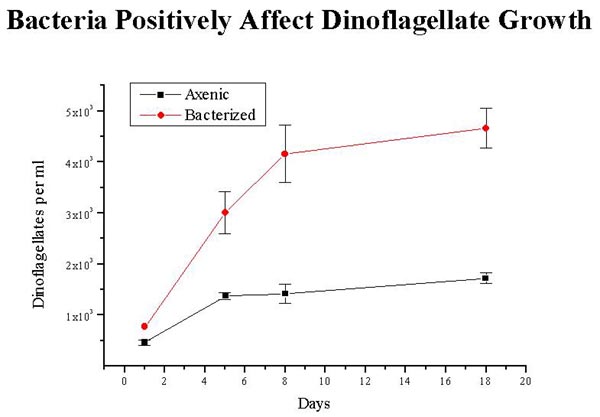
Figure 3. Axenic and bacterized growth of dinoflagellates in culture (Belas 2001)
Phytoplankton
& Carbon Cycling:
Carbon is lost
through the marine food web when phytoplankton and zooplankton die and sink to
the sediments. Carbon dioxide is also lost through when it is broken down
photosynthesis and when it is released via respiration into the dissolved
organic reservoirs. Finally, some carbon dioxide is lost when it is released
into the air and then back into the ocean (Behrenfeld
2002).