Toxins
Dinoflagellates are
a major source of food for other organisms in the sea. Under favorable
conditions, they can proliferate to form a bloom, sometimes called a red tide
because pigments in the algae make the water appear red, brown or even black.
The most dramatic effect of the dinoflagellates on their environment occurs in
coastal waters during the warmer season, usually mid to late summer. At this
time, an upwelling occurs in the ocean, bathing the surface plankton in
nutrients from the bottom of the ocean. The surplus of nutrients triggers a
bloom of photosynthetic dinoflagellates, whose population density may jump to
more than 20 million per liter along some coasts (Rapport
1996).
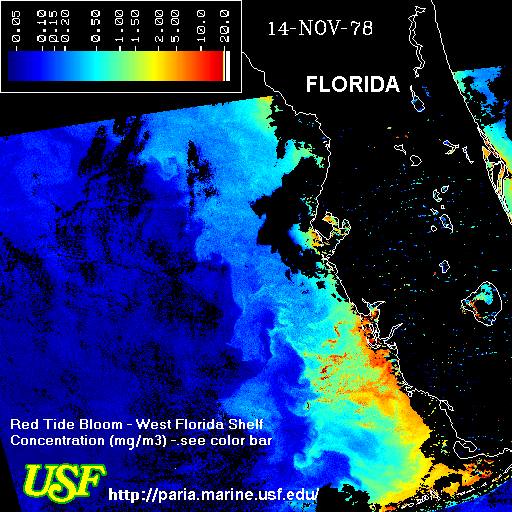
Figure 1. CZCS image of a red tide (Anderson 2002)
In some species these blooms are associated with the
production of neurotoxins,
poisons which injure the nerves of marine life that feed on the dinoflagellates.
The poisons produced by these algae can then accumulate in the tissues of
shellfish and some bony fishes. Consuming these fishes may, in turn, poison
humans and some animals.
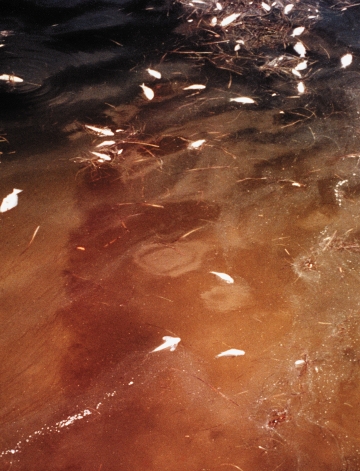
Figure 2. Fish kill caused by red tide (Anderson 2002)
According to Judith Conner, the neurotoxins affect muscle function,
preventing normal transmission of electrochemical messages from the nerves to
the muscles by interfering with the movement of sodium ions through the cellular
membranes. Humans may be poisoned by eating poisoned fish, a condition known as ciguatera, or by eating shellfish, such as clams or mussels, which
leads to paralytic shellfish poisoning
(PSP). The resulting condition is serious but is not usually fatal. Lethal
concentrations lead to death from respiratory failure and cardiac arrest within
twelve hours of consumption (Rapport
1996).
The most common
dinoflagellate toxin is saxitoxin,
a neurotoxin 100,000 times more potent than cocaine. It has been found in North
American shellfish from Alaska to Mexico, and from Newfoundland to Florida. The
most notorious producer of saxitoxin on the west coast of North America is Protogonyaulax
catenella, and on the east coast Gessnerium monilatum. Both have been
known to cause PSP (MacRae
1994, Rapport
1996).
A second form of
toxin, found in the dinoflagellate Ptychodiscus brevis, is brevitoxin,
an assemblage of various polyether alcohols which produce fish kills, and may
also cause poisoning in humans when it accumulates in the tissues of shellfish.
(Speer and Waggoner
2002)
It is tempting to ask what the selection pressure might be
for toxicity in a single-celled organism. One interesting theory that has been
put forth is the theory that suggests that the toxin may actually be used by the
dinoflagellate for nitrogen storage. Chemically, saxitoxinoids are well suited
for nitrogen storage, and the cyst form of most dinoflagellates seems to lack a
nitrogen source. In this case, the toxicity of saxitoxin is an unfortunate side
effect. However, until more detail is uncovered about how the toxin is made and
used by a dinoflagellate, the theory remains speculative (Rapport
1996).
Page created by: Karla Blohm. Special thanks to Stacey Gibson.