 |
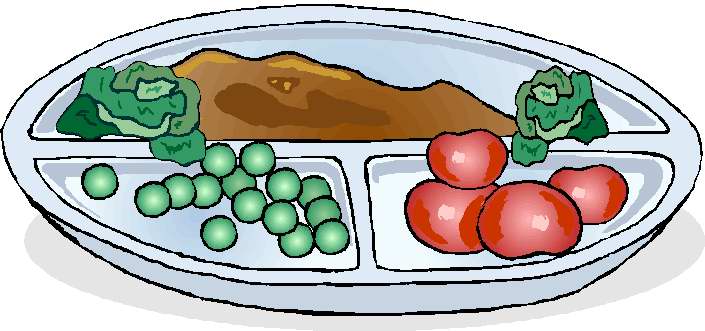
| carbohydrate counting continued. As we saw in the previous pages, carbohydrates are considered 15 grams of a starch. The equation is 15 grams = 1 slice of bread= 1 carbohydrate choice. Below is an example of a low carb dinner, that will filly ou up. You can eat it and pretty much not worry about carbs. By following examples like the one below, and on the previous page you can keep good control. |
|
 |
 |
 |
 |
 |
 |
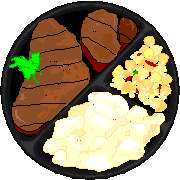 |
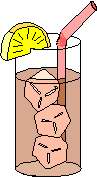
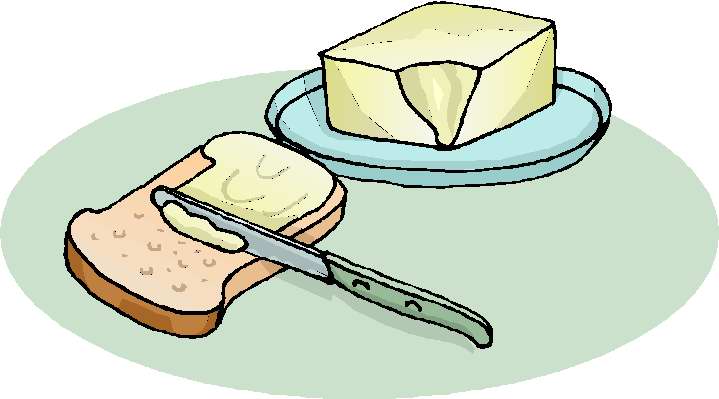
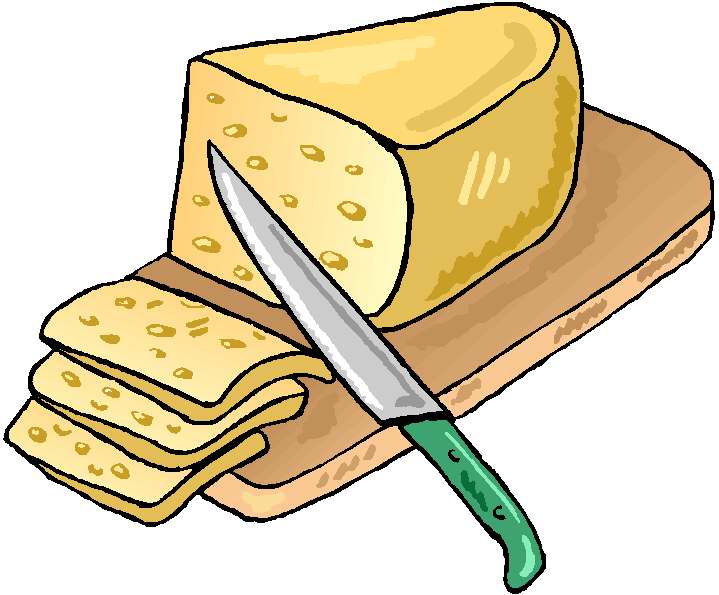
| Look at this example above of a complete dinner. Starting with a glass of wine or beer, there are 0 carbs in a 5 ounce glass of either. Cheese has zero,clear broth soup with some seasoning and a piece of meat, or egg flower soup 0 carb, a tossed salad with some sort of low carb dressing 0, bread and butter. 2 slices of regular (2) or 2 slices of low carb (1 carb) with butter 0, Iced tea 0, meat and potatoes (1 cup= 2 carbs) with cheese cauliflower 0, and a creamsicle 1 and coffee. Total carbohydrate for this huge meal. its either 4 or 5. it depends on the type of bread. In a large 2 carb dinner as exampled below, simply omit the bread and butter, and potatoes, and substiute seasoned veggies, and have a 1/8 of a cake for desert. |
 |
|
|
|
|
|
 |
|
 |
| Diabetes Education 2002 Page 6 |
| Another part of control is learning to read a food label. The food label has some important information that not only diabetics but every one should know how to read. But to diabetics there are a few most important elements. The portion size, carbohydrates per serving, ingredients, fiber and proteins. Many people are just not sure about the calories and percentages per serving. these a diabetic does not worry about. |
 |
| Food Label Reading |
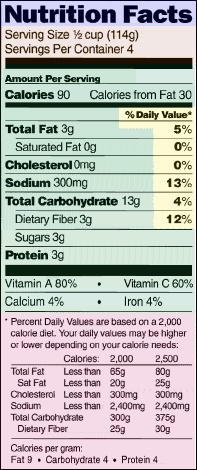 |
| If we look at this label we will notice a few things. Like serving size, calories, how many servings are in a container, etc. here we have an example of Tomatoe soup. We see that this has 4 servings of 1/2 cup. This is prepared. This is as it comes out of the can. As a diabetic you skip down to TOTAL CARBOHYDRATES. this showes that a serving, prepared has 13 grams of carbohydrate. So as it is its almot 1 carbohydrate choice. But As a rule always round up. So this would actually round up to 1 carbohydrate choice. or 15 grams. We then notice that there is FIBER. Fiber has a good loophole. This actually takes away from the carbohydrates because the body needs to utilize more energy to break down fiber. So we SUBTRACT. So the loophole reads like this C (carbohydrate)- F (Fiber) = Actual carbohydrates. In this example we have 13-3= 10 actual carbohydrates which can be counted as 1/2 a carbohydrate choice. there is another loophole about proteins. Proteins require a lot of energy to breakdown. So actually this amount of protein can also be subtracted. but as a rule, we don't, unless the protein content is very high. |
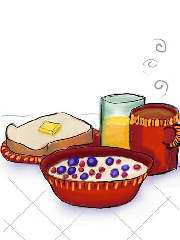
| We as diabetics have to know how many carbohydrates are to be eaten in a day. Thats where as a good rule,. following the food guide pyramid is essential. What we as diabetics have to remember is that some items listed on the food guide pyramid are also carbohydrates. So as we look on the next page we ahve to see that grains, fruits and milk products are also carbohydrates. Tho you should eat from all food groups, as a diabetic you also have count these as part of your carbohydrate intake, So its counted as both. If you eat a fruit, its a fruit choice, but also adds into your carbohydrate choices. A typical breakfast that is shown on a cereal box is a killer for any daibetic. as we can see often they have 2 slices of toast, a glass of milk, a glass of juice and a bowl of the cereal. If a diabetic were to eat it as shown, we would have the bowl of cereal is at least 2 carbohydrates, milk in the glass is at least 1 carbohydrate choice and a glass of juice is 1 choice of an 8 ounce glass is used. so you see by this example its between 4 and 5 . So be careful when looking at food labels. |
 |
 |
 |
 |
| copyright 2000-2991 julia Sherman D.N. |