Birding Sites
Yorkshire boasts some wonderful and varied habitats for
birds. Such variety provides a home to several different
and diverse species. Some of which are common and some
extremely rare and local. The county has recorded over
three hundred species of bird, some of which from as far
away as the USA, China, Southern Europe and Siberia. At
the right time of year and with guidance and a little
luck, we may find some of these birds at the broad representation
of sites listed below.
 Local
Nature Reserve Local
Nature Reserve
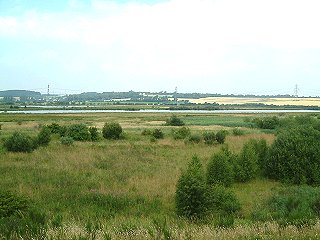
Mining subsidence has created a two mile stretch of wetlands
along the River Aire Valley. Marshes and shallow pools
are the predominant habitat which is extremely attractive
to Wildfowl and Shorebirds. Some scarce and rare birds
can be found in this area including Kingfisher,
Black necked Grebe and Garganey.
Expect also to see Bullfinch, Willow Tit
and Green Woodpecker in the local area of woodland
and farmland that is also home to some good songbirds
including Wren, Robin, common warblers,
Thrushes and Finches. Any time of year can be good but
spring and winter is best.
 The
Yorkshire Dales The
Yorkshire Dales
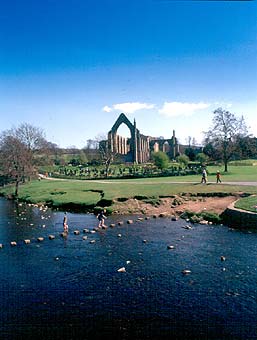
Beautiful countryside and riparian habitat is home to
several upland species of bird. European Dipper and
Grey Wagtail can be found on the fast flowing river
Wharfe while the trees in Spring will find singing Redstarts,
Pied Flycatchers and the commoner Warblers while
with a little luck we may see European Sparrowhawk.
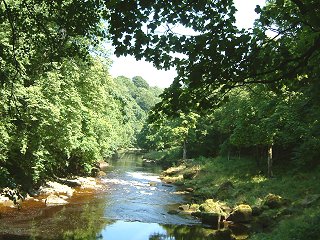
If the birds decide not to show, then enjoy the beautiful
abbey, a 12th century, Augustinian priory. The surrounding
estate belongs to the Duke and Duchess of Devonshire.
We will be free to roam the land in search of birds. Shorebirds
may be found on their breeding grounds in Spring. Species
likely to be encountered are Northern Lapwing,
European Golden Plover, European Curlew,
Oystercatcher, Snipe, Redshank and Dunlin.
The Dales and moors will produce Red Grouse, Meadow
Pipit and possibly Buzzard, Merlin or
Peregrine Falcon.
Lagoon Habitat
Large reed beds and shallow lagoons on the confluence
where two rivers meet, host some rare and very local birds.
Some of the birds can only be found in this specialised
habitat and depend on the good work of the RSPB (Royal
Society for the Protection of Birds) for survival. Expect
to see, Marsh and Hen Harrier, Barn Owl breeds
locally, Short Eared Owl winters regularly. Tree
Sparrow and Turtle Dove can be found with some searching
while the main draw for birders are the lagoons which
attract several species of Shorebirds. Among the common
waders, a scarcity is often found. Expect to see, Avocet,
Black Tailed Godwit, Dunlin, Green, Common
and Wood Sandpipers. Mid to late summer is best.
 The
Yorkshire Coastline The
Yorkshire Coastline
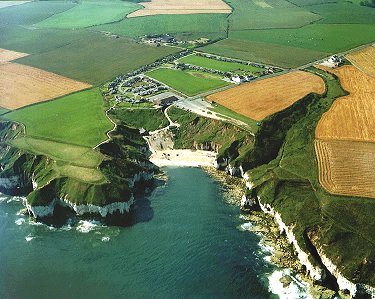
A Prominent headland protruding into the North Sea is
Yorkshire's premier site for watching migrating seabirds.
In the autumn, Skuas and Shearwaters may
be seen in the right conditions. In spring and autumn,
migrating passerines are attracted to the beam from the
lighthouse and birds may number in the hundreds. The area
has attracted some very rare birds. The cliff tops may
hold Lapland Longspurs and Snow Buntings
in the winter, or Linnets and Goldfinches
all year round. The cliffs here are good for breeding
seabirds.
Nearby you can discover the UK's largest mainland Gannetry.
Other birds to be found here include Atlantic Puffin,
Guillemot, Razorbill, Kittiwake,
and Shag. Best time of year is spring to summer
when sea birds come to the cliffs to breed. The sights,
sounds and smells are unforgettable as are the very close
views of the beautiful Puffins. Expect also to
see Short Eared Owl in the winter and the very
scarce Corn Bunting, given away by their 'jangling
keys' song.
Woodand Areas
Just out of the region, this site has some great woodland
habitat and gives birders the very real chance of seeing
Hawfinch and Lesser Spotted Woodpecker.
Several species of tit can also be found along with Great
spotted Woodpecker, Finches, Treecreepers
and Nuthatch. Spring and winter are best before
leaves on the trees make observation difficult. Not too
far away is the 'mighty Oak' of Sherwood Forest, where
Robin Hood was said to have courted Maid Marrion. Several
common woodland birds can also be found here.
A Yorkshire Park
Something a bit different here! There are several large
sculptures by one of Yorkshires famous sons, Henry Moore.
The sculptures are located around the park. A tree lined
lake is also home to woodland species. Another good opportunity
to see Hawfinch. Best time is early spring and
winter before leaves appear on the trees.
 Yorkshire
Wildlife Trust Yorkshire
Wildlife Trust
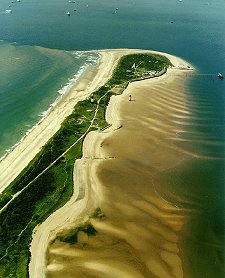
Is a long sandy spit, reaching out into the North Sea,
which acts as a funnel for migrating birds. Spring and
autumn can be fantastic for birding in the right conditions.
Large arrivals of migrants are truly a sight to behold.
These arrivals or 'falls' often include scare and rare
birds, but the fall of thousands of Thrushes,
Robins and Chats is a wonderful experience.
Peak birding times are April and May and then late August
to early November, but any time of year can be good. The
nearby lagoons play host to several species of wildfowl
and shorebirds.
High tide is the best time to watch shorebirds as the
tide pushes the birds closer to strategically placed hides.
This is still a truly wild place, where nature still has
the upper hand. The surrounding villages are also of interest
to birders, especially in the spring and autumn. Expect
also to see other interesting plants and animals. For
another view of this site CLICK
HERE.
 Lower
River Valley And Heathland Lower
River Valley And Heathland
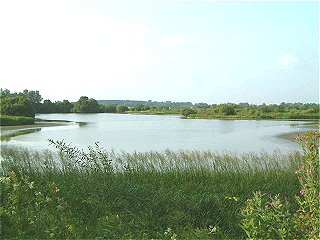
Wildfowl predominate in this riparian habitat. Flood meadows
created by the river Derwent and maintained by English
Nature is a good place to see many species of duck and
geese. Spring and winter can see large numbers of birds.
This is also a good area for raptors with Peregrine,
Merlin, Sparrowhawk and Goshawk heading
the cast. Here there is a very good chance of seeing or
more often hearing Lesser Spotted Woodpecker along
with other woodland birds. The area is home to European
Nightjar, Long Eared Owl, Woodcock and
Grasshopper Warbler and is best visited in early
to mid summer, on warm still evenings.
All the above sites have played host to lots of interesting
and rare birds. Far too many to mention all the birds
here. In recent times, the area has played host to European
Spoonbill, White Winged Tern and Marsh Sandpiper,
Red necked and Temminck's Stints, Bluethroat
and Cetti's Warbler. The Yorshire area can and
regularly does produce migrants from far and wide. Bee
Eater, Pied Wheatear, Red Rumped Swallow
and Red Footed Falcon to name but a few.
The above sites give a broad representation of what Yorkshire
has to offer. If you have a desire to visit another site
you may have heard of then I would be more than happy
to oblige. If you have a hire car, then I can drive for
you as I know the roads well, otherwise, I can provide
the transport. All sites listed above can be accessed
by a normal saloon car.
|