4   How people live


 Simple Present; reading and writing skills.
 
1.  Separate the two mixed-up texts. Work in groups. Use dictionaries only if absolutely necessary.

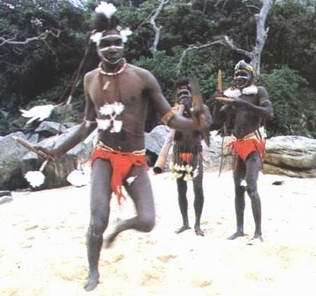
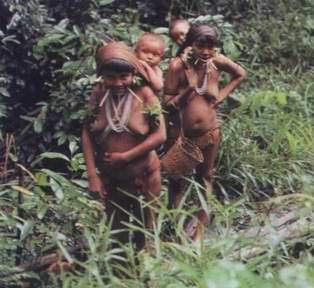
AUSTRALIAN ABORIGINES                                           AMAZON INDIANS

The Karadjere people live in the desert of Western Australia,
These people live in the Amazon Basin, in Brazil,
where the climate is very hot.
where the climate is hot and wet:
It rains from January to March,
it rains for nine to ten months of the year.
and the rest of year is dry.

They do not live in one place,
They live in villages;
but travel around on foot.
their houses are made of wood,
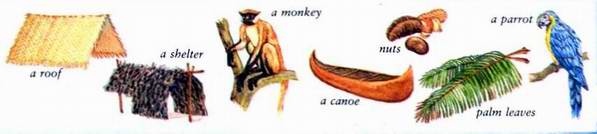
and the roofs are made of palm leaves,
They sleep in shelters made of dry tree branches,
Several families live in each house.
They travel by canoe.

Their food is fruit, nuts and kangaroo meat,
They eat fruit and vegetables, fish, and meat
from animals and birds
and they eat fish in the wet season;
(for example monkeys, wild pigs, parrots)
they also make bread from grass seeds.
Water is often difficult to find.
The Karadjere like music, dancing and telling stories.
They do not wear many clothes.

2.   Pronunciation. Practise these words, and then read part of one of the texts aloud.

people     leaves     sleep     tree     each     meat     eat     season     seeds

live     in     Brazil     is     it     village     families     fish     pigs     difficult     music     dancing     telling     stories


3. Write questions. Example:

Eskimos eat ... What do Eskimos eat?
   
 1.  Eskimos live ...  
 2.  The President lives ...  
 3.  Cats usually eat ...  
 4.  Jane's cat eat ...  
 5.  It rains from ... to ...  
 6.  These people travel by ...  
 7.  These people like ...  
 8.  The Prime Minister likes ...  
 9.  The students usually wear ...  
10.  Alice wears ...  


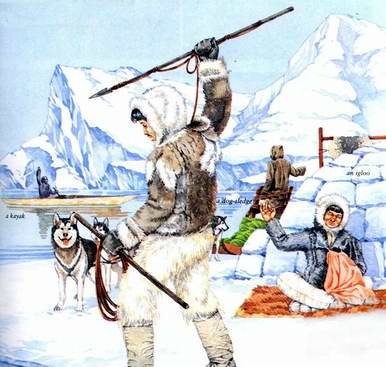
4.  What do you know about Eskimos' traditional way of life? Write what you know in a short text.
 
5.  How do you think most Eskimos live today?


Learn/revise: Australia; Brazil; month; year; the rest; place; desert; village; wood; roof; tree; leaf (plural leaves); food; fish; meat; bread; vegetable; fruit (uncountable); animal; bird; family; clothes; wear (wore, worn); eat (ate, eaten); find (found, found); tell a story (told, told); made of; hot; wet; dry; several; each; around; on foot; also.

PLAY TRACK 4

            Lesson 3

Lesson 5             

webmaster

Hosted by www.Geocities.ws

1