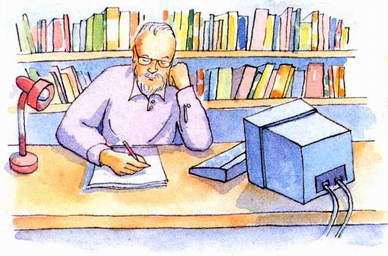
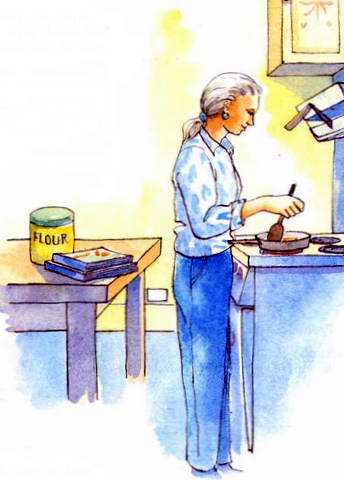
3   My mornings usually start fairly late


Routines and habits; Simple Present tense; frequency adverbs and adverbials.
 

1. How do they spend their weekends? Make sure you know the words in the box. Then listen to the recording and write down four things that Adele says she does and four things that Rufus says he does at the weekend.

business      crossword puzzle      gardening      guests   housework      ice skating rink     ironing      lie in      meal    midday       necessary       newspapers        sleep in           stay in bed      washing      weather      youth club


2. How often? Look at the expressions in the box. Do any of them mean the same? Copy the line, and put the expressions from the box on the line between NEVER and ALWAYS.

almost always     hardly ever       normally     not very often     occasionally     often     quite often     sometimes     usually     very often


0         1       2        3        4        5        6        7         8        9           10

3. Rewrite the sentences, saying how often these things happen. Be sure you put the frequency adverb before the main verb (but after don't/doesn't).

 1.  Adele's mornings start fairly late.  (usually) Adele's mornings usually start fairly late.  
 2.  Adele gets up early.  (not very often) Adele doesn't very often get up early.
 3.  Rufus brings Adele a cup of tea in bad.  (usually)  
 4.  Adele does housework on Saturday.  (sometimes)  
 5.  Adele takes the dog for a walk.  (often)  
 6.  Adele reads the newspapers at some time during the weekend.  (always)  
 7.  Adele visits her elderly mother  in Newbury.   (quite often )  
 8.  They have breakfast.  (not usually)  
 9.  They have Saturday lunch.  (not often)  
10.  They have a heavy meal in the evening.    (hardly ever)  
11.  Rufus does the crossword puzzle in the Saturday newspapers.  (normally)  
12.  Rufus lies in on Sunday morning. (almost always)  
13.  They go out in the car on Sunday afternoons.  (quite often)  

4. How many words can you hear? What are they? (Contractions like doesn't count as two words.)

5.  Survey of people's personal habits.
        1. Make sure you know how to answer all the fallowing questions in English. Use structures from the box.
        2. Choose one of the questions (a different one from the other students), and go round the class. Note the answers.

I sometimes/often/usually go dancing on Saturdays. I play tennis once / twice / three times a week.         I go to hairdresser every ten days / every week.
   
 1.  How often do you lie in bed after waking up?  
 2.  What do you usually have for breakfast?  
 3.  Do you usually get dressed before or after breakfast?  
 4.  What do you usually wear in bed?  
 5.  How often do you eat between meals?  
 6.  Do you ever shut yourself in the bathroom to be alone?  
 7.  How often do you talk to yourself?  
 8.  How often do you daydream at work or school?  
 9.  How often do you have arguments with other people in your head?  
10.  Are you usually more awake in the morning or in the evening?  
11.  How often do you sing in the bath or shower?  
12.  How often do you cook for yourself?  
13.  How often do you cook for other people?  
14.  How often do you go shopping?  
15.  How often do you eat in bed?  
16.  How often do you look in a mirror?  
17.  How do you usually travel to school or work?  
18.  Do you ever live the telephone to ring without answering it?  
19.  How often do you go to the dentist?  
20.  How often do you go to the hairdresser?  


6. Work in groups of eight to ten students. Your job is to write a portrait of the average student in your class.

1. Each member of the group contributes one sentence, from the work in Exercise 5.
Examples:

"The average student in this class hardly ever cooks for himself / herself."
"He / She goes shopping for food once or twice for week."


2. Combine your sentences into a paragraph.
Example:
The average student in this class goes shopping for food once or twice a week, but hardly ever cooks for himself / herself...


  Simple Present tense
  I start
  you start
  he/she/it starts
  we start
  you start
  they start
  do I start?
  do you start?
  does he/she/it start?
  do we start?
  do you start?
  do they start?
 
  I do not (I don't) start
  you do not (don't) start
  he/she/it does not (doesn't) start
  we do not (don't) start
  you do not (don't) start
  they do not (don't) start
 
Frequency adverbs Learn/revise: business; gardening; housework; ironing; meal; newspaper; weather (uncountable); bath; shower; journey; dentist; hairdresser; lie (lay, lain); stay; bring (brought, brought); take (took, taken); get up (got, got); get dressed; go shopping (went, gone/been); shut (shut, shut); sleep (slept, slept); travel (travelled); necessary; heavy; short; early; in bed; awake; fairly; almost; always; usually; normally; (not) very often; quite often; sometimes; occasionally; hardly ever; never; away; between; during;
I always have coffee in the morning.
    (I have always coffee ...)
I almost always / usually / normally lie in on Sunday mornings.
I very often / quite often / often get dressed after breakfast.
They don't often see their parents.

My brother goes shopping once / twice / three times a week.
I wash my hair every day / every three days / every week.
            Lesson 2

Lesson 4             

PLAY TRACK 3

webmaster

Hosted by www.Geocities.ws

1