The Dining Table: 2 boards at 9 inches & 2
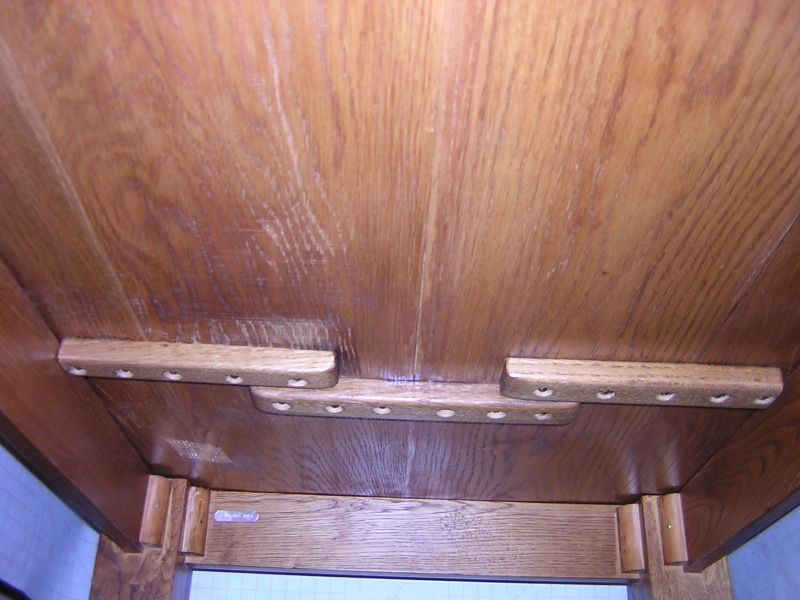
at 7" wide by 1.5 inches thick by 5 feet long. Butt jointed. The
slats (there are 5 sets in all, 2 of which sit outside of the
frame at each end) are screwed to the planks (each one straddles 2 boards)
with over sized holes and washers which allow for movement.
Put together in 1994 there is no sign of any movement.
The legs 4"x4" are mortised & tenoned to the frame
with 2 pegs in each joint. The top sits loose on the frame its
weight and the slats prevent it sliding off the frame.
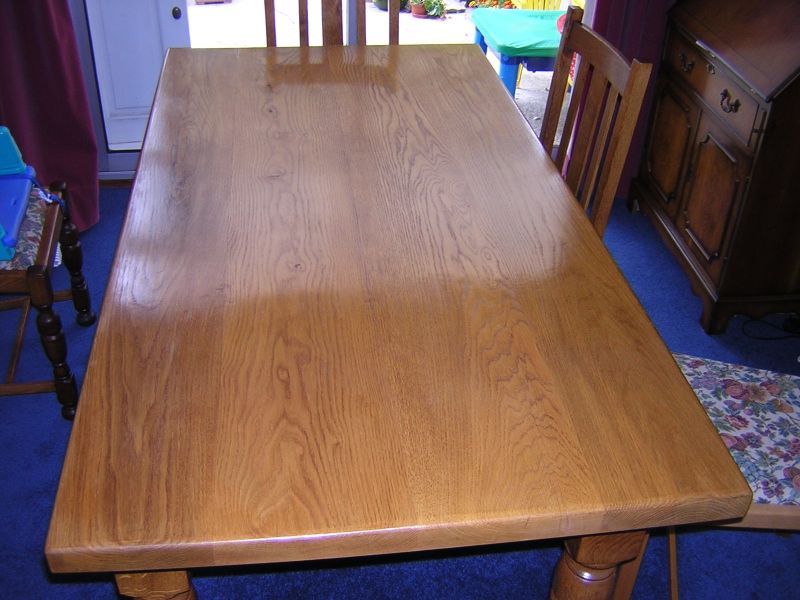
Completed in 1994 & based on dimensions seen in a shop it
comfortable seats 6. If I were to make it again at would not have cut down the two outside
boards. The table is a tad narrow when fully laden with serving dishes
down the middle.
American white oak was used for the top and frame with French Oak for
the legs. Everything was stained with Rustin's medium oak. The top
finished with Patina, the legs with a poly varnish.
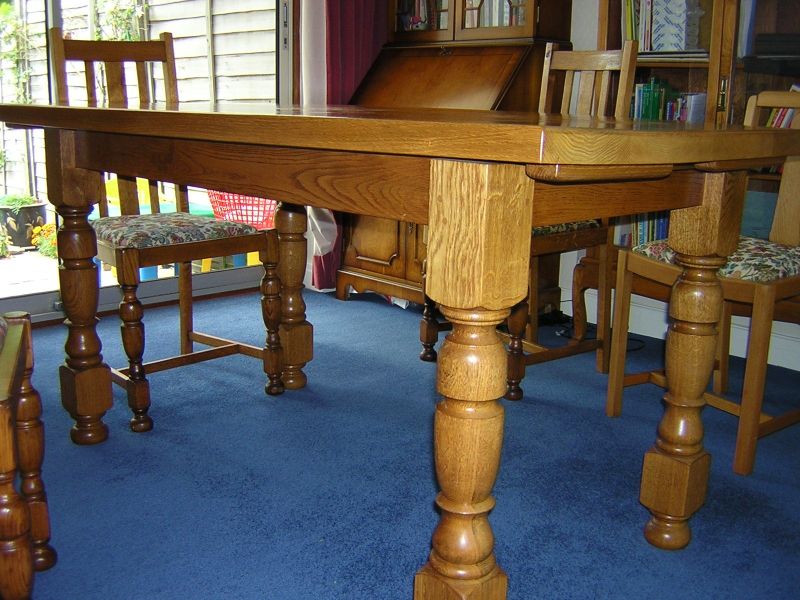
The legs were turned for me. I approached a local woodturning club
stand at a wood & crafts fair and asked if any members would be
interested in doing some turning for me. They put me in touch with a chap
who refused to take more than £20 to turn all four legs (4"x4"). He was in it for the pleasure and told me that as he
had a house for of bowls and candlesticks ( and so had his family, friends
etc) he was really pleased to test himself on something different. I took
along one of the chairs which he used as a pattern for the legs, he even
cut the stepped mortises for me.
The Blanket
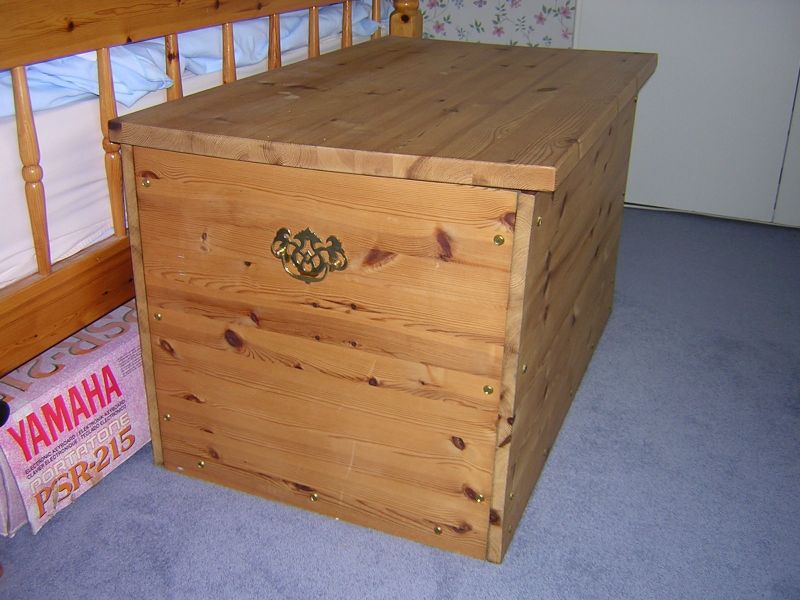
Box: Made in about 1992 from laminated pine board (awful stuff -
never again) with no workshop no power tools and very little idea. It is
all screwed together and the top is horribly bowed but is serves a
purpose.
The
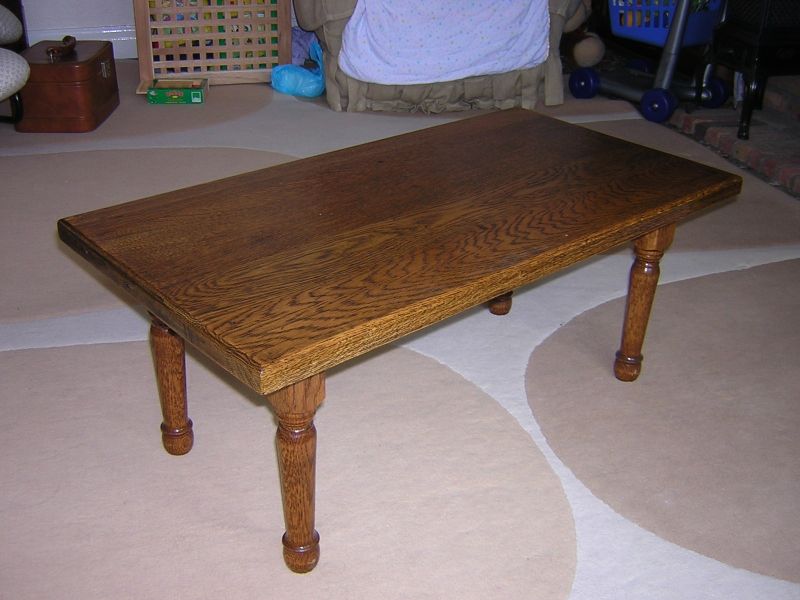
Coffee Table: Made in about 1989. Reclaimed oak from a local
teacher training college which threw out about 50 wardrobes with solid
(1") oak bases and tops with oak panelled sides. I only took 2 at the
time as I had little interest in woodwork and no idea what I was going to
do with the wood. If I knew then what I know now ......... ....The legs
are oak and were turned for me the frame but joints to the legs and is
held with knock-down fittings. Oak dome shaped pegs fill the holes. Finish
is poly varnish
The
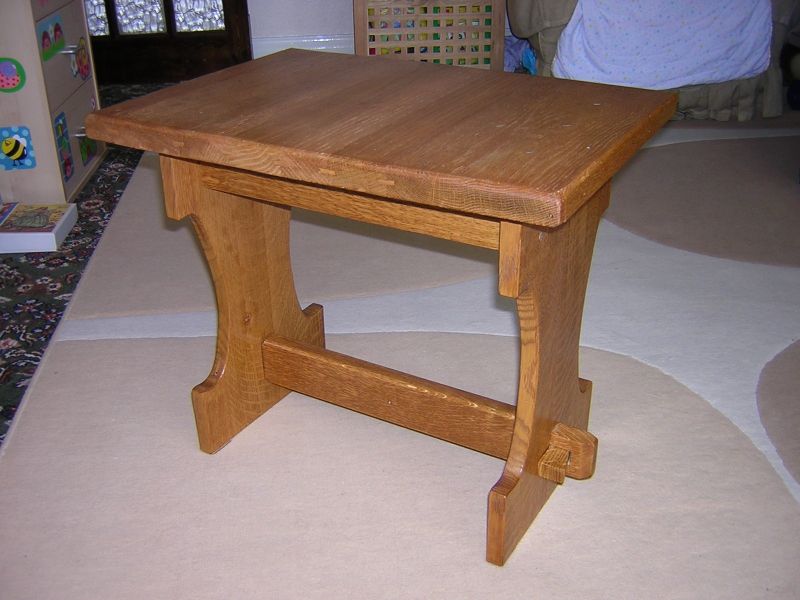
Small Table: Made in about 1993 from the same reclaimed oak
as the Coffee Table. The pegged through M&Ts were fun to make. The
rails are dowelled into the legs as is the top to the legs. I find visible
dowels aesthetically pleasing & have used them on most of my pieces.
One day I will make my own from a darker contrasting wood. All the dowels
seen in these pieces are ramin.
The
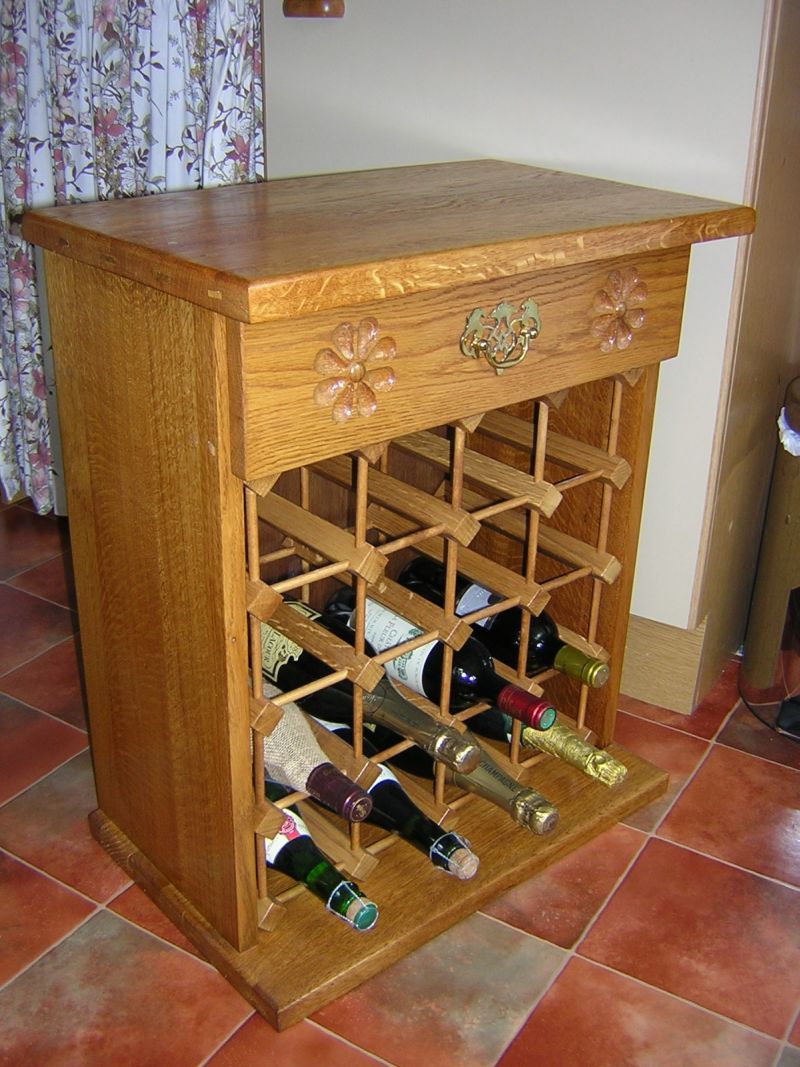
Wine Rack: Made in about 1998 from the reclaimed oak. A simple
carcass dowelled to the base and top. Drawer was made with hidden dowels
with a false front (carved my wife). The
bottle rack itself is also made from oak. I bought 1" square stock,
cut to length and then drilled the holes for the support (dowel again).
Finish is Patina. It
original stood on four bun feet but these were removed so that the whole
things can sit inside a 60cm wide kitchen cupboard.
The
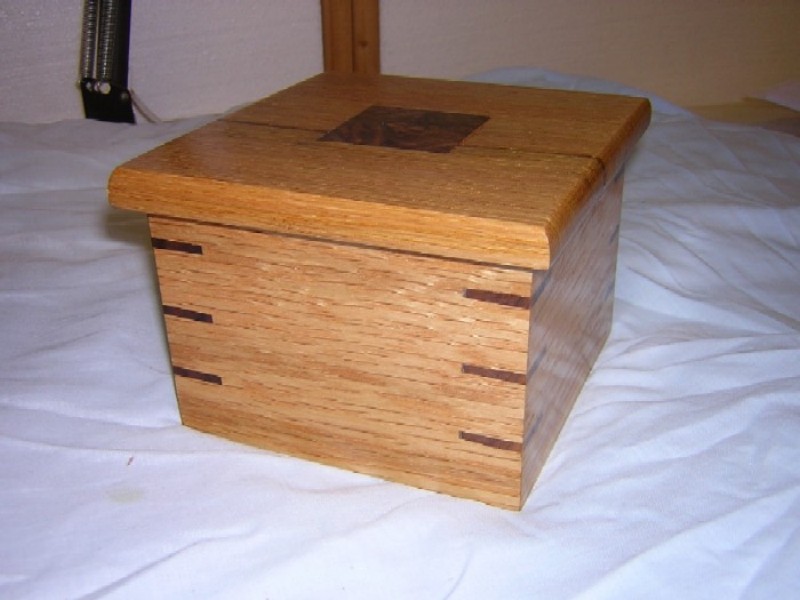
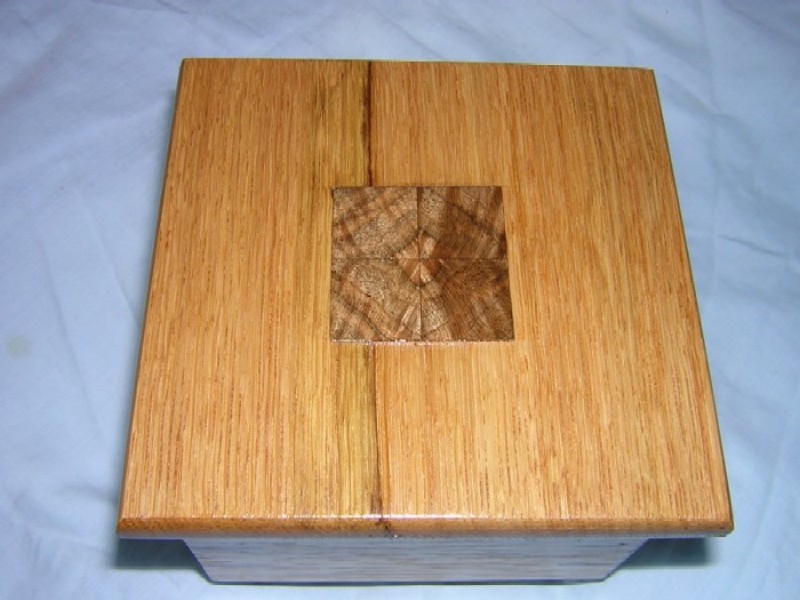
Small Box Made from reclaimed oak skirting boards with walnut
splines set into the mitred corners and a four fold book matched inlay in
the lid. About 4 inches square & finished with about 5 coats of
finishing oil.
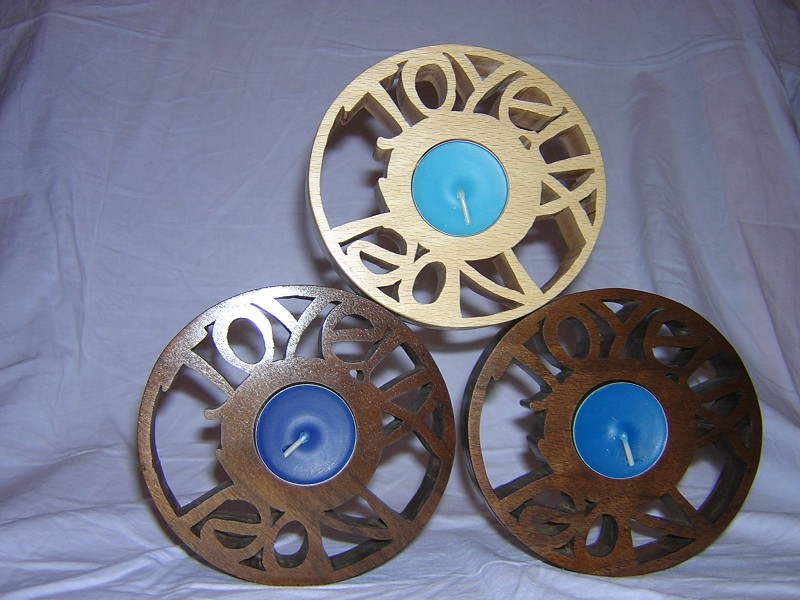
Each one took about an hour to cut
out and they have been finished with 4 coats of Finishing Oil. The top one
is beech the other two both walnut - American.
Made with a single speed Hegner Multicut-1.
It is possibly my technique but I found the walnut much easier to cut, far
less burning on the tight turns and easier to keep a vertical cut.