|
|
|
|
While we've been building the VW engine
and transmission and chassis, we've also
been busy building the famous Volkswagen
body. We've pressed it from sheet metal,
inspected it, spot welded it, inspected it,
painted and baked it, and inspected it again.
(There are as many inspectors as there are
cars produced daily.) Take the design of the body itself: functional, beetle-shaped. It was designed this way for a purpose: to give the VW low wind resistance and to make it short outside, yet roomy inside. |
(It must be a pretty good
design, after all, it's still in style after some 16
years.) Now let's go into the details of one phase of the body production. The paint job, for instance. First, the body is literally submerged in paint, bathed in it. Then it's baked and sanded and the second coat is sprayed on. Then dried and sanded again (by hand) and the third coat sprayed on. Again, it's popped into the oven for a drying, fully sanded, and coat number four is sprayed on. Into the oven for that final drying and we're done. (If our final paint inspector agrees, of course.) |
The result is a car that looks better and keeps on looking better. Through all kinds of weather. The VW is completely protected against rust and corrosion because not an inch of bare metal has been left exposed. |
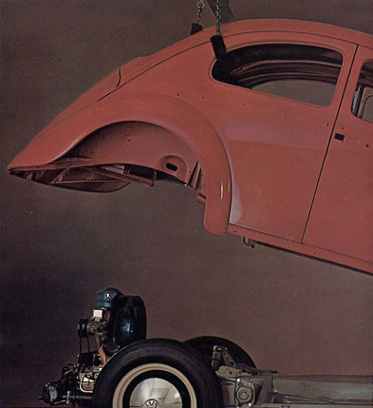
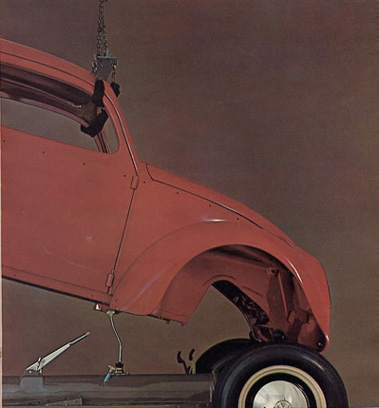
It's time to add the Volkswagen body to
the assembled chassis. Which is exactly what you see happening in this picture. |