| Sterling Jack Hobbs son of Mary Ann "Annie" Hobbs |
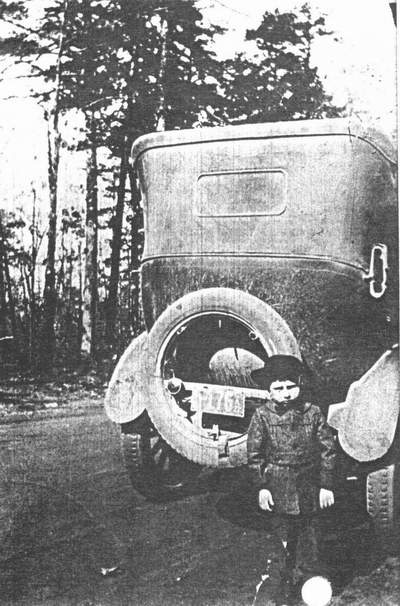
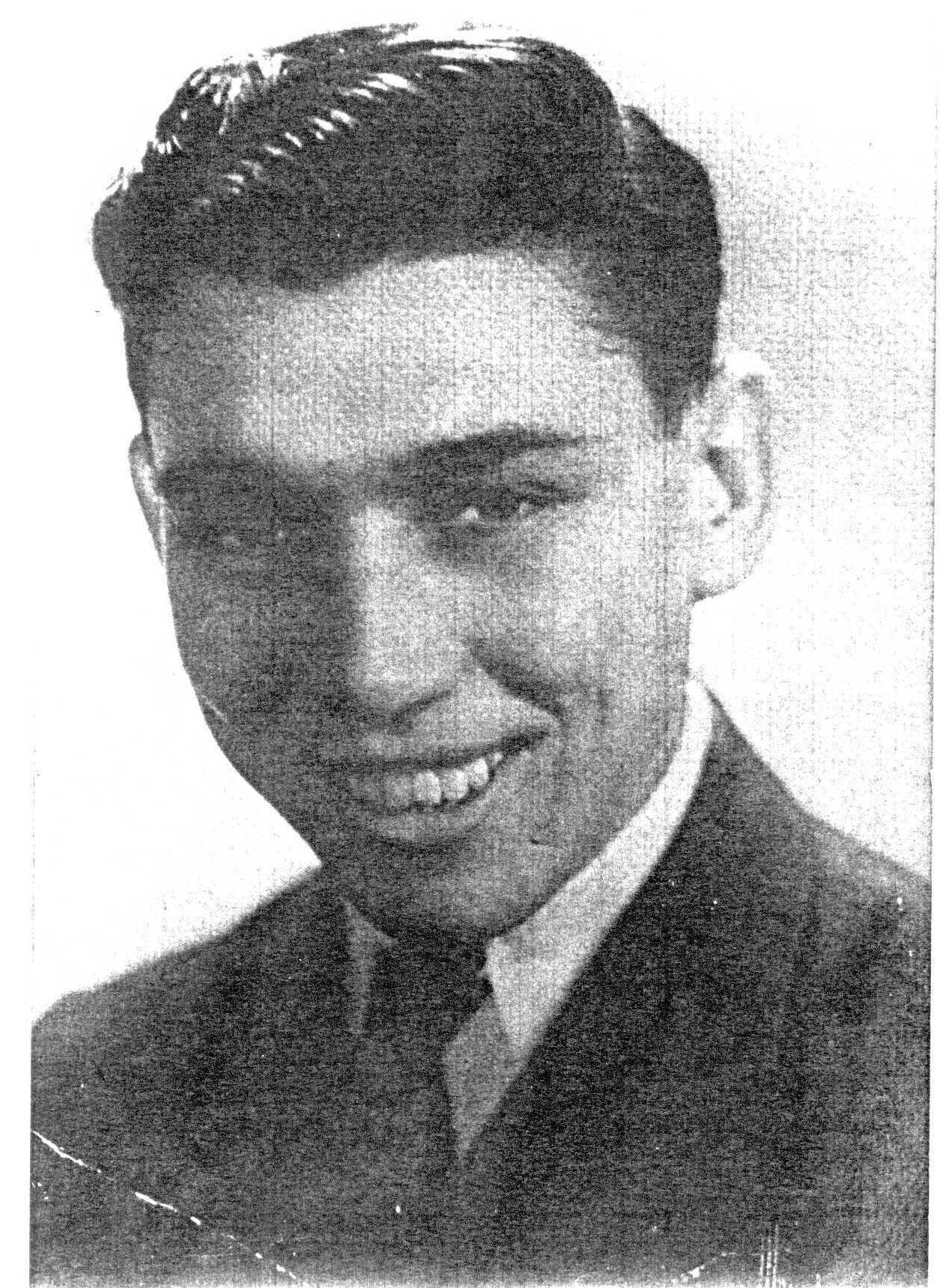
| This was my father. He was born December 27, 1917 Atlanta, Fulton County, Georgia. He died September 9, 1996 Riverview, Wayne County, Michigan. He married twice and had children with both wives. All are living at present. He died from Heart Failure, Pneumonia and Multi Infarct Dementia Alzheimer type. He left Georgia as a young man to join the Roller Derby the group was called the Transcontinenal Roller Derby. He was small and was able to get under people and trip them up by knocking them down, shoving them, hitting and outskating them. He traveled around the country with his team. He told us he had the record in the late 1930's for the fastest mile. He met his first wife in the Roller Derby and married. They had 3 children. He settled in the State of Michigan to work in the auto plants to raise his family. He worked 37 years starting out as a die maker apprentice and working his way up to maintenance. The plant he worked in was called the Star plant, they made transmissions, in the 1960's it was his job to move the plant to Livonia, Michigan where they concentrated on transmissions. They tested, built and created transmissions for many different automobiles. He became Building Maintenance Supervisor. He was in charge of every aspect of maintenance on the building. From pipe fitters, to welders, to . He divorced his first wife after 19 years of marriage and met an married his second wife and had 4 children with her. They were married 35 years at the time of his death. He is buried in Atlanta with his mother Mary A Owen in College Park Cemetery with his mother, step father's family and his brother Clifford Owen. My dad had a sense of humor, he loved to tell jokes and stories to get a smile or a rise out of you. He and my mothers step father, my grandpa would have some heated debates over political things mostly some on other things. He was very protective of us, sometimes too much but that was because he loved us. He loved my children very much, my daughter could charm him off a fence when she was 3, he was in the Alzheimers disease and would be climbing over the fence to leave. She would go up and in her cute little smile tell Grandpa to get off the fence and come with me, he would argue no, but as he was doing it he was climbing off the fence and would hold her hand and they would walk off to the house or the yard to play. My son was his buddy when he was very small, he waited until Dad came over to show he could walk, well he ran across the room to my Dad. Boy did that make his day. He was very proud of them, and they just loved him, he would come over every single weekend to watch them play or bring them some little thing. He loved it. After he got real ill, those visits stopped and was missed. The kids don't remember him, but I remember how happy they made him. It was a cruel disease, no one should ever go through anything like that. He lost every meory and ability he ever had, he was a fighter, he was a strong and determined man. He didn't always do things right, but he learned to ask for forgiveness. Like the times he would get into a fight with the lady next door over silly things really, but to them at the time it was important. One time somehow the boundry of the property became an issue. Dad put bricks down the line, then the man next door would pick them and throw them into our yard, then next thing you know those bricks were going back and forth over the fence. He threatened if the bricks came in his yard one more time he was throwing it through the window. And of course the bricks came back in the yard, he said, I was there when he did it, he'd give them one more chance, the brick got tossed over the fence and bounced twice and went through the basement window. Well they called the police. The biggest police officer I ever saw he had to be every bit of over 7 feet tall came over, well it had to be May, because after the officer left, Dad had already figured he'd be paying for the window, he cut some peonies which were his favorite flower and took them to Jean next door, she always caved when he brought her those flowers. She loved them, and of course all was well until the next fight. They would talk over the fence over anything, they were friends who didn't always agree. Dad was a good skater, when we were younger, he would take turns with the other parents of our friends to take us back and forth to the skating rink, sometimes he stayed, he loved skating, he was very good, I always saw the dancing part but he was in the roller derby way back before all the safety stuff was issued. He was small and was able to zip in and out of place and knock guys out of the rink or over the bars and sometimes got into fights. A cousin Robert, told how he would visit in Atlanta and bring his skates, and him and my mother would go skating that evening. He met both his wives on a skating rink, one in the derby the other going out looking for chicks with his son. Social Security Death Index: U.S., Date of Import: Feb 17, 2000, Internal Ref. #1.111.6.113985.155] Individual: Hobbs, Sterling Social Security #: 256-03-8960 Issued in: Georgia Birth date: Dec 27, 1917 Death date: Sep 15, 1996 ZIP Code of last known residence: 48185 Primary location associated with this ZIP Code: Westland, Michigan Wayne County, Michigan Register of Deeds Grantor/Grantee First Name MI Last Name How Held Grantor FFM Grantee CLAIRE D HOBBS HW Grantee STERLING J HOBBS Sub-Divided Municipality Tax ID Westland Subdivision Liber Page TONQUISH PAWNEE 80 92 Lot Lot Alpha Block 3 Reg. No: U K28625 Doc. Type: FIXTURE FILING Doc Liber: 22185 Pages: 220 - 220 Total Pages: 1 Ref. Liber: 0 Ref. Page: 0 Date Dated: 10/29/1984 Consideration: $0.00 Date Received: 10/29/1984 Grantor/Grantee First Name MI Last Name How Held Grantor SEARS ROEBUCK & CO Grantee STERLING J HOBBS No Detailed Description Available Reg. No: R 200331699 Doc. Type: WARRANTY DEED Doc Liber: 32465 Pages: 421 - 422 Total Pages: 2 Ref. Liber: Ref. Page: Date Dated: 07/26/2000 Consideration: $160,000.00 Date Received: 10/03/2000 Document Reg. No: R 92286731 Doc. Type: DISCHARGE Doc Liber: 26242 Pages: 666 - 666 Total Pages: 1 Ref. Liber: 14906 Ref. Page: 982 Date Dated: 11/02/1992 Consideration: $0.00 Date Received: 12/21/1992 Grantor/Grantee First Name MI Last Name How Held Grantor FFM Grantee CLAIRE D HOBBS HW Grantee STERLING J HOBBS Sub-Divided Municipality Tax ID Westland Subdivision Liber Page TONQUISH PAWNEE 80 92 Lot Lot Alpha Block 3 |
| Census 1920 East Point, Atlanta, Fulton County, Georgia Census Jan 19, 1920 Mollie Hobbs 43 widow rent head GA GA GA Annie Hobbs 19 dau overall factory GA GA GA Sterling J Hobbs 2 mo grson b. Dec 17, 1917 GA GA GA Samuel A Hobbs 16 son Bradden Overall Factory GA GA GA Willliam R Hobbs 14 son Messenger Boy Telegraph Co GA GA GA Henry G Hobbs 12 son none (Annie is Mary Anne Hobbs, my grandmother, Sterling J is my father) 1930 East Point Atlanta, Georgia Part of Ward 3 April 3, 1930 Enumeration District 61-160 Supervisors District 4 James P Wingo Pine Street 217 34 42 Hobbs, Sam Head rent 12.00 no mw 26 s no yes GA GA GA 78 yes Painter Building 2881W yes no line 73 Owens, Dewey G bro in law no mw 29 m 19 no yes GA GA GA 78 yes none Owens, Annie sister H fw 29 m 19 no yes GA GA GA 78 yes none Owens, Jack nephew mw 12 s yes yes GA GA GA 78 yes none Owens, Larance nephew mw 8 s yes GA GA GA 78 none Owens, Clifford nephew mw 7 s no GA GA GA 78 none Owens, Murle niece fw 4 s no GA GA GA 78 none |
| Probate Court 08/07/1997 Wayne County, Michigan Probate Court File 93-500793-CC Order suspending powers of fiduciary and notice Files indicate that the fiduciary has failed to correct the deficiency or omimission of which he has been notified. (2 notices sent to each child of Sterling J. Hobbs) 05/30/1997 Letter and final account of Fiduciary in the matter of Sterling J Hobbs and In the Estate of Sterling J Hobbs a Legally Incapacitated peron Wayne County Probate No 93-505793-CG |
 |
 |
| News in 1917 1917 Dixieland. The early style of New Orleans jazz as played by white musicians, originally distinguished from black jazz by less use of rhythmic swing and blue notes and by a somewhat different melodic and harmonic idiom. The name was at first applied to black marching jazz around 1900, but was popularized by the white Original Dixieland Jazz Band, which toured and recorded widely from 1917 (the term �Dixie� for the Old South of the USA comes from Dan Emmett's 1859 minstrel song of the same name). Dixieland was revived along with black New Orleans jazz in the 1950s and remains a popular style. January 19, 1917 Zimmermann Note (19 Jan. 1917) A secret telegram containing a coded message from the German Foreign Secretary Alfred Zimmermann, to the German minister in Mexico City. It instructed the minister to propose an alliance with Mexico if war broke out between the USA and Germany, Mexico being offered the territories lost in 1848 to the USA. The British intercepted and decoded the message, and passed it to the US State Department. It was released on 1 March 1917 as German-US relationships were deteriorating over unrestricted submarine warfare. It was regarded as an overt act of German aggression, in blatant disregard of the Monroe Doctrine (1823) which rejected European interference in matters concerning the American hemisphere. After years of debate, it was the final catalyst to propel the USA into World War I, with war being declared on Germany on 6 April 1917. February 5, 1917 U.S. Congress nullifies President Woordrow Wilson's veto of the Immigration Act; literacy tests are required. February 8, 1917 Kennesaw Mountain, west of Marietta, is authorized by Congress to become a memorial to the men who died in the Civil War battle Kennesaw Mountain National Battlefield Park March 2, 1917 Congress passes the Jones Act making Puerto Rico a territory of the United States and makes the inhabitants U.S. citizens. March 19, 1917 The Adamson Act, eight hour day for railroad workers, is ruled constitutional by the U.S. Supreme Court. March 31, 1917 The United States purchases the Virgin Islands from Denmark for $25 million. April 2, 1917 President Woodrow Wilson asks Congress to declare war on Germany Woodrow Wilson April 4, 1917 The U.S. Senate votes 90-6 to enter World War I on Allied side. April 6, 1917 With America's imminent entry into The Great War, the battleship Georgia is recommissioned, serving as an escort and troop transport On April 6, 1917, the United States formally declared war against Germany and entered the conflict in Europe. Fighting since the summer of 1914, Britain, France, and Russia welcomed news that American troops and supplies would be directed toward the Allied war effort. Under the command of Major General John J. Pershing, over two million U.S. troops fought on battlefields in France. May 18, 1917 The U.S. Congress passes the Selective Service act, calling up soldiers to fight World War I. May 21, 1917 Great Atlanta Fire of 1917 - Atlanta Fire destroys 300 acres of homes and businesses totaling 1938 structures. Although 10,000 people were displaced by the fire no one was killed. During the great Atlanta fire flames jumped from roof to roof across blocks of wood-shingled houses. More than 4,000 Atlantans were homeless before the wind changed and the fire died. Atlanta, Georgia (1900-2000) June 27, 1917 Suffragists Storm Over Washington D.C. in 1917 Wartime Washington dealt brutally with imprisoned suffragists who dared picket the White House for the right to vote in 1917. Six well-bred women stood before a judge in the Washington, D.C., Police Court on June 27, 1917. Not thieves, drunks or prostitutes like the usual defendants there, they included a university student, an author of nursing books, a prominent campaign organizer and two former schoolteachers. All were educated, accomplished and unacquainted with criminal activity. But today they stood accused in a court of law. Their alleged offense: "obstructing traffic." What they had actually done was to stand quietly outside the White House carrying banners urging President Woodrow Wilson to support their decades-long struggle to add one sentence to the Constitution: "The right of citizens of the United States to vote shall not be denied or abridged by the United States or by any State on account of sex." July 27, 1917 Bacon County created August 15, 1917 Atkinson County created August 2, 1917 On August 2, 1917, Royal Naval Air Service officer E.H. Dunning became the first pilot to land on the deck of a moving ship. He performed the tricky maneuver by flying his Sopwith Pup alongside the HMS Furious as it steamed at high speed into the wind, then side-slipping inward to the deck. Furious joined the British Royal Navy as an aircraft carrier after being fitted with a primitive flight deck. While the converted ship solved the problem of launching fighter aircraft, recovery was still dangerous and costly, since planes launched from the flight deck were forced to land at sea, where they were often lost. Five days after his successful deck landing, Dunning drowned during another attempt when his aircraft developed mechanical problems and plunged overboard. October 15, 1917 Mata Hari, the woman whose name has become synonymous with a seductive female spy, was executed by the French on October 15, 1917, on charges of spying for the Germans during World War I. Born in 1876 the daughter of a prosperous Dutch merchant, Margaretha Geertruida Zelle married a colonial army officer named MacLeod in 1895. The couple lived for five years in Java and Sumatra before the marriage failed. By 1905, Mrs. MacLeod was calling herself Mata Hari--said to be Malay for "eye of the day"--and creating a sensation as an exotic East Indian dancer in Europe. Among her many lovers were military officers and, although the facts surrounding her espionage activities are still unclear, Mata Hari was arrested by the French as a German spy in February 1917. After a two-day trial before a military court, Mata Hari was sentenced to death for espionage. October 19, 1917 The first doughnut is fried by Salvation Army volunteer women for American troops in France during World War I. October 27, 1917 20,000 women march in a suffrage parade in New York. As the largest state and the first on the East Coast to do so, New York has an important effect on the movement to grant all women the vote in all elections. November 10, 1917 Forty-one US suffragettes are arrested protesting outside the White House. December 1917 Eighteenth Amendment. The Eighteenth Amendment to the U.S. Constitution, instituting national prohibition, was born out of temperance reformers' efforts to remove the blight of alcoholic drinks from society, as they maneuvered within the intricacies of American federalism December 26, 1917 As a wartime measure, President Woodrow Wilson places railroads under government control. December 27, 1917 Sterling Jack Hobbs was born in Atlanta, Fulton County, Georgia on a Tuesday. December 31, 1917 Seaboard Air Line Railroad inaugural service on a new rail line between Savannah and Charleston greatly reduces the time it takes to travel between these two cities. |