
Previous Page
|
|
|
|
|
|
|
|
|
|
|
|
|
|
|
|
|
|
|
|
|
|
| Dave's Arizona Hunting Pictures 3 | |||||||||||||||||||||
|
|||||||||||||||||||||
| An early visitor to Arizona described it as a land where everything "stuck, stung, or bit." There's some truth to this. The desert is a harsh environment, and plants and animals have had to adapt to survive. Most plants have developed defenses in the form of thorns or spines. In fact, the cactus have transformed their leaves (which lose water) into spines, which don't. These spines not only protect the plant and its precious store of water from animals, birds, and insects, they can capture the rare rain and moisture and channel them toward the plant, while avoiding the loss of moisture due to transpiration. A remarkable example of adaptation. Hunting in this environment can be challenging - particularly for dogs. However, they soon learn to adapt. On this page is a few of the more commonly encountered desert plants. | |||||||||||||||||||||
|
|||||||||||||||||||||
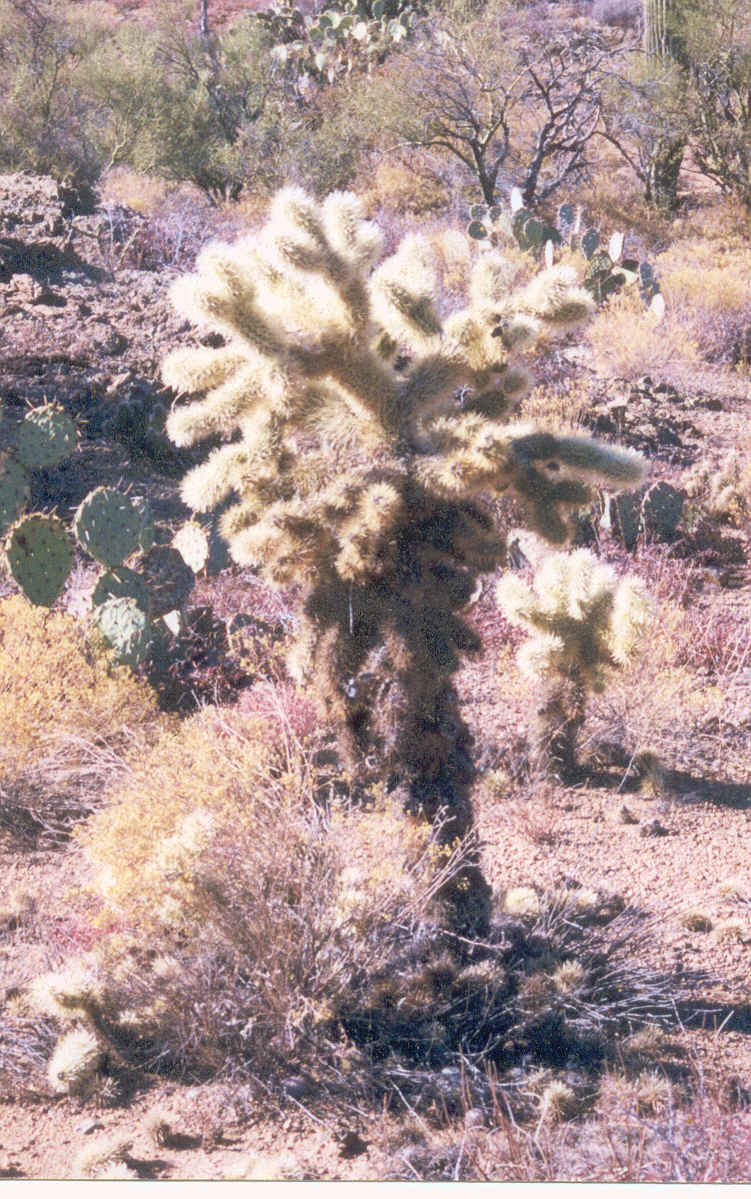
| Teddy Bear Cholla (jumping cactus) - the worst, nastiest plant I've ever hunted around on three continents. The spine covered balls break off of the plant when you touch it and the barbed spines work their way into your clothes and skin This is how the plant reproduces - new plants grow from the transported balls.. I've seen javelina blinded by these balls, and dogs have been known to die trying to bite the balls from their fur. Smart hunters simply avoid hunting in cholla patches - and carry forceps to remove the balls from fur or skin. | |||||||||||||||||||||
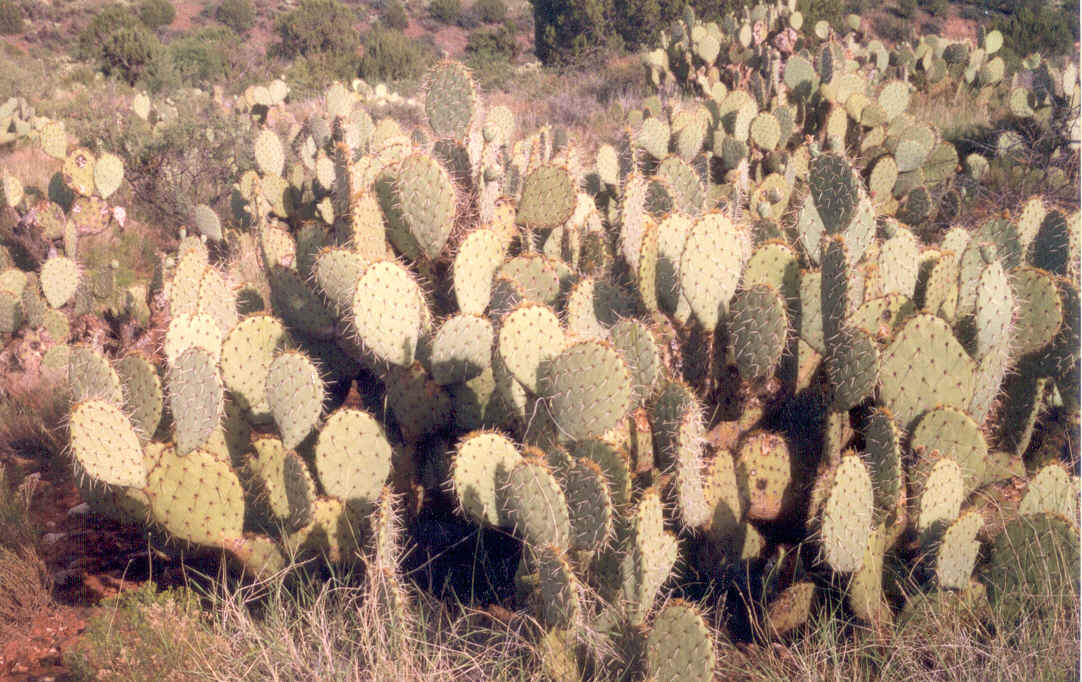
| Prickly Pear - there are dozens of species of prickly pear cactus, all having the characteristic paddles covered with spines. These are everywhere in Gambel's country, and one of the reason I don't train my dogs to be steady to wing and shot. I want them on a cripple as soon as possible, because a cripple that manages to make it into one of these patches is generally unretrievable. | |||||||||||||||||||||
|
|||||||||||||||||||||
|
|||||||||||||||||||||
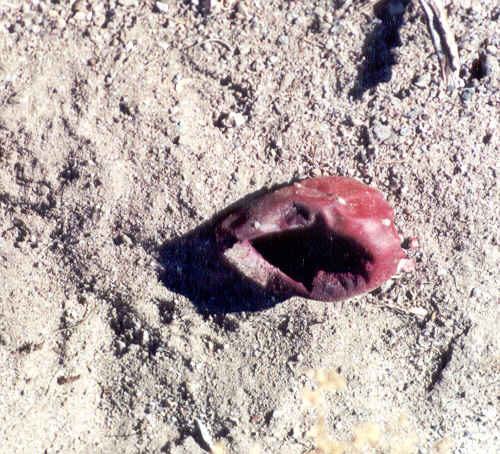
| The fruit from the prickly pear is a favorite food of most wildlife, including quail. Gambel's quail can't resist them -and when the fruit is ripe that's normally where you'll find the coveys. . | |||||||||||||||||||||
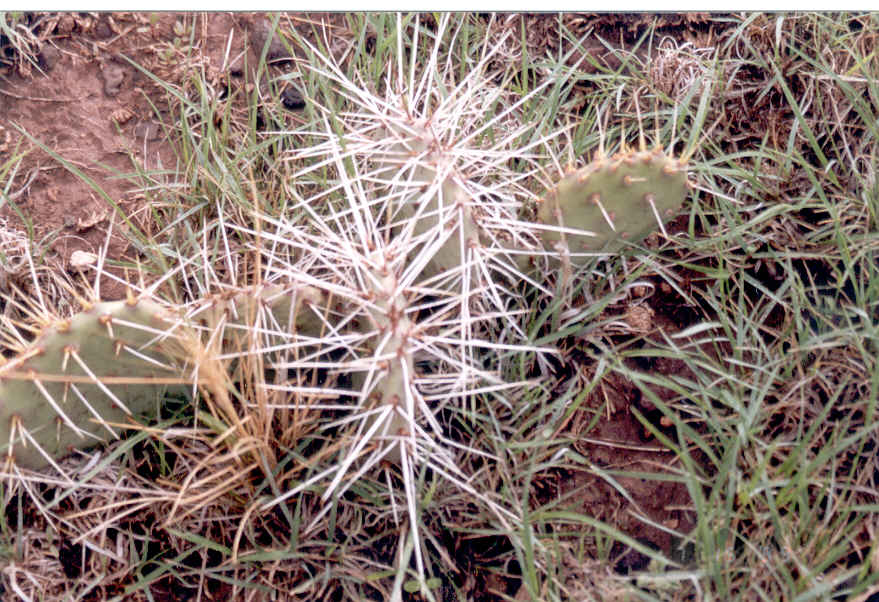
| A close up of a prickly pear paddle. The spines are 3-4 inches long and can penetrate most fabrics.. Leather boots are a must when Gambel's quail hunting. | |||||||||||||||||||||
| Next Page Previous Page |
|||||||||||||||||||||