
Despite its name ("New Scotland" in Latin), Nova Scotia's roots are French, making it of great interest to Elsa. The first part of our holiday was spent around Annapolis Royal and the Evangeline Trail, checking out old Acadian settlements. It was here, some 400 years ago, that French settlers began diking and farming the coastal salt marshes ... only to be caught in an imperial power struggle between France and England.
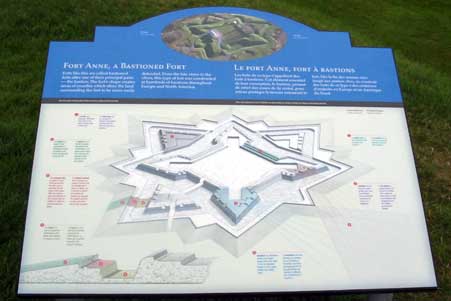
Planned by the master war engineer of France's Bourbon kings, Fort Anne and its guns commanded entrance to the Atlantic--making it and Annapolis Royal a bone of contention between the French and English militaries for centuries. The two empires swapped possession of the area repeatedly in the 17th and 18th centuries.
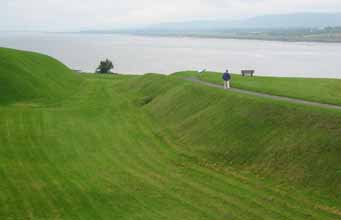
At left: the plan of Fort Anne, carefully designed to trap invading forces in its undulating terrain (below left).

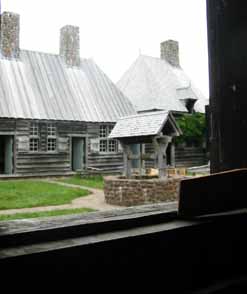
Today's Cajuns have their roots in the original French settlers of Nova Scotia, who called it Acadie. At right, a window's-eye view of the reconstructed settlement, built as a four-sided fort with living quarters facing inward and gun emplacements looking outward.
Driving Across the Atlantic Inland Attractions The Bay of Fundy Lunenburg & The Coast