 |
|

|
The Question of Citizenship-
- As it was originally written, the Constitution mentioned both “citizens of the United States” and “citizens of the States”
- The coming of the Civil War and the adoption of the 13 th Amendment in 1865 raised the need for a constitutional definition.
|
 |
Citizenship by Birth-
- That need was finally met in 1868 by the 14 th Amendment.
- Defined by the 14 th Amendment a person can become a citizen by: Birth, and by blood.
- jus soli- citizen by birth
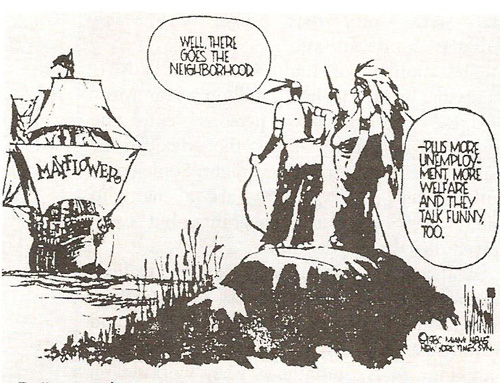
- Native americans did not always have citizenship
|
 |
Citizenship by Naturalization-
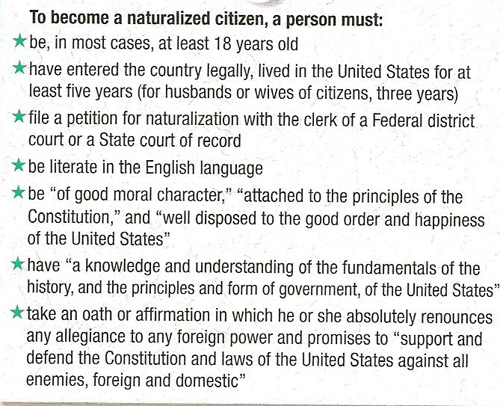
- A person can also be naturalized, but that is an individual choice, and there are certain requirements that need to be met: First of all a person must be 18 years of age
- has to have entered the country legally, must have been a resident for at least 5 years, must file a petition, be literate in English, must be of good morale, good citizenship, must have fundamental knowledge of US History,
|
 |
Loss of Citizenship-
- Expatriation is the legal process by which a loss of citizenship occurs
- Denaturalization- only after a citizen becomes by fraud or deception
- A person can neither gain or lose American citizenship by marriage
|
 |
A Nation of Immigrants-
- Congress has the exclusive power to regulate immigration
- There were only some 2.5 million persons in the united states in 1776
- Congress has the exclusive power to regulate immigration
- The States have no power in the Field, The Passenger Cases, 1849
- Congress placed the first major restrictions on immigration in 1882
|
 |
Diversity and Discrimination || Equality Before the Law || Federal Civil Rights || American Citizenship|| Breaking Down Barriers
|