Little wax replica
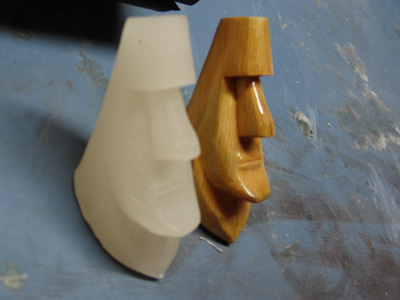
One of the wooden originals with an earlier attempt at duplication. The wax model has a depression on the rear from the wax shrinking as it cools.
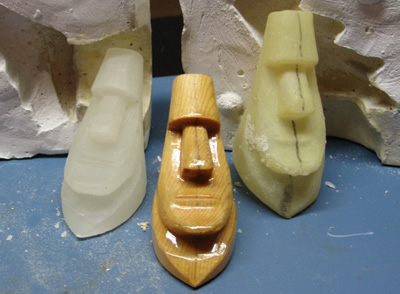
The same, but with the latex mold.
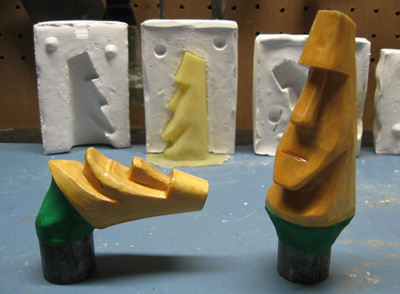
Since I decided to try something new to keep the wax from shrinking so much, I had to make new molds. These are the wooden originals ready for.. uhh... molding.
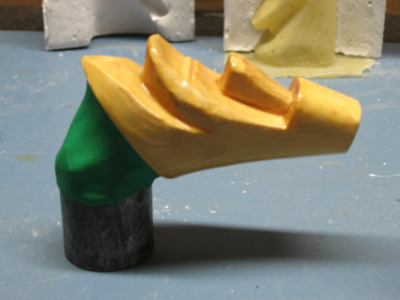
The idea is that a metal tube will extend from the mould, and a heat gun will keep the wax in the tube liquid until the rest has set, giving it a reservoir to draw from, preventing it from sucking in the sides of the mold.
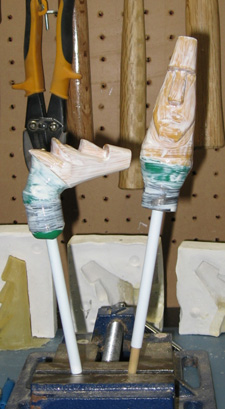
Covered in a new layer of the spreadable latex. I hate waiting for things to dry.
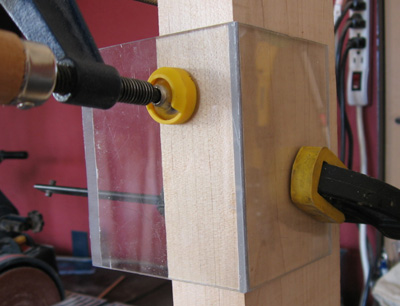
The latex is not strong enough, so I have to give it a plaster support. To date I have always made disposable boxes for the mold out of cardboard, but this time I decided to try something a little different. This is me about to glue two sides of a reusable plexiglass box.
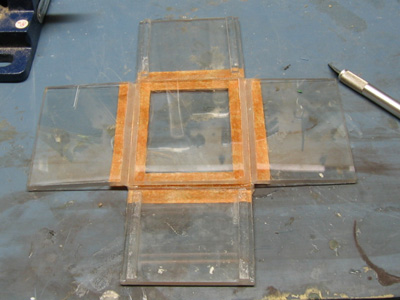
This is the box opened. You have to be able to open the box, to get the plaster out, and it is also easier to deal with the second half of the plaster mould. That comes later.
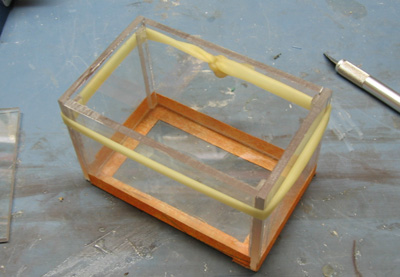
The box closed. It's composed of a bottom, two sides (the long ones) with their bottoms sanded to a 45 degree angle to match the bottom, and two end plates with shelves glued on to stop the longer sides from going in to far. The corners are hinged with some random orange fabric that was hanging around.
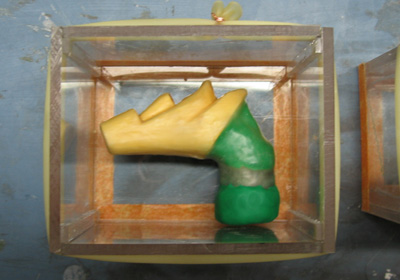
A view into the box to show how fantastic I am at measuring things properly.
I actually made two boxes, but the other one was almost an inch too short to hold the second, longer head.
The head ended up getting about 10 layers of the latex, plus I ended up dipping it into wax briefly, since the latex has a tendancy to hold water against itself when you pour the plaster, making all the plaster just against it soggy and weak. I hoped to avoid this (it worked).
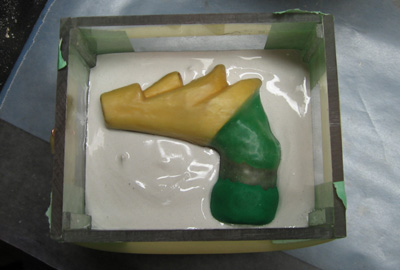
Half filled with plaster, and the head stuck in.
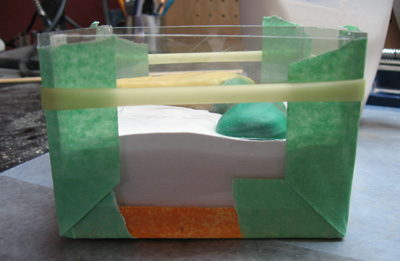
I taped the corners, accuzza I didn't trust them not to leak plaster all over without it.
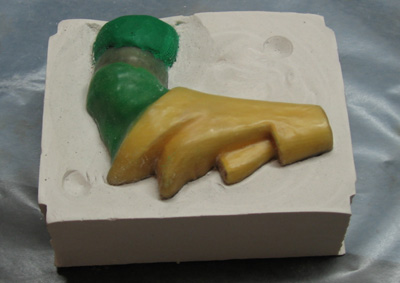
This is where the box opening becomes handy. I pulled the whole thing out, and then using some highly specialized tools (the sharp corners of a metal ruler and a crappy, dull exacto knife) I sort of gouged down to the half way mark on the original to make it come out of the mold easily. With the sides of the box in place, this would have been a real pain.
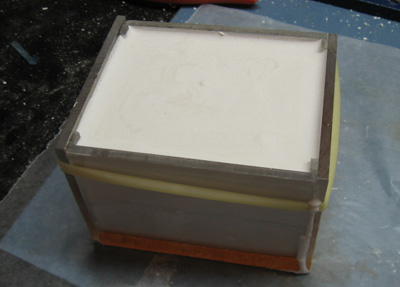
It's gone! Muhuhahahahaha!
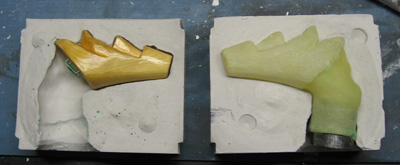
Wait for the plaster to dry, pry apart with a screwdriver, remove latex from wood original, glory in own omnipotence.