MOVEMENT TO TAA THOMPSON
“Suicide Alley”
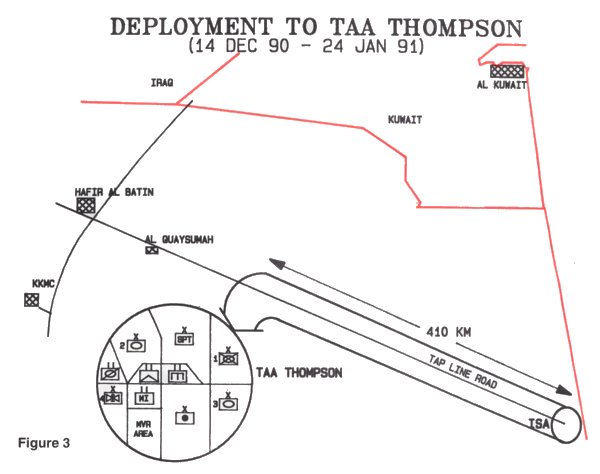
"OLD IRONSIDES" units convoyed from the ISA to TAA
Thompson between Dec. 14 and Jan. 24, 1991. One of the great
dangers IRON SOLDIERS faced during "Operation Desert
Shield" and "Desert Storm" was that of traffic
accidents during the
convoy to TAA Thompson. The Tapline (Trans Arabian Pipeline) Road
was a paved but bumpy road, wide enough for two and a half
vehicles but regarded by Saudi truck drivers as a four-lane super
highway!
Convoys from the ISA to Thompson took 15-20 hours and entailed numerous hazards and obstacles: traffic jams, long refueling stops, driver fatigue and reckless Saudi truck drivers. Fortunately, "OLD IRONSIDES" sustained no fatalities on "Suicide Alley" during the move to THOMPSON.
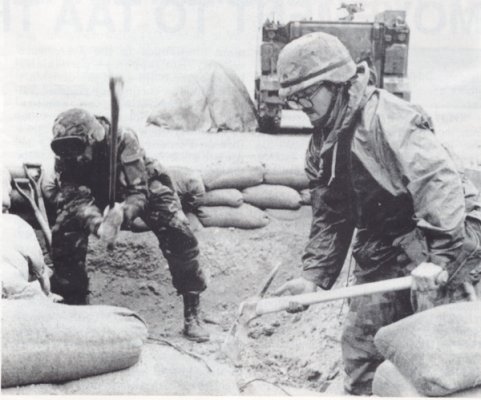
Prior to the air campaign, the division's main challenges in the TAA were security, life support - particularly hygiene, the build up of the division's combat power, contingency planning and mental preparation for combat. Preparation for an Iraqi pre-emptive strike in conjunction with terrorist attacks increased security measures during the division's concentration. All units maintained a high security profile to include daily stand-to, around-the-clock security and constant improvement of fighting positions. If any terrorists entered the TAA, they made no effort to challenge "OLD IRONSIDES" readiness.
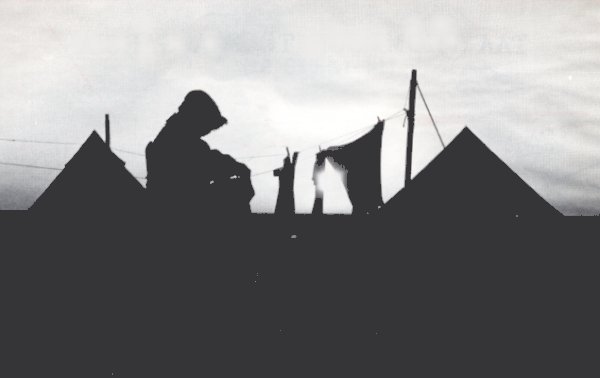
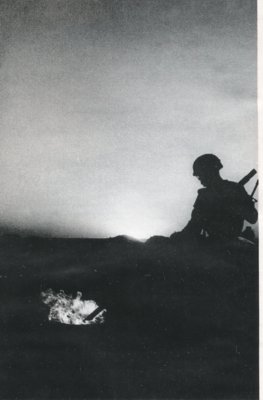
Life support issues also received a high priority. Key concerns were proper waste disposal, personal cleanliness, creature comforts and most important, mail and the use of telephones. Wooden showers and latrines raised morale, while burning human waste became a daily ritual. "Bs," "MOREs," and the occasional A-ration meal aided both health and morale. The highlight of each day was mail call, while the 120-phone AT&T "fest tent" made a phone call home the highlight of the stay in the TAA. Thompson was not home, but it was far better than the ISA.
Another challenge during the build up in Thompson was preparation for an Iraqi pre-emptive attack. Despite his numerous heavy divisions, Saddam failed to seize the initiative from the Coalition and continued to tie his units to fixed defenses. The threat of an Iraqi attack spurred the 1st AD build up of combat power in Thompson. Logisticians vied daily with corps for more HETs for tank, BFV and artillery transport. Ammunition was another critical issue as Hellfire missiles, artillery Copperhead rounds, M1A1 SABOT rounds, Stingers, TOWs and .50 caliber rounds required intense management. Long hours of hard work ensured that combat power increased daily. All soldiers knew that the division's preparation was not a drill. The failure of the Baker-Aziz talks on Jan. 9 showed that the Iraqis were not ready to withdraw. Offensive operations were imminent.