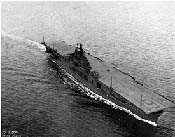
U.S.S. Lexington before the attack on the Panama Canal
14th September 1946 to February 5th 1947
The Essex class carrier USS Lexington sat idle in the Panama Canal's Pedro Miguel lock, lowering slowly with the decreasing water level. Bristling with anti-aircraft guns, the mighty carrier seemed impervious; safe in America's Panama Canal.
The deck was busy with activity as the crew ran drills of every type imaginable. It was a clear day, a few clouds drifting lazily against a blue sky. The captain, wary after the devastating attack on Pearl and the subsequent loss of Guam, Wake, and Midway, intended to keep the crew as alert as possible.
The first Japanese airplane was spotted by air defense observers(already on high alert after reports of Japanese aircraft in the area were received via radio) several kilometers from the Pedro Miguel lock. The bomber approached the lock at treetop level and came under heavy fire from ground-based anti-aircraft positions. Spotters on the deck of the Lexington saw the approaching torpedo bomber for a moment before it exploded in a ball of flames and crashed just under a kilometer away.
Two more aircraft were spotted not long after, and then another four coming from the opposite direction. U.S. fighters appeared at about the same time, a mixture of Army Air Force aircraft and the Lexington's own F6F 'Hellcat' fighters operating from airbases around the Panama Canal Zone, descending rapidly and angling for the Japanese aircraft. The world seemed to explode in thunder as the Lexington's many cannons and machine guns came into action.
Another Japanese bomber exploded into flame as yet another began trailing smoke and tumbled out of control. Four Japanese pilots made it close enough to spot the Lexington, surprise evident on their masked faces. Their orders had been clear...
"If any American carrier spotted in the lock, destroy at all costs in the name of the Emperor. Destruction of lock itself to become secondary in this event."
Two came from the north, two from the south. They came through a hail of tracers and smoke. One managed to smash directly into the Lexington's superstructure, not far from the bridge. A second was hit by an incoming shell and instantly became a flaming trail of debris. The third took several hits and the severely wounded pilot missed in his attempt to crash into the Lexington, instead crashing harmlessly into the walls of the lock.
The fourth incoming bomber managed to avoid the hail of anti-aircraft fire and slammed into the port hull with a terrific explosion, the force of the crash combining with the high explosive packed on the plane to tear a gaping hole near the waterline.
Listing to port, her tower ablaze, the crew desperately fighting several fires, Lexington gradually grounded on the bottom - very much stuck in the Pedro Miguel lock of the Panama Canal.
September 14th 1946
Japanese torpedo bombers, launched by I-400 aircraft-carrying submarines less than fifty kilometers off the west coast of Panama, strike the Panama Canal. The Gatun locks are heavily damaged. Flooding is limited by emergency flood-control damns, avoiding what could have been an even greater disaster.
Also struck in the attack is the USS Lexington, sitting helplessly in the Pedro Miguel lock. The Lexington suffers extensive damage. Of the 24 Japanese torpedo bombers involved in the attack, only three manage to return for recovery by the submarines, those heavily damaged. Of the eight I-400 submarines involved in the attack, four will be sunk in the next week by pursuing U.S. destroyers, submarines, and anti-submarine aircraft. For the Japanese Imperial Navy the price has been high but the benefit great. Another American Essex class carrier out of action, and the Panama Canal out of commission for at least several months.
The attack on the Lexington was the result of a mixture of very good luck and Japanese planning. The Japanese knew that the Lexington would be passing through the canal in mid-September, but not the exact date. The U.S. now has one fully operational Essex class in the Pacific and one in the Atlantic, as well as about six older cv's in each Ocean. Four new Essex class were already under construction before the attack on Pearl Harbor and should be ready for action by late 47 or early 48. Also, two of those sunk at Pearl are salvageable and can be in service by early 48. Beyond that, lets just say that the USN is about to get a massive infusion of brand new warships of all types. At least 15 additional Essex class to be ready(beyond the 4 already under construction) by 49, around six Midway class carriers by 50, though they will have a different name in this ATL for obvious reasons.
September 18th 1946
Italian aircraft stage their largest raid on Malta to date, causing widespread damage to the island's infrastructure but failing to achieve their actual mission, the destruction of the island's fuel and ammunition depots. This bombing attack is the first in a new Italian campaign to severely harass the island fortress. The seas around Malta are already virtually closed to Alliance shipping by Italian and German submarines and aircraft, despite the best efforts of the Royal Navy and Free French air force
September 20th 1946
The Japanese invade Bali. Also, a Japanese probe against Burma is violently repulsed by the well prepared British forces there.
September 21st 1946
Largest Japanese air raid since Pearl Harbor occurs against Singapore. The raid on the combined British, French, and Dutch fleet there is a dismal failure. The Japanese loose over 40 aircraft and only manage to sink one cruiser and moderately damage several others. British Meteor fighters, radar-guided AAA, and extremely high readiness were the reasons for the failure of the raid.
September 23rd 1946
On Luzon, in the Philippines, Japanese forces are still largely confined to a thin stretch of land around their original landing zone. However, logistics is beginning to rear its ugly head. U.S. supply lines into Luzon are much longer than Japanese supply lines, and more vulnerable as well. U.S. and Philippine forces are beginning to run low on heavy weaponry though they do have plenty of small arms and ammunition spread across many large depots.
The Japanese high command, realizing that they must take the Philippines if they are ever to fully secure the East Indies, have begun planning a second series of landings in an attempt to break the stalemate.
September 26th 1946
First Japanese attack on the U.S. mainland as a submarine shells an oil refinery near Santa Barbara, Calif. This, along with the attacks on Pearl Harbor and the Panama Canal, has led to an atmosphere of near-panic on the U.S. west coast. The U.S. is busily fortifying likely landing zones in the west and bulking up anti-aircraft defenses from Seattle to San Diego.
The U.S. Pacific Fleet, what remains of it, is huddled around Hawaii and off the U.S. west coast. The only true carrier task force, centered around the one remaining Essex Class carrier in the Pacific, the Wasp, and two older CV's, is patrolling north of Hawaii to help block any Japanese moves south from Midway. To the west the U.S. surface squadron in the Philippines has withdrawn to Australia rather than risk confronting the Imperial Japanese Navy, leaving only submarines to hunt in the Japanese sea lanes.
October 3rd 1946
Germany has sent 15 additional divisions to reinforce Guderian's 1st Panzer Army, thus putting Guderian in command of what is, in effect, an army group. Italy has also reinforced its forces on the western half of the Greek front and newly arriving forces from Romania, Bulgaria, and Turkey are allowing Guderian to form a sizeable reserve and to reinforce thinner parts of the line. The Luftwaffe, for its part, has slowly began to dominate the skies over the front lines and is beginning to increase strategic bombing in the Greek rear areas to the south of the front lines.
October 10th 1946
Free Dutch and British forces on Java have been forced to withdraw into the interior but remain a viable force.
October 12th 1946
War Relocation Authority established in the U.S. The round-up and internment of Japanese-Americans begins throughout the U.S.
October 23rd 1946
British bombers hammer several ballistic missile launch sites and airfields across northern France. German air defenses have been strengthening in this region and British losses are very heavy.
October 28th 1946
German Ural bombers, operating out of Sicily and escorted by Italian fighters, hit French transportation hubs in Algeria and Tunisia. This raid, and other lesser ones to follow, will severely hamper the tenuous flow of Free French forces and supplies to the Tunisian front.
De Gaulle begins to consider building a new rail line deep in the interior of Algeria. It will run straight east from Casablanca and then curve north to end at Tunis. That this will require further suppression of the interior Arab tribes is of little concern to the Free French relationship. They have plenty of refugee families from continental France who would like nothing more than to settle the vast Algerian interior, taking land grants and large tax breaks. The Italians have begun to get discrete visits from tribal representatives across French North Africa. Getting small arms and supplies into French North Africa wouldn't be that difficult.
November 2nd 1946
Guderian is ready to launch another new offensive in Greece, the final one if things go according to his plan. With the Luftwaffe beginning to dominate in the air and Greek cities and transportation routes coming under increasing bombardment, Guderian is certain that Alliance forces in the rear areas are very weak. If he could shattered the veteran, hardened, Greek and British, troops at the front then he could probably rip deep into southern Greece with little trouble.
The new offensive, codenamed 'Southern Strike' is set to commence on November 10th.
November 5th 1946
Germany begins expelling all Slavs from the Baltic states, to the cheering approval of the 'proud Aryans' there. Once again the Soviets prepare to receive a flood of refugees, and this time there is no buffer zone to keep the unwashed masses in. The refugee camps will be on Soviet territory this time. All the easier to indoctrinate them.
In squalid refugee camps from Leningrad to the Ukraine Soviet agents are planting the seeds for socialist revolution across Eastern Europe, and for a potentially vast partisan force
November 10th 1946
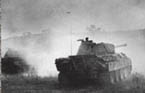
Along the Greek front Germany launches operation 'Southern Strike'. The main axis of the thrust is in the center, driving hard with the central transportation hub of Kalabaka as the first objective. 1st Panzer army's seasoned veterans with their venerable Cougars and MkIV's smash into the Greek and British defenders as rocket barrages and artillery shells bathe the landscape in death and destruction. Ural bombers carpet bomb the initial Alliance positions, pinning them down, as the panzers race forward through narrow 'safe zones'. By the end of the first day German panzers and infantry are in the northern outskirts of Kalabaka.
In the east and west of the Greek front things are quiet, the ominous gray panzers, most of them Cougars, motionless beneath mottled green and brown netting.
November 12th 1946
Kalabaka has fallen but British and Greek forces have taken up their next defensive positions north of Trikala as planned. The Alliance commanders, looking at the great maps spread out in their headquarters in Athens, can see the danger clearly. If the German juggernaut breaks through Trikala it can fan out and rush towards Kardhitsa and straight on for Lamia, putting the entire Alliance position in Greece in question.
Accordingly, carefully hoarded British forces have been on the move since the German offensive began. Moving by rail, from their staging bases in Lamia. By the end of the day the British 3rd army is rolling off rail cars north of Karditsa. Comprised of several armored divisions and numerous mechanized infantry, they begin moving forward towards Trikala. They are equipped with the latest Alliance tanks,(some 400, a mix of Pershings and Liberator II's) and led by officers trained in the ways of modern mechanized warfare, their lessons derived from all the knowledge gained by observing the Eurasian War and the subsequent direct experience in the confused fighting in the Low Countries and France. The scene is set for a ferocious clash of arms. It is exactly what Guderian wants.
The Pershing mentioned here is essentially the same as OTL's Pershing deployed by the U.S. in 1945 of OTL. It is almost an equal match for the Cougar and more than a match for the MkIV. The 'Liberator' MkII is roughly the equivalent of OTL's Churchill VII. It just has a different name in the ATL. It has a 75mm main cannon and enough armor and speed to make it a match for late model MkIV's, it is outclassed by the Cougar though.
November 15th 1946
In a high level Alliance meeting between Churchill and De Gaulle, held at Casablanca, De Gaulle demands a second front in North Africa. The British, reluctant to open an attack into heavily fortified eastern Libya while the Greek situation remains in question, promise to launch an offensive into Libya 'before the end of 1947'.
Sir Archibald Wavell, still commander of British forces in the middle east, is ordered to begin making preparations for offensive actions against Italian North Africa by the summer of 1947. Britain already has 120,000 troops in Egypt, many of these Indian and South African, as well as some 500 tanks, including outdated Sherman’s, Crusaders, as well as the latest American-made Pershing and Britain's latest main battle tank, the 'Liberator' MkII, and even a few B2 'Defenders' left over from the fighting in France.
November 18th 1946
U.S. B-31 bombers hit Midway, hammering the small airfields there. The bombers fly above the ceiling of the older model Japanese fighters stationed there and suffer no losses. Many Japanese aircraft are destroyed and the airfields severely cratered. The strike is a great morale boost and propaganda tool for the U.S.
November 19th 1946
Just east of Trikala the leading elements of the British 3rd army come into contact with the German forces that have surrounded the city. By mid-afternoon a ferocious armored engagement has developed. Both sides exchange even numbers of tanks but the British gain the upper hand, breaking through into the city and relieving the besieged garrison of Greek infantry.
Sketchy reports by some lower ranking officers that the German forces seemed to give ground too easily went largely unnoticed, as did reports that there seemed to be an odd lack of Cougars. Commanders reported spotting five MkIV's for every Cougar. Many different people had pieces of the puzzle, unfortunately for Greece no one put it all together.
November 21st 1946
With fighting raging in and around Trikala and across the center of the Greek front, Guderian unleashes the springs on his trap. The real strength of 1st panzer army, divided into western and eastern taskforces, surges forward from their carefully concealed staging areas around Preveza in the west and Volos in the east. Luftwaffe tactical bombers, both aging Stuka's and the latest jet bombers, surge into the skies to support these two forces. The Alliance forces there, thinking they are facing Italian and minor Alliance forces, can offer little serious resistance to the simple blitzkrieg surging through them.
On the heels of the advance come Italian, Romania, Bulgarian, and Turkish infantry to mop up points of resistance and fight their way into hold-out towns.
November 25th 1946
The Alliance lines in Greece have been shattered, and the Germans are ripping into the soft underbelly of the collapsing Alliance member. In the west, German panzers have rolled down the coast and are now east of Agrinion. The Greek defenders in the area are either trapped in one of several pockets or fleeing in disorder, along with civilian refugees, towards the imagined safety of Amfissa. In the east the German panzers are tearing into the northeastern outskirts of Lamia, and the stunned British and Greek forces there are barely aware of the even more disastrous situation in the west. In the center the fighting rages on around Trikala, the Alliance forces there don't know that they have already been effectively enveloped by a gigantic ring of steel. They will find out soon enough.
November 28th 1946
German elements of the east and west taskforces meet northwest of Amfissa, which itself is in Axis hands. The bulk of Alliance forces, and virtually all of the armored forces, in Greece are now trapped in the 'Karditsa pocket'.
November 29th 1946
Athens is in turmoil. Axis forces are already probing at the head of the peninsula upon which Athens sits and Alliance forces were surrounded in central Greece. Around the capitol city pro-fascist elements have risen up in favor of surrender and leftist-leaning elements have risen up against them. The political center is stunned and incapable of action. As mixed street riots are suppressed by Alliance soldiers and Greek police, Luftwaffe bombers range overhead dropping stick after stick of bombs into the flaming industrial quarter.
December 3rd 1946
Leading German forces have captured Thivai and are rolling southeast towards Athens with mixed levels of resistance. Back to the north the British 3rd army has broken off contact around Trikala and is moving south via rail. If they can retake Amfissa and sever German supply lines they may yet save Athens, or so the commanders believe. There is one major problem. The 3rd army is rapidly running out of fuel.
December 5th 1946
Japan firebombs central Singapore, swollen with refugees from the north, laying waste to vast swaths of the city. An estimated 150,000 are killed in the massive firestorm that cooked flesh and suffocated people hiding in basements and bomb shelters. Winston Churchill states on the BBC that the bombing was 'the most barbaric single act in the history of the world'. "For Singapore" will become a rallying cry for British forces for years to come.
December 7th 1946
The attack by the British 3rd army on Amfissa never fully develops due to lack of fuel and disruption of the rail network by the Luftwaffe. An attack goes forward and regains some ground but the German supply lines are not cut.
December 10th 1946
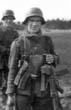
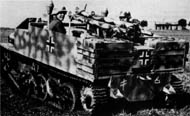
German forces enter an Athens wracked by street battles between fascist and socialist elements. The Germans back the pro-fascist faction and quickly help crush the socialists. The Greek government has already fled for Crete.
December 13th 1946
Due to a lack of fuel the British 3rd army has been forced to go completely on the defensive, entrenching itself along with other Greek and British forces in and around Karditsa. The rest of mainland Greece is in Axis hands. British and Crete aircraft continue to operate out of Crete, now reduced to harassing Axis forces and bombing transportation hubs.
December 24th 1946
The railroad connecting the Soviet Union with India, via Afghanistan, is completed. The Soviet Union now has access to trade with the outside world for the first time since the start of the Axis - Alliance war. Another railroad through Persia was considered but rejected by the Persian government, they still remember the minor Soviet incursion of 1943.
January 3rd 1947
It has been a hard winter, once again, in the Soviet Union. The widespread starvation of the past three years has made the people exhausted and lesser in number. It has also made them hard. Lavrenti Beria rules with an iron fist, harder than Stalin in some ways but also in a more practical fashion. Beria's purges are not those of random terror, but rather of carefully crafted acts of political warfare. The Red Army is his in every way, as much as the intelligence services have always been. The party apparatus is little more than a tool to be wielded by Beria and his inner circle, ruling on-high from Moscow.
From Leningrad to Beriagrad (formerly Stalingrad) a massive defensive line scars the barren landscape. Bunkers, emplaced turrets, artillery pieces, multiple rocket launchers, minefields ranging from anti-infantry 'man murderers' to anti-tank traps of heavy 'Cougar Busting' buried mortars. All designed to funnel any German attacked into carefully arranged 'kill zones'.
East of the great 'Beria Line' the Red Army lies coiled like a snake of the deadliest kind, a deadly beast forged in the pits of the Eurasian War and raised through three years of relentless reforms and purges. Armed with new models of the T-34 and a newer, deadlier, tank designated the Su-85. The Red Air Force, armed with a variety of new piston aircraft, lies ready to swamp advanced German planes through brute force of sheer quantity.
New rail lines link every portion of the long western frontier directly with Moscow and the trans-Ural factories far to the east. And in the Urals, and in the vastness of Siberia, new factories turn out tanks, rifles, and aircraft at a tremendous rate as Soviet engineers blast and build and drill, desperate to exploit the vast untapped resources of Siberia.
And in Siberia, along the long and winding frontier with the Japanese Empire, lay 80 divisions of the Red Army. More tanks and soldiers and artillery than the Japanese can even begin to truly grasp. The ill-trained Manchurian troops and highly trained IJA men facing them hopelessly outclassed by Soviet armor and artillery. At Beria's command they can roll east towards the Siberian coast, with only the Japanese Navy and Air Force, with their ability to support their ground forces, to offer a realistic threat.
The Soviet Union is an armed camp, her people loyal to the Party, to Beria himself, and ready to sacrifice everything in the name of socialism and for the defense of the motherland. And yet the Soviet Union is a weakened beast, desperately short of fuel and food, barely managing to produce enough food, spare parts, and manufactured goods to keep her command economy up and running. Beria knows the situation cannot last forever. Without the lands lost to the Axis Powers and trade with the outside world the Soviet Union will eventually collapse as her people slowly starve and her industry gradually grinds into dust.
The solution was obvious. Only the timing was to be determined. In the west the Germans, and in the east the Japanese, both kept a weary eye on the menace that was the rump Soviet Union.
At his desk, in a recently completed steel-reinforced concrete command bunker underneath the Kremlin, Beria read through the latest reports issued by his military and intelligence leaders, as well as reports on food and civilian production. He knew his mind was made up. Everything was on track to seek vengeance on the fascists. He need only wait, continue to build up towards his force-strength goals. When the Red Army moved west and east it would be with a weight of firepower and maneuver never before seen in the annals of war. The offensive would be short, rapid, and overpowering, to maximize the reserves of oil the Soviet Union still possessed. It would be the ultimate throw of the dice, a tremendous gamble, but a well calculated risk.
To imagine this ATL Soviet Union of early 1947, think of a much larger version of North Korea, with all the same near-worship of the leadership, all encompassing propaganda, and fanatic militarism.
January 6th 1947
On Luzon, in the Philippines, Japanese forces have begun to push the Americans and Philippines back in some places as the defenders run low on heavy equipment and more Japanese troops and equipment come ashore. However, the situation is still a tactical stalemate. The Japanese continue to prepare for a second series of landings in the Philippines but those plans have been put off until Spring.
January 14th 1947
The last British and Greek forces in the 'Karditsa pocket' surrender due to lack of fuel, ammunition, and food. Several futile attempts to supply the pocket by air were shredded to pieces by German, Italian, and minor axis aircraft. Mainland Greece is now under Axis control, though Crete remains firmly in Alliance hands.
January 18th 1947
Greece is annexed by Italy, Bulgaria, and Turkey. Italy gets peninsular Greece while Bulgaria and Turkey split the eastern strip.
Hitler announces to the Axis Powers that Germany will establish naval bases in several of the newly occupied Greek ports in order to begin to establish a Kriegsmarine presence in the Mediterranean. Germany already has a small fleet operating out of Sevastopol in conjunction with the Turks on the Black Sea. Mussolini is privately upset that Hitler is intruding in 'his Mediterranean' but given the fact that he needed German help to conquer Greece he can't publicly voice his concerns.
January 24th 1947
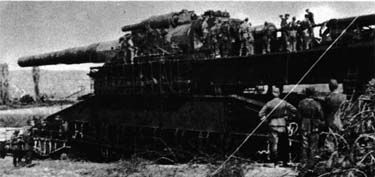
With the siege of Gibraltar entering its sixteenth month, the German high command has decided to try something new. In the early morning hours a monstrous 80cm 'super-heavy' artillery cannon is carefully set up by German field engineers. Carried in parts over the fragile Spanish rail network and then on hastily constructed rail lines to the frontier with Gibraltar itself, it was a miracle it had arrived at all. Gibraltar's gallant defenders will come to call the gun "The Beast". It and other, lesser, heavy mortars and artillery, as well as bombers, will make their lives hell for some time to come.
January 26th 1947
In central-eastern China another Japanese offensive comes to a ragged halt, blocked more by terrain and logistics than by actual Chinese resistance. Nationalist China has spent a lot of costly Alliance and U.S. weaponry in hopeless counter-offensives in the north and south, with virtually nothing to show for it. Chiang Kai-Shek has been lobbying for Chinese entrance into the Alliance for Democracy for years and it has finally paid off, thanks to the Japanese. At 12:00 AM China became a member of the Alliance for Democracy.
January 28th 1947
German scientists succeed in creating a controlled, sustained nuclear chain reaction. Werner Heisenberg , unaware of the proto-cancer forming deep in his left lung, a consequence of his earlier radiation exposure, receives congratulations from Hitler in a top-level Nazi ceremony several months later. Hitler has become convinced that the Americans are arming themselves with 'Jewish weapons of insidious design' and has demanded that 'Aryan science' foil this supposed 'plot'.
February 5th 1947
The Panama Canal is officially re-opened to all traffic. President Dewey, on hand for the event, addresses the American people live via radio, calling on them to "...display patience and fortitude through times ongoing and the times yet to come, for America's hour will be at hand..."
Famous photographs from late 1946, early 1947 :
Black and white, somewhat blurry as if taken in a hurry. Smoke pours from the deck of the USS Lexington. Jets of water arch in the background. In the center of the scene, backed by roaring flame, a crewman, a look of rugged determination etched on his smoke-smeared face, carries a wounded comrade. The photographer, an obscure United Press correspondent by the name of Walter Cronkite, will win the Pulitzer Prize for the dramatic photograph.
Clear and in vivid color. London as seen from St. Paul's, looking towards Trafalgar Square. The damage from a year of sporadic bombing and frequent ballistic missile attacks is clearly evident. Some buildings show the scars of damage, a few are nothing more than piles of rubble. Most, however, show no signs of wear or tear. A dark streak can be scene against the blue sky. It is the falling A2b missile that will, a fraction of a second later, crash into Thameslink station shortly after 5:34 PM; the two thousand pound high explosive warhead and kinetic energy of the falling missile combining to kill over eight hundred commuters in the busy station and wound several thousand more. The recent slowdown in the rate of ballistic missile attacks had convinced the authorities to lift restrictions on the use of the stations, restrictions that had been in place since the beginning of the war.
Dawn in Athens, Greece. Crisp black and white. The sun sinks behind a pall of smoke and haze. German panzergrenadiers are visible in the foreground, advancing in staggered order down a rubble filled street. In front of them are the charred remains of a devastated residential district. White flags hang from the windows of the few standing buildings. In the center of the picture two German soldiers, armed with StGw-44 assault rifles and dressed in urban camouflage, raise the swastika over a partially destroyed fountain. A few Greek civilians, appearing dazed and terribly sad, stare blankly at the soldiers.
To Be Continued...
Back to Part 36