
HOME
Up
the CVWC Club
Club Officers
Becoming a Member
Meetings Schedule
Newsletter
At the Meetings
Activities
LINKS
CVWC Member Showroom
Contact Us
Contest 2002


Club patches and Hats available
for sale
We now offer both a hat and our club patch for purchase.
The three inch oval patch contains four colors and is $5.oo. The hat is
an adjustable cotton hat and is $15.00. Make checks payable to CVWC,
PO Box 1073, Hickory, NC 28603. Please send a SASE.
UPDATED 1/20/2003
 P
O Box 1073, Hickory,
NC 28603 P
O Box 1073, Hickory,
NC 28603
or  to
[email protected] to
[email protected]
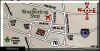
CLICK HERE for directions
to "Klingspor's Woodworking Shop" where we have our meetings.
Site created,
edited, and maintained by
our webmaster &
club member Richard Grant.


COPYRIGHT © 2003
This web site is
fully and completely protected by International Copyright Law. All
images, articles, content including but not limited to text and photographs are
copyrighted and therefore may not be reproduced, copied,used in any manner what
so ever without the express written consent of the owner.
| |
workshop safety
back to Carving Tips
|
Mental &
Physical Acuity
- Are you able to concentrate and work safely?
- Never work while tired or taking medication.
- Try not to rush the job.
- Be aware of your attention or lack of it to the job – repetitive
cuts can lend themselves to day dreaming.
- Avoid distractions – never surprise someone who is working with
tools.
- Standing on a concrete floor for long periods of time can tire leg
& back muscles. Reduce muscle strain by laying a resilient rubber
anti-fatigue mat (available at industrial tool supply stores) or a piece
of foam-backed carpeting on the floor in front of your work area. Wear
sturdy, quality work or athletic shoes, and have a stool to further
reduce fatigue.
Back to top
|
|
General
Environment Safety Checklist 
|
Make sure your work surface is at a
comfortable height with plenty of room to set out your tools and
workpiece.
A fully equipped First-Aid box should be
present and readily accessible in every workshop.
No open flames or tobacco smoking!!
Evaluate the lighting conditions in your
workshop:
Adequate lighting is necessary to the safe
use of sharp hand tools or the operation of power tools. Shadows and dim
lighting increase fatigue and contribute to measurement errors.
Protect light fixtures from flying wood
chips by covering them with metal window screening or wire mesh.
Make sure that a grounded outlet of correct
amperage for your power tools is close by. This outlet should be below
the level of your work table so that any electrical power cords will not
interfere with work. Keep all electrical cords and extension cords free
of entanglement with loose materials. Be certain all power cords are not
worn or damaged but in good repair.
Keep the floor area clear and wipe up all
spilled liquids immediately to prevent a slipping hazard.
Ensure that you can easily and safely work
around your bench – no sharp edges or corners sticking out.
Use a mask or respirator to protect against
the toxic vapors from oil-based paints and solvents, and sawdust. This
can prevent lung irritants and disease.
Store and arrange tools and equipment
safely, securely, and conveniently.
Bag up and remove dust and debris
frequently – especially rags that are used for finishing.
Look over your wood stock, inspecting for
loose knots, twists, cupping, or wet lumber. These conditions can cause
trouble, especially with power tools.
Back to top
|
|
Clothing
and Protective Gear 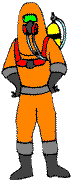
|
- Dress properly for your own physical
protection. Use a leather apron, leather glove, and thumb guard.
Clothes should not be loose enough to get caught in moving tools.
- Remove all rings, bracelets, necklaces,
etc. Keep loose hair and sleeve cuffs tied back out of the way.
- Always wear protective glasses or
goggles. Grit and sparks can penetrate the eyeball.
- If your work is noisy, wear ear plugs or
muffs.
- Wear a dust mask to protect against
sawdust and microscopic particles. Some wood dusts are toxic and all
are not good to breathe.
- Use a rigid foam head (wigs) to store
safety equipment. Put the head in a noticeable place as a reminder to
use eye protection, hearing protectors, and other safety gear.
- Tools guards and rests should be properly
adjusted and used.
- Wear disposable rubber gloves when
working with solvent-based liquids. These liquids are strong skin
irritants and can cause burns or blisters. Some are absorbed through
the skin and can cause serious health problems.
Back to top
|
|
General
Hand Tool Safety 
|
- Think through each operation before you
execute it. Where is the knife/gouge blade going if it slips?
- Never cut or exert pressure towards any
part of the body.
- A tough glove is recommended when rasps
are being used.
- Both hands should be on the carving tool
with the blade hand resting on the wood.
- Use the thumb of the hand holding your
work as a pivot or guide to control the cutting – never cut toward
the hand holding the work.
- Only use a tool if it is in good
condition. Keep your tools sharp.
- Always wear protective equipment such as
safety glasses or goggles and dust masks.
- Always keep your hands and limbs well
clear of the cutting part of any tool.
- In vigorous mallet work, especially with
very hard, brittle or old and dry woods, eye protection is advisable.
- Never try to catch a falling carving
tool. Carve in footwear strong enough to protect your feet from
falling tools.
- When sanding, use a dust mask, never
blow, and protect your eyes.
- Never let children "play" with
your tools or leave them alone in your workshop.
- Do not use any tools while under the
influence of medication, alcohol, or when fatigued.
- Keep your tools in good working order,
and keep your work area organized and clean.
The primary safety considerations for power
carving are: dust inhalation and fire hazard resulting from improper dust
collection and disposal.
Back to top
|
|
DUST
INHALATION 
|
|
Minuscule particles of wood dust are
propelled into the air and directly at the face, due in part to bit
rotation and to the carver’s head position. These minuscule particles
hang suspended in the air for hours and any air disturbance causes them to
rise, suspend, and resettle again.
Very fine dust, when inhaled, goes right
down into the deepest part of the lungs. No inhaled dust is good for you,
but some species of wood are more toxic than others, and may also contain
fungus, bacteria, and mold spores.
Continued inhalation eventually coats the
lungs and the lungs try to expel the intrusion by coughing, which causes
some of the dust to clot into a mass. Health problems such as emphysema
and nose cancer can eventually develop.
The texturing process and sanding and
smoothing can cause the following problems if a dust collection system
isn’t used or proper precautions such as a face mask/respirator aren’t
taken: dry throat, harsh cough, congestion in the lungs/chest, dry
scratchy eyes.
In the studio or working area, a sufficient
dust collection system is the most important consideration above all. For
work that generates excessive amounts of dust, a portion of which the
collection system might miss due to size of piece or inability to route
the entire amount to the intake of the collector, a dust mask with a
filter rated sufficient for wood dust should be used.
Ventilate your workshop so that harmful
vapors and fine dust particles are blown out. For good ventilation, your
home workshop should have at least 2 windows, or one window and a built-in
exhaust fan.
Keep a small fan blowing either across and
into the intake of the collector or over your shoulder and into the
collector intake when executing excessive dust generating operations.
Back to top
|
|
FIRE
HAZARD 
|
|
Fire hazard presents the next primary danger
to an area where dust is not collected and disposed of. Install a smoke
alarm and fire extinguisher. Anywhere dust has settled, a fire path is
presented from the spark or flame source to anything combustible within
the shop. Uncontrolled and uncollected, airborne dust particles settle and
build up on any exposed area or item in the work area. In a studio
workshop, where all aspects of carving are dealt with many situations are
presented wherein a spark is generated.
A few worthy of consideration are:
- electrical motors and any heat or spark
generating electrical appliances.
- switches, outlets, and light bulbs.
- sparks generated from grinding metal when
sharpening tools.
- assembling metal armatures, bird legs and
supports with soldering iron or torch.
- heating elements.
- torches used for soldering and bit
cleaning.
- improperly stored finishes.
- spontaneous combustion from improperly
discarded or un-cared for finish rags, brushes, wipes.
- tobacco smoker.
Back to top
|
|
General
Safety with Power Tools 
|
- All floor machinery and portable hand
tools should be inspected and kept in safe working order. Every item
should have a proper place for storage and use, with consideration
given long beforehand to how its use will affect surrounding areas.
- Be very judgmental when it comes to how
machines are placed, set-up, and used in your shop.
- Care must be given to each machine in its
turn with respect to safety through use, location, surrounding area,
accessory use/storage, safety devices, electrical set-up,
blade/guides, and waste disposal.
- Read and study the owner’s manual. This
will familiarize you with the mechanical features, their adjustments,
and general instructions for operations the tool.
- Use whatever safety-related devices are
provided by the manufacturer, such as guards and hold-downs.
- Only use a tool if it is in good
condition. Be certain the switch operates properly.
- Do not leave any machine unattended with
the power on.
- Be aware of the potential danger when
operating power tools. Keep your hands on top of the workpiece. Hold
the workpiece down fair and square on the work table.
- Make sure the power tool is properly
grounded with an appropriate three-prong electrical plug and grounded
receptacle that is equipped with a ground fault interrupter.
- Do not use any tools while under the
influence of medication, alcohol, or when fatigued.
- Keep your tools in good working order,
and keep your work area organized and clean.
Back to top
|
|
SPECIFIC SAFETY WITH POWER
TOOLS
|
|
Bandsaw:
|
Always set the blade guides properly and
accurately.
Feed the wood into the saw lightly and let
the machine do the work. Never direct the pressure of your hands towards
the blade; keep them as far away from it as is practical.
Make stop cuts where necessary or work away
the waste in smaller pieces – rather than getting the blade stuck in a
position from which it cannot extract itself.
Curves are cut better if you think of
working from the back of the blade rather than just the teeth.
Ensure the correct width of blade is being
used for the curves to be cut, with the appropriate tension.
Always set the safety guards correctly
within ¼ inch of the wood surface and only adjust them with the machine
stopped.
Take care when coiling or uncoiling the
blades – gloves are recommended.
Back to top
|
|
The Arbortech:
|
The grinders to which the Arbortech is
fitted have a no-load speed of around 11000-rpm so dust and chips are
flung quite violently from the blade.
There are guards available to reduce the
effect, but face masks and eye and ear protection, as well as tight
sleeve cuffs, are all necessary.
Always sharpen or adjust the blade with the
machine isolated.
Back to top
|
|
Foredom 
|
- The cutters, burrs and sanding discs
create a very fine dust when used, especially on hard wood, so a
facemask is necessary.
- Chips of wood can fly off and it is
possible for a cutter or burr to break, so eye protection is
essential.
- Always use a cutter or other accessory
at, or below, its maximum rated speed.
- If a cutter is used above its maximum
speed, it could fly apart, bend, or otherwise be damaged.
- Never use a bent or damaged cutter or
burr – or one that vibrates or chatters – throw these away.
- Never force or pressure the accessories.
Back to top
|
|
Foredom Bits 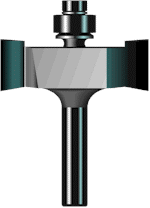
|
If a bit with a head that is made from a
composition that dictates a low speed is operated beyond its capability,
the torque generated by extreme RPMs can cause the bit to break up and
break away from the shaft, sending particles in all directions.
Bits and accessories should be inspected
for cracks or flaws before use.
Never use or continue to use a bit that
appears to be damaged, loose, vibrating, or out of balance.
Back to top
|
|
Woodburner:

|
Don’t use excessive pressure when texture
burning – learn to adjust the heat setting to make it work for you
instead of stressing the pen and tip.
Check the owner’s manual or with the
manufacturer to find out whether it is recommended that the unit be
turned to full power to "condition" new tips or to burn off
carbon – some say yes, some say no.
Use care and common sense in how you clean
and/or re-sharpen the pen tips. If you use a stone, sandpaper, or a
harsh abrasive, you will wear out the tip prematurely, and in some
cases, modify or hinder its former use. Use a leather strop or buffing
wheel with fine polishing rouge, and learn to work at the lowest
temperature necessary to achieve the result you want.
Always keep the unit out of the reach and
away from children. Tips are sharp and very hot, and will burn skin
easier than wood.
Whenever you burn, assume a comfortable and
relaxed position, with respect given to arm, head, body, and leg
position. For example, if you begin to feel stress in the back of your
neck, change the angle you are holding the work, or adjust the height of
your seat to relieve the strain.
Always work with sufficient quantity and
quality of light. Use a shadow light that creates a shadow with each
stroke, making it easier to place and register strokes.
Turn the unit OFF whenever you leave it –
not only will you avoid a fire hazard, but you will prolong the life of
the burning tip. Most burning tips will heat the tip to operational
temperatures in less than thirty seconds – time well spent when
considering the possible alternatives that could occur by not turning
the unit off.
If a unit begins to make noise or buss,
turn it off, allow the pen to cool, and change pens. Usually, an
occurrence such as this is indicative of a shorted pen. If the noise
continues with a new pen, you should contact the manufacturer to
ascertain the cause of the problem and/or make arrangements to return
the unit.
Keep wood scraps available to check heat
settings and to practice strokes. To maintain uniformity, the test piece
should be the same type of wood as the carving you are, or will be
working on.
Back to top
|
|
Modifying
or Creating Power Tools 
|
- The shape of carving tools can be
modified while they are cold, while being heated, or through a
combination of both, depending on what is needed.
- The woodcarver’s environment tends to
be dry and contains inflammable wood chips, finishing agents, etc.
Work away from these items.
- Never leave a naked flame unattended.
Keep water, fire extinguisher, or fire blanket near by.
- Make sure a source of heat is safe before
using it. Do not clamp a hot torch to a wooden surface.
- Have good ventilation – fumes arise
from the use of torches and other heat sources, as well as from
quenching blades in oil.
- Remove the wooden handle completely
before heating up a blade. Even is it does not burn the handle, an
expanding tang may loosen the hole.
- Sharp tools left champed in vices with
their tangs and edges exposed are very dangerous.
- Eye protection, if not a whole face
shield, should be worn.
Back to top
|
|
Shellac,
Oil, & Wax Finishes Safety:

|
Follow all instructions and advice on
packages, especially with bleaches and other caustic finishes.
Use and store turpentine,
spirit-and-oil-based stains, as well as all other finishes, in
well-ventilated areas.
Keep containers closed when not in use;
keep them away from children, heat, and naked flames.
All brushes should be cleaned properly, and
used rags sealed in plastic bags, and disposed of away from the
workshop.
Avoid inhaling the vapors, or allowing
vapors to contact skin and eyes.
Hands soiled with oil-based paints and
stains can be cleaned with ordinary salad oil. Never use kerosene or
mineral spirits, or other solvents to wash skin because the hazardous
materials are skin irritants and can be absorbed by the body.
Back to top
|
 |
|
Keep a well-stocked basic First-Aid Kit in
your shop where it can be reached easily. Always replace what you use as
soon as possible. Carvers should always be up to date on their tetanus
shots.
Equip your kit with:
- A variety of bandages
- Needles and tweezers
- Antiseptic ointment
- Cotton swabs
- Cotton balls
- Eye drops or eye bath & wash
- A first-aid handbook
- A chemical cold pack
- Elastic bandages
- First-Aid tape
- Sterile gauze
- Scissors
Possible Injuries:
Cut or stab to the hand or finger:
- Cover the entire wound with a thick sterile
or clean cloth pad.
- Press firmly on the entire wound for 10
minutes without releasing pressure.
- If possible, raise the injury above the
level of your heart.
- When bleeding stops, wash the wound with
warm water and soap.
- Apply antibiotic ointment and cover wound
with an adhesive bandage or clean gauze.
Cut off finger or thumb:
- Cover the entire wound with a thick sterile
or clean cloth pad.
- Apply direct pressure to the wound.
- If possible, raise the injury above the
level of your heart.
- Seek medical attention immediately!
- If bleeding doesn’t stop, apply a
tourniquet.
- Wrap the amputated part in a cold, damp
cloth, but do not place in water.
- Place the wrapped part in a plastic bag,
and put the closed bag inside a second container full of ice.
- Avoid direct contact between the part and
the ice.
Tore off thumb/finger nail:
- If the nail is not detached – put it down
and place a band-aid on.
- If the nail is detached – use antibiotic
ointment and band-aid to let the nail grow in under it.
Tore off piece of skin:
- If there is a flap left – place the flap
back and apply direct pressure.
- Use ice in a paper towel or cloth to help
stop the bleeding.
- If needed, go to emergency to get stitches.
If not, place a band-aid on wound.
Inhaling paint fumes:
- Get fresh air immediately.
- If continue to wheeze, go to emergency.
- If loose conscientiousness, go to
emergency.
Burns:
- Immerse in cool water until pain lessens.
- Gently pat dry with a sterile or clean
cloth.
- Cover the burned area loosely with a
sterile or clean dry cloth.
- If skin is tingling or has no feeling go to
emergency.
For any serious cuts, punctures, burns, or
other injuries, seek medical help immediately!
Back to top
|
back to carving
tips |