 |
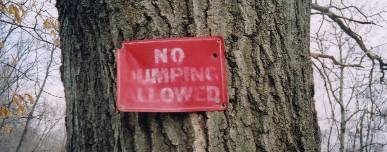 |
| NO DUMPING ALLOWED |
 |
| Litter of All Sorts |
 |
 |
| Litter. How does it happen? Human error? Litter happens in many ways, most can be prevented. Litter is an issue of pollution, because most of what goes out in a garbage can is not biodegradable, meaning it will stick around for years. Chances are that if something in your garbage can is not biodegradable it is actually something that can be recycled instead. If your waste is not reused or recycled, please be sure it will at least make it to a proper waste receptacle. |
 |
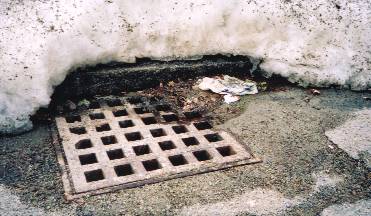
| Sanitation is a necessity in human society. Wastewater management facilities have a difficult enough time cleaning out what is meant to go down the drain. Some of the pollution on the streets will luckily make it to the wastewater facility to be cleaned out, though much of it will end up in wetlands, rivers, and oceans. Pollution is something that comes back to us in the form of harm. Waste that comes from sewers and septic trucks with household and restaurant waste usually goes to the wastewater facilities. |
 |
| Water Management Example Lowell Wastewater facility process described in basic form: Large particles of garbage, such as litter and sticks that wash into sewers, are sifted out of wastewater and sent to a landfill or incinerator. Other sludge is cared for in large tanks where the water is kept to a minimum flow current, allowing sludge to separate by density. Some will float to the top of the tank, where it is skimmed off. Some will sink to the bottom to be scraped out. In another tank, aeration occurs along with a biological process using special bacteria to break down any sludge in solution. After the water is sent to a third tank to settle out bacteria, chemicals are then used to neutralize any "hazardous" chemicals traveling with the water. From here the water is sent into the Merrimack River. (See Pollution In Perspective on Basic Sustainables Page 4) |
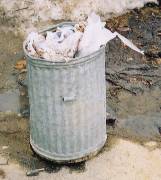
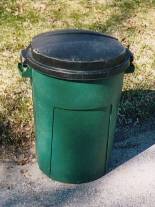
| The garbage can to the left is an example of how household waste can make it into the natural environment. When not contained properly (e.g., bagged, tied up, and covered) like in the photo to the right, curbside garbage is open to opportunities for wind and animals to disperse the garbage all over the ground. Whether it gets picked up or not, is a responsible choice people need to make. It should be picked up, or better yet prevented before it happens. Properly composting your food is also a way to reduce the risk of animals in your garbage. |
| Littering is accidental on occasion, but too many times it is not. Whether it is someone flicking a cigarette butt out their car window, or a pedestrian dropping a candy wrapper or coffee cup, or, illegal dumping of chemicals or large amounts of garbage, it should not happen. Litter does not go away. It may go somewhere else with rain washout. This just means that it will end up somewhere else. Synthetic material and chemicals harm natural chemical processes, which effect all living things, including humans. They do not compost like natural material does. Humans have created them and humans are responsible to care for them. |