


Ireland Information.Com
Irish History By Seamas MacAnnaidh
Christ the King Lord of History By Anne W. Carroll
|
|
|
|
|
|
|
|
|
|
|
|
|
|
|
|
|
|
|
|
| Padraig Pearse: First In Irish Independence | |||||||||||||||||||
|
|||||||||||||||||||
|
|||||||||||||||||||
|
|||||||||||||||||||
|
|||||||||||||||||||
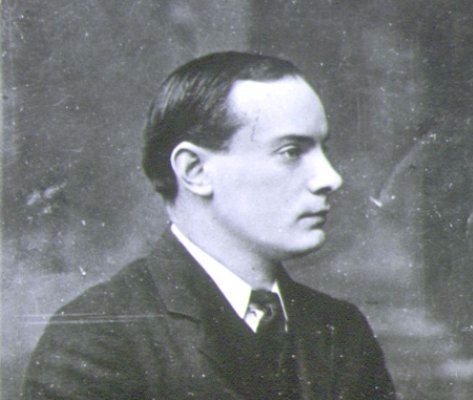
| ����������� There are many proud moments in the history of Ireland, but in the modern Irish republic, especially a few years past when many veterans and witnesses were still with us, whenever anyone thought about the birth of independent Ireland they thought about the Easter Uprising of 1916. It was an uprising that was not successful, in fact in the short term it could be called a disaster. It did not achieve a free Ireland, and it is debatable whether its leaders actually thought it would, but it was the beginning of a new era, a victory for the hearts and minds of the Irish people (which the British unwittingly handed to them), a rallying cry and a point of no return. Before the Easter Uprising the Irish wondered if freedom would ever come but afterwards they only wondered when. Forever after proud Irishmen around the world who might agree on little else could lift a glass, thump their chests and remember the brave men of 1916. The leader of those brave men, the handful of rebels who challenged an empire, was P�draig Pearse. | |||||||||||||||||||
| ����������� He was born Patrick Henry Pearse on November 10, 1879. Like many of the heroes of Ireland, he had some British roots; his father was English and his mother was Irish. His father, James Pearse, was a sculptor and stonemason from Birmingham who moved to Dublin to take advantage of the recent boom in church building there. In 1870 he converted to Catholicism and in 1877 married Margaret Brady who gave birth to Patrick two years later. Although Patrick Henry Pearse was born in Dublin, his maternal grandparents were Gaelic speakers and his aunt Margaret especially instilled in him early on a love of the Irish language. He soon adopted the Gaelic version of his name; P�draig. Thanks to his family he grew to be a very devout Catholic and his love of Irish history and culture drove him to become a great writer as well as a zealous patriot for the cause of the liberation of his country. | |||||||||||||||||||
| ����������� At the age of 16 he joined the Gaelic League and by the time he was 23 was made editor of the League paper. The League was formed to promote the study, and most importantly the use, of Gaelic as the everyday language of Ireland; not just to study the language as a thing of the past but revive it to rival the dominant language of English. Naturally, this went hand in hand with the political ideas of many nationalists and a great many famous Irish republicans came out of the ranks of the Gaelic League. However, Pearse was no rabid fanatic, nor was he anxious for violence. His first instinct was academic. He would reawaken the Irish people to the Gaelic roots, instill in them a better understanding and appreciation for the glorious history of Catholic Ireland and the result would be an Ireland that felt itself independent and that would translate to real independence. Knowledge and education were to be his weapons and toward this end he founded St Edna College near Dublin in 1908. It taught in both Gaelic and English and focused its curriculum around Irish traditions and culture. | |||||||||||||||||||
| ����������� P�draig Pearse is unique among his fellow nationalist leaders in that even if he had not been involved in the liberation of Ireland he would still be remembered today for his literary achievements alone. He was a gifted writer and pioneered modern Irish language writing. His works included stirring poetry, stories, plays, articles and essays most of which revealed his Catholic and patriotic character. However, the content aside, simply by doing so much to spread written Gaelic as a popular literary form did a great deal in itself to revive the Irish culture as something unique and separate from the imposed culture of Great Britain. From 1896 onwards he quickly became the preeminent author of the Irish langauge and succeeded through this avenue alone to bring about a national rebirth of the Gaelic heritage which had not been seen for centuries. However, he was not to remain simply a man of letters. Over time he became convinced that academic encouragement would never be enough to free Ireland from Protestant British rule. Like many before him he came to view open rebellion as the only recourse. | |||||||||||||||||||
| ����������� This might seem like quite a leap for a man who was half English by birth, however, his father had become a Catholic; which in itself was still considered almost treasonous by some diehard Protestants in Britain, he had married an Irish girl and had even come to favor home rule for Ireland as a result of these changes in his life. Perspective has a marvelous way of changing opinions. For P�draig the issue was one of ethnic survival. Of course, he had been raised a devout Catholic and was fed on stories and folktales from ancient Ireland; his favorite legendary figure being C� Chulainn, as well as the sad history of Irish oppression at the hands of the Protestant elites. His devotion to the Irish langauge also undoubtedly played a part in his conversion from writer to rebel. He saw Irish culture on its deathbed, the language especially hardly being spoken at all. If things continued as they were, he feared, there would soon be no Ireland left to raise the slightest resistance; they would forget themselves and cease to exist as a separate, unique people. With this motivation, he immersed himself in the history of the past uprisings in Ireland becoming particularly interested in the early republicans like Robert Emmet and Wolfe Tone. It is one of the ironies of history that so zealous a Catholic as Pearse would be inspired by two radical revolutionaries, both of whom were really unreligious and from Protestant backgrounds. Pearse studied their tactics and ignored their values. For his part at least, his vision was a free, Catholic Irish republic and he saw the struggle to win it in very Catholic terms. | |||||||||||||||||||
| ����������� There was also the instinct to self preservation at work for the Protestant unionist presence in Ireland was already becoming more militant, partly as a result of the very work Pearse had been doing with his school and his writings. Seeing the outcry for home rule growing and their cultural dominance being threatened northern Protestants formed the Ulster Volunteer Force in 1912. Although cloaked in noble slogans the real purpose of this organization was to intimidate Irish Catholics. Pearse decided that this action could not go unmatched so in 1913 he formed the Irish Volunteers in Dublin as an Irish Catholic militia to defend those who favored home rule and who were threatened by Protestant groups like the UVF. The Irish Volunteers attracted a wide variety of members; liberals and conservatives, radicals and moderates. By 1914 this local militia had grown to include over 100,000 members. The British government, which was soon to become embroiled in World War I, definitely took notice and they had good reason to. A great many Fenians had joined the Irish Volunteers since its birth and soon the Irish Republican Brotherhood had formed its own organization within the organization to steer the Irish Volunteers in the direction they wanted: an armed struggle for independence. | |||||||||||||||||||
| ����������� In July of 1914 Pearse himself was given a place on the Supreme Council of the Irish Republican Brotherhood. This move toward men of action did not suit everyone. A notable member, John Edward Redmond, was extremely nervous about the direction he saw the Irish Volunteers taking. He was as patriotic as the next man, but he was a strict constitutionalist. His most notable achievement was persuading the government to entertain another home rule bill for Ireland in 1912 but, as Pearse and his comrades would be quick to point out, it was defeated by the Ulster Protestants which only strengthened the case of men like Pearse that armed opposition was the only choice for Irish Catholics. Redmond and Pearse represent the extreme opposites of a division that split the Irish Volunteers after 1914. Redmond not only still favored sticking to the constitutional route to achieve home rule under British sovereignty; when World War I did break out he urged his fellow Irishmen to support the British war effort in the hope (entertained by many Irishmen before him) that Britain would grant concessions afterwards in return. For Pearse, and those like him, this was unthinkable. Germany and certainly Catholic Austria were not the enemies of Ireland, in fact they shared a common enemy which was the British Empire. The old Fenian line came back that, "England's difficulty is Ireland's opportunity". For those who looked fondly on past Irish republican figures like Tone, as Pearse did, this was clearly the way. | |||||||||||||||||||
| ����������� Nonetheless, at this early date many followed the call to arms of Redmond and enlisted in the British army. Others, disheartened by the division simply refused to take either side. Still another group rejected the idea of fighting the Kaiser in the cause of King George for fear that this would send the message to the world that the Irish call for freedom was not all that serious but nonetheless hesitated from making any open challenge to British rule while the war was being waged. This disagreement, between Redmond and Pearse, may well have sealed the fate of the rebellion already being considered by core members of the Volunteers and certainly by the IRB. Had the Irish Volunteers led an uprising at their full strength while Britain was stretched to the breaking point on the continent there are any number of alternatives that could have come about. As it was, the diehard Irish Volunteers who remained, Pearse among them, were reduced to 15,000 men under Eoin MacNeill. The Irish Republican Brotherhood made the plans behind the scenes and in 1915 P�draig Pearse was named director of military operations for the group. | |||||||||||||||||||
| ����������� By this time military planning for an uprising against the British were well underway, though MacNeill and the rest of the Irish Volunteers outside of the IRB knew nothing about it. For as many had followed the call of Redmond and enlisted in the British army, many more were alienated by it. It seemed to be the same false hope Ireland had fallen for time and again in the past and this in turn increased the numbers of the IRB and made Pearse all the more popular for openly rejecting the British call to arms. In August of 1915 Pearse gave possibly his most famous speech at the graveside of the Irish revolutionary Jeremiah O'Donovan Rossa. His words struck a chord across Catholic Ireland and can still be seen to this day scrawled on many a mural in oppressed sections of Northern Ireland. He said, "...This is a place of peace sacred to the dead, where men should speak with all charity and all restraint; but I hold it a Christian thing...to hate evil, to hate untruth, to hate oppression, and hating them to strive to overthrow them...while Ireland holds these graves, Ireland unfree, shall never be at peace". For Pearse, these remarks were tantamount to his own declaration of war against Protestant Britain. | |||||||||||||||||||
| ����������� His war was to come on Easter Week of 1916, a time of particular significance to Pearse. Of course we know that Irish independence did not come in 1916 and it has since been much debated whether or not the leaders of the Easter Uprising actually believed they had a chance to succeed given the divisions and disorganization that had afflicted them. In the case of Pearse at least it seems he must have known the exercise would be futile, but he also saw this from a very Catholic and somewhat fatalistic point of view. This Easter week, this rebellion, would be the passion play of Ireland; a blood sacrifice that would inflame the masses and bring about the national salvation (Irish independence) that he and so many others had so long dreamed of. It was certainly a diverse group that was brought together by the uprising. The core included men like Pearse of the Irish Republican Brotherhood, there were also moderates such as MacNeill who they planned to make use of, socialists like the Countess Markievicz and even monarchists who wanted the German Prince Joachim of Prussia put on the throne of a free Kingdom of Ireland. | |||||||||||||||||||
| ����������� Pearse was to head up the whole enterprise, but things went wrong from the very start on Good Friday. Roger Casement, one of the leaders, was arrested and the weapons he had with him were confiscated by the British. He had also been on his way to tell his compatriots that they could expect no open assistance from Imperial Germany. Pearse nonetheless gave the signal for the uprising to go ahead, the secret call to arms for the Irish Volunteers. But, Eoin MacNeill, who had been left out of the planning and who had advocated making no trouble for Britain during the war ordered the Irish Volunteers to stand down, which caused many Irish Catholics across the country to believe that the whole enterprise had been cancelled. Operations were postponed for a day and any chance, however small, the uprising had of achieveing any military success ended then. What would remain would be a heroic act of principle, an open show of defiance that would be a first step rather than the fulfillment of the goal of total liberation. | |||||||||||||||||||
| ����������� The uprising that did finally take place in Dublin was effected by 1,000 Irish Volunteers and 200 men of the Citizen Army under James Connolly. Pearse was to be the spokesman of the group but in the absence of any other was proclaimed provisional President of the Republic of Ireland after the troops had seized the General Post Office along with other government buildings and issued their declaration of independence. The British were taken by surprise and responded with ferocity and brutal force. What even many Irish Catholics considered a simple little show of symbolic defiance the British met as though facing German soldiers on the western front. This was in part the result of British embarassment. As was the case with most other Irish uprisings the British had known about the plan long beforehand but had wrongly assumed that by arresting Casement and intercepting his German guns they had nipped the rebellion in the bud and thereafter let their guard down. Even many who took no part in the uprising were shocked by the brutality of the British forces sent to crush it. In the face of this retaliation, after a week of defiance, Pearse ordered his forces to lay down their arms and surrender so as to avoid the bloodbath the authorities seemed intent on. | |||||||||||||||||||
| ����������� P�draig Pearse, along with his brother and all the other leaders of the uprising were quickly arrested and sentanced to death for treason. Fourteen others, besides Pearse, were put to death, the sole survivor among the leadership being Commandant �amon de Valera who was saved by his American birth. As usual, a wave of British retaliation followed the uprising. Anyone suspected or accused of rebel sympathies or anyone found with a weapon could be shot on sight. Irish homes were raided in the dead of night and in the years that followed Protestant former soldiers were enlisted into a special force the Irish named the Black and Tans to terrorize the Irish Catholic population. Their actions were egregious enogh to cause an international outcry against Great Britain and finally force some concessions to be made. Unintended though it was, the British government had turned a military defeat for the Irish rebels into a public relations victory. Observers already shocked by British brutality in dealing with the uprising were further amazed by the execution of the 15 men including P�draig Pearse whose life was taken on May 3, 1916. The British government had unwittingly turned a group that could have been seen as failed and foolish dreamers into a group of secular martyrs who gave their lives for Irish independence. The response, which was seen around the world as totally out of proportion to what was a weak show of defiance succeeded in ensuring that Britain was viewed as the villain in this story. | |||||||||||||||||||
|
|||||||||||||||||||
|
|||||||||||||||||||
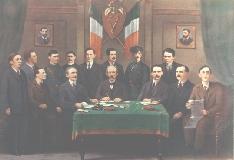
| The men of 1916 | |||||||||||||||||||
| ����������� It is true that P�draig Pearse succeeded in death what he could not achieve in life. In part because it was so diverse and disorganized the Easter Uprising was able to become all things to all people. It became a rallying cry for future generations who remembered the words of Pearse that, ?There are many more things more horrible than bloodshed and slavery is one of them?. He died in a failed insurrection but he inspired an entire country to continue the fight until the day that Irish freedom was achieved and the Republic of Ireland became a reality. Pearse may have looked to men like Tone and Emmet for his example, but generations of Irish Catholics since have looked to P�draig Pearse as their role model. His memory is still honored and his words still remembered by proud Irish men and women of every variety. | |||||||||||||||||||
| "Our foes are strong and wise and wary; but, strong and wise and wary as they are, they cannot undo the miracles of God Who ripens in the hearts of young men the seeds sown by the young men of a former generation. And the seeds sown by the young men of '65 and '67 are coming to their miraculous ripening today. Rulers and Defenders of the Realm had need to be wary if they would guard against such processes. Life springs from death; and from the graves of patriot men and women spring living nations. The Defenders of this Realm have worked well in secret and in the open. They think that they have pacified Ireland. They think that they have purchased half of us and intimidated the other half. They think that they have foreseen everything, think that they have provided against everything; but, the fools, the fools, the fools! -- They have left us our Fenian dead, and while Ireland holds these graves, Ireland unfree shall never be at peace." | |||||||||||||||||||
| - P�draig Pearse | |||||||||||||||||||
| Sources: Ireland Information.Com Irish History By Seamas MacAnnaidh Christ the King Lord of History By Anne W. Carroll |
|||||||||||||||||||