 |
|
|
|
|
|
|
|
|
|
|
|
|
|
|
|
|
|
|
|
|
|
|
|
|
|
|
|
 |
|
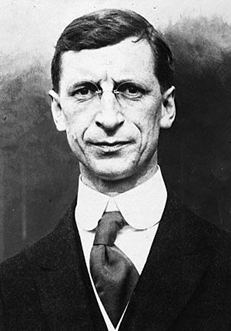
President �amon De Valera |
|
|
|
|
|
|
Father of the Republic of Ireland |
|
|
|
|
|
 |
|
 |
|
|
|
|
 |
|
|
|
|
|
|
|
|
 |
|
|
|
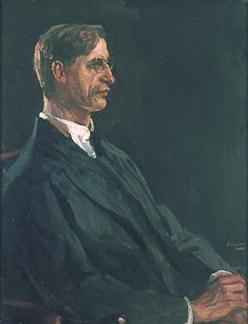
����������� No man has shaped modern Ireland more than �amon de Valera. Still a somewhat controversial figure, he has his supporters and his enemies even today. In many ways he created the Irish republic and yet it would not be entirely correct to say that Ireland would not be what it is today without him, since, in many ways, Ireland has moved far and fast from the country he built and the future he envisioned. He was a combination of many things; an Irish republican, a liberal nationalist and a conservative Catholic. He was also American born and always seemed to have hints of American faith in the common man and democratic republicanism. He was also certainly an idealist and often had to walk a thin line between what he considered ideal and what he considered obtainable. An Irish statesman without equal, he served as president of the council of the Irish Free State (which he had opposed) from 1932-37; he served as Taoiseach of the Irish republic from 1937 to 48, 1951 to 54 and again from 1957 to 59. He served as the third President of Ireland from 1959 to 1973 and wrote the 1937 constitution. Even if the Ireland of today is not exactly as de Valera left it, no single person has had a greater impact than he. |
|
|
����������� Edward George de Valera was born in Brooklyn, New York, on October 14, 1882 to an Irish immigrant mother and a Spanish father from Cuba. From very early in life he became a very devout Catholic and in his youth seriously considered joining the priesthood. His father died when he was very young and his mother remarried (to an Englishman) who converted to Catholicism and one of the children of that union did become a priest; Father Thomas Wheelwright. Nonetheless, de Valera would throughout his life be defined for his Catholicism and his devotion to Irish independence. Following the death of his father he was sent to live with relatives in CountyLimerick, where his mother was from. After finishing his education as the University of Dublin he worked as a math teacher and in 1908 joined the Gaelic League. This organization worked to promote a revival of the Gaelic language and to preserve Irish culture and traditions. P�draig Pearse was also a member. He quickly adopted the familiar Gaelic style of his name and became known thereafter as �amon de Valera. It was also in the Gaelic League that de Valera met his future wife, Sin�ad Fhlannag�in, whom he married in 1910. A devoted wife, she eventually gave him seven children, but family life had to compete with de Valera with his goal of liberating Ireland from British rule. |
|
|
|
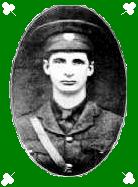
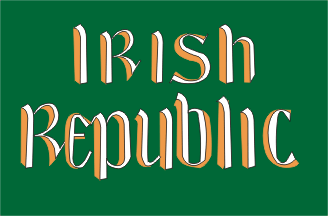
����������� In 1913 de Valera joined the Irish Volunteers, an Irish Catholic militia formed in response to the creation of the Ulster Volunteer Force by northern Protestants in 1912. He soon became prominent in the organization, becoming a battalion commander in the preparations for the Easter Uprising of 1916. By this time, the Irish Volunteers included many members of the Irish Republican Brotherhood and de Valera himself joined the IRB, being sworn in by no less a figure than Thomas MacDonagh, a friend of Pearse and a leader in the planned rebellion. When the uprising came, de Valera led his troops, not playing a major role but certainly gaining his Irish nationalist credentials. When, after a week of resistance, Pearse ordered the Irish to surrender, de Valera was hurriedly arrested, convicted of treason and sentenced to death. However, he was saved because of his American citizenship, with his mother working hard on his behalf. Britain was desperately trying to win the United States to her side in World War I and the last thing Britain needed was to execute an American citizen fighting for Irish independence, especially since there were so many Irish Americans who sympathized with their cause. Because of all this his sentence was reduced to life at hard labor but he was released in an amnesty the next year. |
|
|
 |
|
|
|
 |
|
|
|
|
|
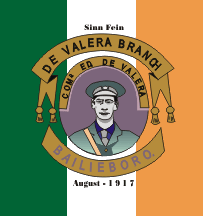
����������� However, by 1918, �amon de Valera was in a British prison again; this time because of accusations that he had plotted against Britain with Imperial Germany. He was able to escape though and became more involved with the political (rather than military) struggle for Irish independence. He was elected to a seat in the British House of Commons (which he could not take of course) and became president of Sinn F�in. Since its founding, the party had moved from advocating an independent Irish kingdom which shared a crown with Britain to calling for a totally separate Republic of Ireland. In dealing with Sinn F�in the British were their own worst enemies. They blamed the Easter Uprising mostly on Sinn F�in (which was untrue but widely believed) and this, combined with the executions following the rising and the brutal retaliation that followed succeeded in making Sinn F�in seem like the greatest heroes of Irish freedom and extremely popular among Irish Catholics. As a result, Sinn F�in under �amon de Valera won a huge majority of the Irish seats in the 1918 elections. |
|
|
|
����������� The next year Sinn F�in formed the D�il �ireann (Irish parliament) in Dublin and �amon de Valera served as the first president of this body from 1919 to 1920. This was meant to be the governing body of a free Irish republic and for that very reason was condemned by the British. During this time de Valera sought to win recognition for Irish independence at the peace conference at Versailles. This failed since, as many others were to discover, when the Allies talked about freedom for subject peoples they meant only for those of the former German, Austrian and Ottoman Empires; certainly not their own. Since the United States was also not wild about the Versailles conference and since their was such strong support there among Irish Americans, de Valera went to the United States to try gaining official recognition in the land of his birth. He was very well received, at least among Irish Catholics, and managed to raise some six million dollars for the cause of Ireland but with the United States and Great Britain such recent wartime allies official government recognition was not forthcoming. He returned to Ireland at the end of 1920. |
|
|
|
����������� It had been an eventful year in his absence. When the British attempted to forcibly suppress the new Irish government a full scale war for independence broke out between the British and their supporters and the Irish Republican Army under General Michael Collins. Because they were so outmatched the IRA made use of guerilla tactics which de Valera deplored and attempted to stop. His move to restrict the IRA to conventional military methods, however, was shot down as being totally unrealistic in the face of the overwhelming might of the British Empire, fresh from victory in World War I. Finally, a stalemate on the ground, the inability of either side to gain a clear advantage, the political ascendancy of Sinn F�in across Ireland and international pressure began forcing the war to an end. A few days after the cease fire de Valera met with the British Prime Minister David Lloyd George who lectured on Irish history in an effort to make him understand that the old days of British rule over Ireland were gone forever. In subsequent talks Arthur Griffith and General Collins acted on behalf of the D�il �ireann and agreed to the Anglo-Irish Treaty. This called for the partition of Ireland with Britain maintaining control over the Protestant dominated counties of Ulster. |
|
|
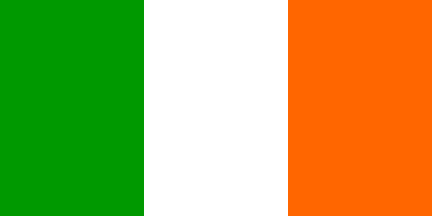
����������� The D�il �ireann voted by a very slim margin to accept the treaty, which created the Irish Free State, an autonomous member of the British Commonwealth, and a separate Northern Ireland united with Britain. However, �amon de Valera and the more zealous republicans refused to accept it and the result was the tragic Irish Civil War between the pro-Treaty Free State forces and the Irish Republican Army. Criticism remains directed at de Valera in some quarters for these events but as a zealous republican he could not stomach Irish Catholic officials taking an oath of allegiance to the Protestant British monarch nor as a zealous nationalist could he tolerate British control of key Irish ports and remaining in the British Commonwealth. As an idealist, the Irish Free State was not the ideal government he had fought for. However, since the British had backed down from total control of Ireland as existed in the past he miscalculated that they would concede these points as well. That proved not to be the case and no less a republican than General Collins took command of the Free State forces fighting his old comrades in the IRA when Winston Churchill threatened to reoccupy Ireland with British troops. |
|
|
|
 |
|
|
 |
|
|
|
|
|
����������� It was a sad conflict and extremely unusual to see avowed Irish republicans like General Collins and General Richard Mulcahy fighting (nominally under the British Crown) against their own IRA and with �amon de Valera, who had from the start opposed the tactics of the IRA, forced to back that same organization in fighting for a totally independent Irish republic. He abhorred the conflict and met secretly with General Mulcahy to try to end it but could find no common ground. As the conflict worsened in intensity though de Valera came to favor an end to the fighting but in actuality he had virtually no power over the IRA and the war continued until 1923 when the IRA agreed to ceasefire and the Irish Free State became an accepted, if rather unpopular, reality. No one, especially in the republican camp, though viewed this outcome as final. There were repercussions, de Valera was briefly imprisoned again, but was released though he got a brutal reminder of the painful division of Ireland when he was imprisoned in solitary confinement for a month for illegally entering British ruled Northern Ireland. Deciding that an Irish republic was an apple that would have to be taken in two bites, de Valera decided to get back into the political fray in the Irish Free State. |
|
|
|
����������� In 1926 de Valera formed a new party called Fianna F�il (Soldiers of Destiny), which called to mind the knights of the Fianna of Irish folklore. Fianna F�il proved very popular in Ireland but ran into a problem with the British over their refusal to take the oath of allegiance to the British monarch. For a native of the foremost republic in the world who had learned well the hardships Catholic Ireland had suffered at Protestant hands over the centuries taking an oath of allegiance to a Protestant British monarch was more than the staunchly Catholic de Valera could stomach. However, there was no getting around the issue and he was finally forced to give in or cease to play any part in the mainstream politics of the Irish Free State. �amon de Valera took the oath in 1927 but openly stated he considered it a coerced and empty formality. After this de Valera was able to run for office and was swiftly elected Prime Minister of the Irish Free State in 1932. That is to say that Fianna F�il won the majority of seats and de Valera was then appointed by the Governor-General of the Irish Free State, James McNeill, acting for King George V. |
|
|
����������� Removing the oath to the King was one of the top priorities of de Valera and his government and it is worth remembering what a sad position King George V was in regarding Ireland. He was essentially a king whose own government was determined to depose him. If one agrees or not with the actions of the republicans in this regard, in light of Irish history they are at least understandable. It is often forgotten though that King George V had advised his government in London against being so harsh with the leaders of the Easter Uprising but was ignored. Likewise, as a committed constitutional monarch, when de Valera, as head of the Free State government, requested that Governor-General McNeill be replaced with an Irish veteran of the rising (which was against Britain and King George V) the King did so; effectively aiding in the loss of his crown because he felt it was his duty to follow the advice of his government. Yet, even by this time, the Irish Free State was becoming more and more a republic with the monarchy remaining more and more on paper only and even then it only extremely technical ways. |
|
|
����������� Although not often remembered, de Valera promised, during his campaigning, that once Irish independence had been secured the people of Ireland could vote in a referendum on whether or not they would be a republic or a monarchy ?at least so long as it was not the British monarchy. This, however, he never did and given his lifelong avowed republicanism that is not surprising. The native Irish nobility had been devastated over the centuries of British rule and in many Irish minds it was impossible to think about monarchy without thinking of the British. It is also an unfortunate fact that while so many of those who persecuted the Irish did so in the name of the monarch the actions of various British monarchs which were favorable to Ireland were almost always done behind closed doors, out of public view and remained mostly unknown. It might have been interesting to see how a referendum such as was proposed would have turned out, but it is probable de Valera considered it unnecessary and assumed the people, the Catholic Irish anyway, thought as he did on the matter. |
|
|
����������� In the years leading up to World War II de Valera only became more popular and was able to further strengthen his position in the Irish government. Having learned from the glorious but ultimately failed tactics of his youth he was now making more progress by taking things slow, being more subtle and playing the game of politics. He could also be unpredictable such as when he supported allowing the Soviet Union into the League of Nations; a rather meaningless gesture in a meaningless institution, but not something one expected from such a staunch Catholic. Nor did he openly support General Franco in the Spanish Civil War (as many Catholics did) though he did not stop Irish volunteers from going to Spain to fight for the nationalist cause. |
|
|
In the Irish Free State, his work centered mostly on reworking the constitution to slowly cut away the ties to Britain, make it more republican and pave the way for full independence. He had the oath of allegiance removed as he had promised and when King Edward VIII abdicated he took the opportunity to remove all mention of the Governor General and of the King in anything but a purely symbolic capacity as head of state. His new constitution was essentially a republican one. The name of the country would be changed from the Irish Free State to simply �ire, rather than a Governor General and King there would be an elected President, the elevation of the Gaelic language and recognition of the Roman Catholic Church as the majority religion with Catholic values enshrined in law; especially concerning morals, marriage and the illegality of divorce. However, as Roman Catholicism was not made the official state religion and because Protestant churches and Judaism were also given official recognition Pope Pius XI refused to give his endorsement to the constitution. This was rather surprising given that it came from a man like �amon de Valera, but on the other hand that very fact caused many Catholics to believe that it should have been much more specifically Catholic than it was. |
|
|
During World War II even more criticism was to fall on de Valera for remaining neutral in the conflict while the rest of the British Commonwealth, though autonomous, chose to fight alongside the mother country against Nazi Germany. For de Valera this was a matter of principle. If Ireland was really free to make her own choices then she must be able to make choices that Britain did not like. That was not always understood, nor was it helpful in the field of public relations that the Germans in World War I had been at least indirectly involved in the Easter Uprising and German agents made contacts with the IRA in the hope of gaining a foothold for the invasion of Britain that Hitler long wanted but never achieved. Hitler would have liked nothing better than to have Ireland on his side, but de Valera refused to aid either side and worried over a German or a British invasion of the country. Subtle aid was given to the Allies, many Irishmen joined the Allied war effort on their own and de Valera was quick to arrest any IRA soldier connected with the Germans. Most controversially though was when de Valera, at the end of the war, expressed his condolences to the German ambassador upon the death of Adolf Hitler. |
|
|
|
After the end of the war British Prime Minister Winston Churchill made scathing remarks against de Valera for Irish neutrality, accusing him of frolicking with the Axis powers and stating, rather arrogantly, that Britain showed great restraint for not simply invading Ireland and forcing their hand. It was, in many ways, typical Churchill and he lavished praise on the rest of the Commonwealth and the British people for their courage and determination. In a brilliant radio response to this rather inflammatory speech, de Valera also praised British tenacity but then asked of the British Prime Minister, "Could he not find in his heart the generosity to acknowledge that there is a small nation that stood alone not for one year or two, but for several hundred years against aggression; that endured spoliations, famines, massacres in endless succession; that was clubbed many times into insensibility, but that each time on returning to consciousness took up the fight anew; a small nation that could never be got to accept defeat and has never surrendered her soul?" People around the world praised the response while the words of Churchill only cemented in the minds of many that Britain would always consider Ireland their own property to invade and coerce whenever their decisions did not coincide with British interests. Certainly the remarks of both men sped the way toward total seperation. |
|
|
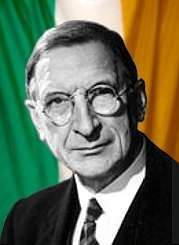
�amon de Valera, however, did not preside over that separation. His tightrope walking and strict government control during World War II cost Fianna F�il some of its public support and in 1948 de Valera was replaced as Taoiseach (prime minister) by John A. Costello. It was during his administration that �ire formally cut her last ties to Great Britain, left the British Commonwealth and officially became the Republic of Ireland on April 18, 1949. He served as Taoiseach once again and after leaving that office was promptly elected the third President of Ireland in 1959, however, he has been more criticized for his actions during this period than probably any other. This was not because de Valera changed much in his thinking but mostly because the world was changing and de Valera was refusing to. His Catholic morals were being considered more and more out of date, especially during his presidency, though he was given some good recognition for this by Blessed Pope John XXIII who awarded him the Order of Christ; the highest papal decoration and one given only to Catholic heads of state. Ironically enough for someone Catholics had once criticized for failing to back General Franco in Spain; de Valera was now being accused of making Ireland into a similar country. The same people gave de Valera the same criticisms, accusing him of keeping Ireland a superstitious, repressed and backward country. This was simply an anti-Christian response to what had always been the goal of de Valera, namely making Ireland an independent, rural dominated, devoutly Catholic republic. Catholics who once might have criticized him for being a liberal were now among those who praised him as a conservative. De Valera had not changed much, but the rest of Europe had. |
|
|
 |
|
|
|
 |
|
|
|
|
|
�amon de Valera died on August 29, 1975 at the ripe old age of 92, only two years after leaving office as President of Ireland. As per his wishes, he was buried in a religious habit, showing his Catholicism to the very end. Although not a fan of presidents in general, I consider him one of the better ones. He made his mistakes, and later in life admitted as much, but he was also an idealist who never lost sight of his dream and, unlike many, made it a reality. He struggled, fought for, adapted, argued for and won his free Irish republic of Catholic farms and villages. The unity he longed for was never achieved (at least so far) though he never gave up hope for the return of Northern Ireland. Certainly the wave of secularism has hit Ireland hard in recent times, as it has the rest of Europe, but Ireland remains one of the last holdouts for Catholic society in Europe. The fact that Ireland has held out longer than most every other country against legalizing abortion or gay marriage and the like is due largely, I believe, to the influence of �amon de Valera. He was also against Ireland joining the EEC, forerunner of the modern EU as he feared it would mean a loss of Irish sovereignty; a standpoint on which I could not agree more. Ireland, since that time, has joined the EU and enthusiastically so as well as embracing other dangerous fashions addressed elsewhere. That, in the end, underlines the basic flaw in the politically moderate liberal but socially conservative republicanism that de Valera put into place. It can work and work beautifully; but it takes a man like �amon de Valera to lead it and keep it that way. Once that figure is gone, things can quickly come unraveled and leaders such as him are sadly few and far between. |
|