The Covenant School
Charlottesville, Virginia

What makes HOUSE at The Covenant School unique is our focus on decision-making. Rather than seeing history as a series of dates and names, we focus instead on decisions made by people who are not very different from people today. In fact, the consistency of human behavior is one of the key lessons of history, which bears out the Biblical truth that humans are fallen creatures in need of God's redemption through our Savior, Jesus Christ.
We use our summer reading assignment, Robert F. Kennedy's Thirteen Days: A Memoir of the Cuban Missile Crisis to develop a five-step model for decision-making that we will apply throughout the school year.
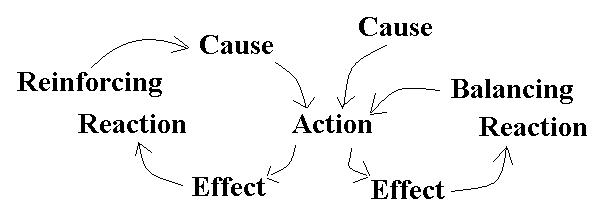
We also assume that more than one of these factors can influence a person's behavior at any given moment; this is the Law of Multiple Causality. Moreover, human decisions usually have Multiple Consequences, including Unintended Consequences.
This unit focuses on the geopolitical factors influencing the settlment of North America.
October: Revolutionary America (1763 - 1789)
This unit addresses on the political and cultural factors prompting the colonies to rebel and design a new government.
November: Democratic America (1789 - 1832)
This unit analyzes the social and economic changes that increased the influence of ordinary Americans.
December: Divided America (1832 - 1860)
This unit explores the differences between the North and South that led to the Civil War.
MIDTERM EXAMS
January: Uniting America (1860 - 1885)
This unit addresses the political and social consequences of the Civil War.
February: Progressive America (1885 - 1912)
This unit explores the responses to the changes caused by the Industrial Revolution.
March: Crisis America (1912 - 1941)
This unit analyzes US involvement in World War I, the Great Depression, and US entry into World War II.
April: Anticommunist America (1942 - 1968)
This unit analyzes the causes of the Cold War, and America's efforts to contain Communism at home and abroad.
May: Conservative America (1968 - 2001)
This unit analyzes the social and political changes resulting from the Vietnam War and the end of the Cold War.
FINAL EXAM
Covenant School History Main Page
History of the United States 11
AP US History
Student Resources
The Avalon Project at Yale Law School
History Matters
10 Commandments of Historical Writing
UVA Summer Enrichment Program
UVA History Department
-- Class discussions
-- Reading Assignments
-- Textbook Readings
-- Document Analysis
-- Educational Videos
-- "History Journal" entries, in which students record their opinions of past and present events
-- Role-Playing Activities, such as debates
-- Student Presentations
-- 2 Multiple-Choice Quizzes
-- A test combining multiple-choice, short answer, and an essay.
Mr. Davisson graduated from West Virginia University in 1998 with degrees in Computer Science and in History. In July of 1999, he followed the LORD's calling to central Virginia, where he became a member of Jefferson Park Baptist Church. The next year, he started as a substitute at The Covenant School, and in the fall of 2000, began teaching full-time.
Mr. Davisson currently lives in Waynesboro, Virginia, with his wife, Gretchen, and their children, Ginny, Michael, and Christopher.