. .
17.21 �A precautionary and anticipatory rather than a reactive approach is necessary..�
17.18 �There is currently no global scheme to address marine pollution from land-based sources.�
17.18 �Many of the polluting substances originating from land-based sources are of particular concern�since they exhibit at the same time toxicity, persistence and bioaccumulation in the food chain
17.27 �Incorporating sewage concerns�(in) coastal development plans�
17.27 �promoting environmentally sound co-treatments�
17.27 �..(give) due consideration to the characteristics of receiving bodies��
17.28 �Eliminate the emission or discharge of organohalogen compounds that threated to accumulate to dangerous levels in the marine environment.�
17.29 �Priority actions should include control and prevention of coastal erosion and siltation..�
17.30A �Supporting wider ratification and implementation of relevant shipping conventions��
17.30A �Cooperating in monitoring marine
17.30A �Taking action to ensure respect of areas�in order to protect and preserve rare or fragile ecosystems��
17.30B �take appropriate steps to stop ocean dumping and incineration of hazardous substances��
17.30B�(by) Assessing existing regulatory measures to address discharges, emissions and safety��
17.31 �assess the state of marine pollution in areas of congested shipping��
17.34 �States should intensify international cooperation to strengthen or establish�oil/chemical response centres��
17.35 �Establishing a clearing-house on marine pollution control information��
17.35 �Allocating adequate funding for capacity-building and training programmes��
17.22 �..to prevent, reduce and control degradation of the marine environment so as to maintain and improve its life-support and productive capacities.�
pollution from ships, especially from illegal discharges��
Agenda 21, Chapter 17, Section B
Marine Environmental Protection
Overall Goal: to reduce the negative impacts of anthropogenic activities that cause degradation of the marine environment, with emphasis on pollution from the land and sea. Adopting anticipatory and precautionary approaches are important innovations of the section and are deemed necessary to achieve the goals.
Emphasis is also placed on the Polluter Pays Principle as a mechanism for developing economic incentives and the internalisation of costs in order to encourage pollution prevention. The root cause of pollution in developing countries is also recognised by the inclusion of a general objective to improve 'coastal living standards'.
Sustainable use of the marine environment is vital to ensure the continued utilisation of the goods and services provided by the oceans. Sustainable use of the marine environment is vital to ensure the continued utilisation of the goods and services provided by the oceans, estimated at US $21,500 billion annually.
A principle feature is the division of this section into two areas:
1. Land-based activities that concentrate on forms of pollution.
2. Sea-based activities reflecting guidelines to control sources of pollution based upon pre-existing structures.
Land-based forms of pollution include the recommendation of priority action for sewage and 'other sources' of pollution. The physical destruction of coastal areas is highlighted an additional area of concern, representing 70% of marine pollution.
Why is Sewage important? It is estimated that 8 billion shellfish meals are eaten each year. The microbiological hazard from poor sewage treatment infecting shellfish causes widespread disease with an estimated global cost of US$ 10-20 billion a year.
What does AG.21 propose? Recommends a logical framework for states to tackle problems relating to sewage, with emphasis on the following:
 Adopting minimum standards of primary sewage treatment, building on the Montreal Guidelines.
Treating compatible domestic and industrial wastes together, optimising resource use.
Development of monitoring guidelines and water quality criteria for sewage discharge.
Why are 'Other sources' a concern?
Persistent Organic Pollutants (POPs) have been detected in certain Arctic fish species at concentrations 15 to 20 times higher than average, causing irreversible and deleterious impacts on human health and the marine environment.
Nutrient enriched waste products are the primary cause of eutrophication (Harmful Algal Blooms), which causes coral reef degradation and reductions in coastal fishery production. The USA estimated annual costs of eutrophication between 1987-1993 to be over US$100 million. (GESAMP 2001)
What does AG.21 propose? Suggests measures for limiting the emission and discharge of certain chemicals from point and diffused sources, including: Organohalogen compounds (e.g. DDT), synthetic organic compounds (e.g. PAHs) and nitrogen and phosphorus (e.g. fertilisers).
Why is the physical destruction of coastal areas important?
Construction of the Aswan Dam on the River Nile has resulted in significant physical alterations along stretches of the Mediterranean coast. A reduction in the supply of silt has provoked increased coastal erosion and a decrease in availability of natural resources. (Grigalunas.T, et al. 2000)
What does AG.21 propose? A co-ordinated approach working in conjunction with section A.
Control and prevention of coastal erosion and siltation
The adoption of watershed river basin management practices.
Sea based forms of pollution are covered under four themes: Shipping, Dumping at sea, Offshore Oil and Gas and Ports.
Why is Shipping a concern?
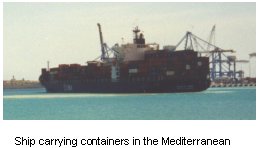 The world's oceans have been used since earliest times for the transportation of goods on a global basis. Approximately 500,000 vessels transit the North Sea and Celtic Seas annually and over 1415 million tonnes of crude oil are transported by sea worldwide. These figures are set to increase.
What does Agenda 21 propose? While recognising the role of the International Maritime Organisation (IMO) in regulating shipping activities, recommendations are made to reduce the impact shipping activities on the marine environment:
States are encouraged to ratify appropriate conventions / protocols and provide inter-governmental support in overcoming implementation obstacles.
A rigorous monitoring system of marine pollution through international co-operation and greater enforcement of MARPOL regulations is required to address marine pollution issues.
Priority action concerning the following: the spread of non-indigenous organisms in ballast waters, promotion of navigational safety to reduce the risk of accidents at sea, and the development of safety codes for the transport of hazardous substances.
Why is Dumping at sea important?
Over 110 million tonnes of waste was dumped into the world's oceans in 1996, causing untold damage to the marine environment. Sludge dumped at sea contains many contaminants including the toxic tin compound, TBT, known to be responsible for London Convention 1972.
Why is the Offshore Oil and Gas industry an issue?
On 15th March 2001, a large explosion rocked an oil rig situated 200km (125 miles) north of Rio de Janeiro. The potential for disaster is all to clear as rigs like this are potentially carrying up to 1.5 million litres of oil. The United Oil Workers Federation (FUP) has reported 32 deaths from oilrig accidents over the last 3 years.
What does Agenda 21 propose?
An assessment of the present situation of the offshore oil and gas industry in order to identify additional safety measures to reduce the risk of pollution.
What is the issue of Ports important?
The total volume of sea borne trade reached a record high in 1999 of 5.23 billion tonnes, a figure that is estimated to increase by 2% each year. With such a high volume of traffic visiting world ports annually, the pressure upon port authorities to provide adequate facilities for vessels is increasing.
What does Agenda 21 propose?
Development of port reception facilities.
to control and store waste from ships.
Priority action concerning the following: pollution in heavily congested shipping areas, reduction of organotin compounds and the requirement of International co-operation in emergency response and contingency planning.
Data and Information: vital for achieving land/sea-based objectives. Key functions for states include:
Setting up observation systems to measure environmental quality.
Regular exchange of information.
Establish international meta-database on aspects of marine pollution.
Creating institutional capacity with emphasis on developing countries.
The implementation costs are estimated at $200 million/year. This recognises the on-going development of human resources in terms of environmental education focusing on training and research. Operating in parallel is the recommendation for the transfer of technological and scientific resources with the emphasis on developing countries.