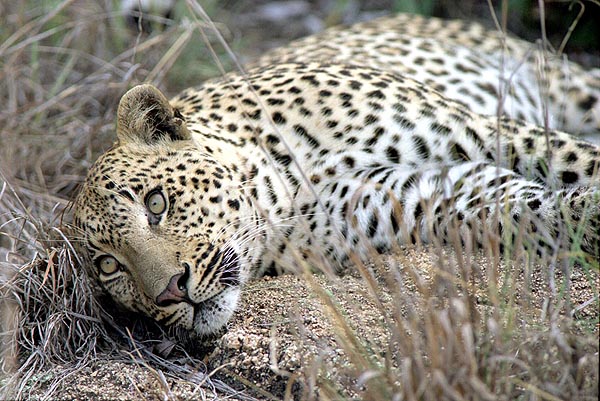
Black Rhino – Mkhaya Game Reserve,
Swaziland
Organisation: Big Game Parks, Swaziland
Contact Details: www.ecovolunteer.org
(link to Ungulates: Black and White Rhinos)
Volunteers: Bob & Sofia Carter
Location: Swaziland, Southern Africa
Species: Black and white rhino, elephant, giraffe, zebra, antelopes
Cost: Around GBP1,000 for five weeks
Email: [email protected]
(please mail if there’s anything else you think I could help you with)
Mkhaya is a small game reserve in Swaziland, Southern Africa which offers volunteers the
opportunity to interact with a wide range of African wildlife. Costs for this can be
rather high at around �1000 for five weeks (though cheaper than any comparable volunteer
project we found - shorter stays are possible but proportionally more expensive) and
bookings must be made through Ecovolunteer. Hence, not all your contribution goes to
the project. However, despite our initial scepticism at booking through an agency,
it did turn out to be a very positive experience. No special requirements for
volunteers apart from reasonable English and overall fitness.
We stayed at Mkhaya for five weeks June-July 2002. All in all it was a fantastic
experience, the most positive aspects of which were:
- a unique opportunity for daily intimate encounters
with an amazing range of wildlife. In our time there, we saw the following animals among
many others, and many of these on a daily basis: white rhino, black rhino (though there is
less focus on black rhino work for volunteers than we expected), elephant, giraffe, hippo,
buffalo, crocodile, zebra, warthog, impala, kudu, nyala, ostrich and vervet monkey. In
this, the trip exceeded all our expectations. In trips to the neighbouring reserves we
also saw lion, cheetah, baboon and jackal.
- the staff are friendly and a great source of
information. They do their best to answer volunteers’ questions about the flora and
fauna, though of course are not trained biologists. They do, however, know a great deal
about the animals, and about tracking and observing them successfully and safely.
- food provisions were better than expected, with a wide
range of fruit and vegetables. As a vegetarian, Bob was expecting difficulties. In fact,
there is no meat in the camp diet, but plenty of pasta, rice, bread etc.
The only negative point we would make is that, rather than a volunteer project where
volunteer labour is central, we did feel more like eco-tourists. There is some manual work
to be done in which volunteers can be of some help, and patrols (which made up a large
part of our activities) are also of value to check on the general condition of the reserve
and the animals. However, if you have been on a previous project where your work was
vital, this may feel different. Those really seeking to make a contribution with their
work may be disappointed, but, on the other hand, you can ask to get involved in whatever
is happening, and to an extent how much you help out is largely up to you. However, this
should certainly not put you off, as the opportunities for wildlife contact and getting to
know the bush are incredible.
During our time we were able to get involved in: day and night patrols of the reserve;
tracking black rhino; capturing tsesebe and wildebeast for relocation; collecting plants
from the surrounding mountains for the reserve; clearing alien vegetation; taking down
fences; helping to construct a roof on the kitchen. Other things happening which we did
not take part in were darting and collecting data on hyenas and culling of impala,
wildebeast and warthog . Some of these things (e.g. animal capture) happen only rarely,
but there’s a good chance something out of the ordinary will happen during your stay.
We think the project will appeal to you if you:
- have a passion for African wildlife and love watching
and living close to animals
- are patient and don’t get too frustrated when
nothing happens for a while
- are used to camp life and comfortable with fairly
basic facilities
- enjoy walking 20km in the heat
However, it may not be for you if you:
- think there’s nothing more to see once
you’ve seen an elephant once
- expect wild animals to be available for viewing on cue
- can’t live without eating meat
- don’t like walking, getting up early or cold
showers
Some final practical advice:
- expect to get tick bite fever. It feels like a bad
‘flu, but affects people differently. Bob’s was aches and pains for a couple of
days, Sofia’s lasted a week and needed antibiotics. There are good clinics nearby.
Take lots of antiseptic wash and cotton wool - often the tick bite goes a bit nasty.
Otherwise we stayed pretty healthy.
- if you’re going in winter, it’s VERY cold at
night (we underestimated). Bring a good sleeping bag, woolly hat and gloves.
- invest in a good camera, and bring your own film
supply.
- plan a few days on the end of your trip to explore
Swaziland. It’s a fascinating place.
|
| Campaign for Nature Conservation, Uganda
Organisation: Campign for Nature Conservation
Address: P.O Box 8312 Kampala, Uganda.
Email Address: [email protected] or [email protected]
Telephone: 256 71 504478 or 256 71 936626
Volunteer: Mukasa Nash, Kampala, Uganda
I wanted to submit my review on a project which I
vounteered for in Uganda [East Africa] the last 2 months (summer 2005). The
project is called C.N.C [Campign for Nature Conservation] which is concerned
with among other things, bird conservation, re-afforestation soil conservation and food
security, within the rural communites of Wakiso, Luwero Nakasongola and Tororo disticts of
Uganda.
I volunteered for CNC, for about 6
weeks and I got a wonderful lifetime experience, working with the local rural
communities gave me a wonderful insight and taught me more about life, and made me realise
and cherish the need of volunteering, because it is the only way of restoring back the
beautiful environment that we inherited from our fore fathers, and it's the only way of
helping the helpless poor.
Bird watching gave me a unique experience too, for I
watched a variety of birds with amazing beauty. This made me realise the need for bird
conservation, an area which hasn't been widely explored in East Africa.
What surprised me more were the low costs of
volunteering because, for the 6 months I spent with CNC, I only paid a stipend of
just 900 US dollars, which included accomodation, breakfast , lunch and supper.
Though, I didn't cherrish the need for paying my transport costs, even though the costs
were a bit lower than the neighbouring East African countries.
I also enjoyed the warmth of the rural people, they
easily welcomed us, and we just felt at home. Before departing, I made a resolution to
volunteer for CNC at least once in two years, whenever I am on leave.
My email address is, [email protected] in case one needs
any details.
|