 Come For A Dream...
Reputation And Rarities
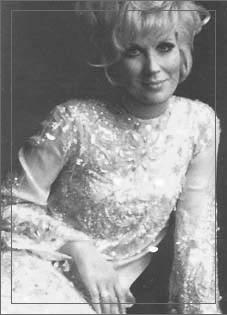
Unfortunately, as time went on, a gorgeous voice was not what Dusty grew famous for. She was fiercely independent and a perfectionist. When she was recording, she fought for things to be done her way. Her records are always of the best quality because Dusty was in control, and her strong-willed nature opened up the music industry to other female artists who wanted to be who they were and not some pathetic little ‘dolly-bird.’ "…I was always told how particular she was about her vocals, so technical. She definitely had the goods; she wasn’t just a pop singer." (Cher) Male record producers were afraid of the shift of power in the studios, and Dusty was labeled ‘difficult,’ making it hard for her to get a record deal. Thankfully, Dusty did not surrender so easily, and in nineteen-sixty-nine, she recorded the biggest hit of her career.
Dusty In Memphis is the rarest, most collectable, most critically-acclaimed Dusty Springfield album ever recorded. Though it only hit number forty-three in the charts, her fans scrambled to buy this amazing piece of recording history. Most of the songs off this beautiful LP - Just A Little Lovin’, So Much Love, Son Of A Preacher Man, I Don’t Want To Hear It Anymore, Don’t Forget About Me, Breakfast In Bed, Just One Smile, The Windmills Of Your Mind, In The Land Of Make Believe, No Easy Way Down, and I Can’t Make It Alone - were released as singles and were instant successes, especially Son Of A Preacher Man, who’s unique and slightly confusing lyrics captivated listeners. (The song was later used in the movie Pulp Fiction.) The album has been released and re-released over the years with added bonus tracks. Son Of A Preacher Man put Dusty back on top, even landing her a spot on The Ed Sullivan Show. It would be her last big hit until the mid-eighties.
The tail end of the sixties and the seventies were an extremely difficult time for Dusty. Though she recorded some of her best and most memorable songs in this decade, the records flopped due to bad promotion and Dusty’s worsening reputation. The carefree, easy-going ‘bachelor-girl’ of the sixties became DYKE in the seventies, and the tabloids hounded her. The funny thing about Dusty was that she would be very private, but very public at the same time. She was very candid with what she said, what she would admit to, but her personal life and the songs she was recording speak volumes. One song in particular, a quiet ballad called Beautiful Soul, was overtly lesbian. Sadly, it was not released until two years after her death, along with several other unreleased or forgotten songs that should have been huge hits for her, like Tupelo Honey, A Love Like Yours, Home To Myself, In The Winter, and Exclusively For Me. In nineteen-seventy, Dusty remarked to one interviewer that "I couldn’t stand to be thought of as a big butch lady. But I know that I’m as perfectly capable of being swayed by a girl as by a boy." She also remarked, "My sexuality has never been a problem to me but I think it has been for other people." After Dusty In Memphis, she left England for America, and remained there until the eighties.
America provided little else for Dusty than shelter from the British tabloids. She drank too much and became addicted to drugs, and had a string of short-lived relationships. Dusty even went so far as to marry a woman named Teda, who turned out to be abusive and hurt Dusty severely, physically and emotionally. Dusty made many suicide attempts, but she was terrified of dying and always made sure that someone would find her. Several times she checked herself into hospital, though inevitably someone - usually a staff member - would leak to the press that she was in there. All her beautiful work went unnoticed - magnificent albums like Cameo, Brand New Me, See All Her Faces, and Star Dusty flopped. (These are all collectors’ items today.) Often she did not show up for shows, tours were cancelled. She performed in small clubs lip-synching to her old hits. Newspapers kept busy with tales of her downward spiral. Briefly, in nineteen-seventy-eight, Dusty enjoyed moderate success with an album called It Begins Again, but success was fleeting. When the seventies came to a close, Dusty packed up once more and left America, this time heading for Toronto.
In Toronto, Dusty did shows at various gay clubs. "…gay following has been very loyal to me when there was absolutely no product…I think that they recognise that I am a drama queen…I think that particularly in the ballads there is some sensitivity perhaps in my singing that the gay population picks up on." (Dusty Springfield) At one such engagement, she met Canadian glam-punk Anti-Diva Carole Pope, who was a huge fan. The pair hit it off immediately, and were together for six months.
Carole Pope and her band Rough Trade were famous for such unique songs as Highschool Confidential, It’s A Jungle, and the ever-controversial What’s The Furror About The Fuhror. When she and Dusty got together, Rough Trade was at the height of their success, and Carole reigned as the "Raunch Queen of Canada." Dusty’s career had hit rock bottom. Though it’s clear that they loved each other immensely, the relationship was destined for failure. Even so, it did have its high points. Carole and Dusty recorded together - Dusty sang back up on Rough Trade’s best album, For Those Who Think Young, along with Carole’s younger brother Howard. She can be heard quite clearly on several tracks, including Prisoner Of My Skin, The Sacred And The Profane, and Attitude - and Carole pushed Dusty to fight her addictions. Dusty took Carole to Los Angeles to show off her old haunts and the homes of famous ‘broken celebrities.’ They had stalkers though, Dusty and Carole alike, and they would show up at the door at all hours, especially unnerving for poor Dusty, who was an intensely private person. Dusty - enrolled in A.A. - would hide alcohol around the house. Carole would find it and there would be huge fights. When she could not stand it anymore, Carole expressed her emotions through music, namely a song called Soft Core, which Dusty ironically ended up recording on her next album, disco-influenced White Heat, released shortly after the couple’s break-up in nineteen-eighty-two (the dedication on White Heat reads "Because of and in spite of Carole Pope"). (Carole and Dusty remained on good terms. Dusty later performed Soft Core at Rough Trade’s farewell performances in Montreal.)
PREVIOUS NEXT