The Modern Rhodes Island
| > About
The Colossus of Rhodes > Colossus of Rhodes & New York > History of Rhodes Island > The modern Rhodes Island |
Historically, it was known for its Colossus of Rhodes, one of the Seven Wonders of the World. The medieval city is a World Heritage Site.
Geography
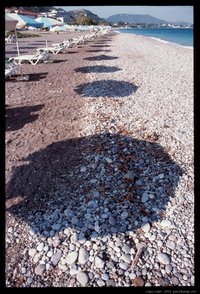 The
island of Rhodes is shaped like a spearhead, 79.7 km long and 38 km wide
with a total area of approximately 1,398 sq km and a coastline of approximately
220 km. The city of Rhodes is located at the far northern end of the island,
including the site of the ancient— and modern— commercial
harbor. The main air gateway (Diagoras International Airport (http://www.hcaa-eleng.gr/rhod.htm),
IATA code: RHO) is located 14 km to the southwest of the city in Paradisi.
The road network radiates from the city along the east and west coasts.
The
island of Rhodes is shaped like a spearhead, 79.7 km long and 38 km wide
with a total area of approximately 1,398 sq km and a coastline of approximately
220 km. The city of Rhodes is located at the far northern end of the island,
including the site of the ancient— and modern— commercial
harbor. The main air gateway (Diagoras International Airport (http://www.hcaa-eleng.gr/rhod.htm),
IATA code: RHO) is located 14 km to the southwest of the city in Paradisi.
The road network radiates from the city along the east and west coasts.
The interior is mountainous and sparsely inhabited, covered with pine forests and abundant fauna including the Rhodian deer and peacocks. Features include the so-called Petaludes or Petaloudes Valley, or Valley of the Butterflies, where tiger moths gather in summer; Mount Attavyros, at 3,986 ft (1,215 m) the island's highest point of elevation; and the appropriately named Seven Springs area. While the shores are rocky, arable sandy strips exist where citrus fruits, wine grapes, vegetables, and other crops flourish in the Mediterranean climate.
Outside of the city of Rhodes, the Faliraki resort, Lindos, Archangelos,
Afandou, Embona, and Trianta(Ialysos) are significant. The economy of
the whole island is geared toward tourism, the island's primary source
of income.
© 2004 - Dimitris Liarelis