



|
|

| INDEX 2 | INDEX 3 | INDEX 4 | INDEX 5 | INDEX 6 | INDEX 7 | INDEX 8 | INDEX 9 |
 |
 j j   |
|
||||||||||||
|
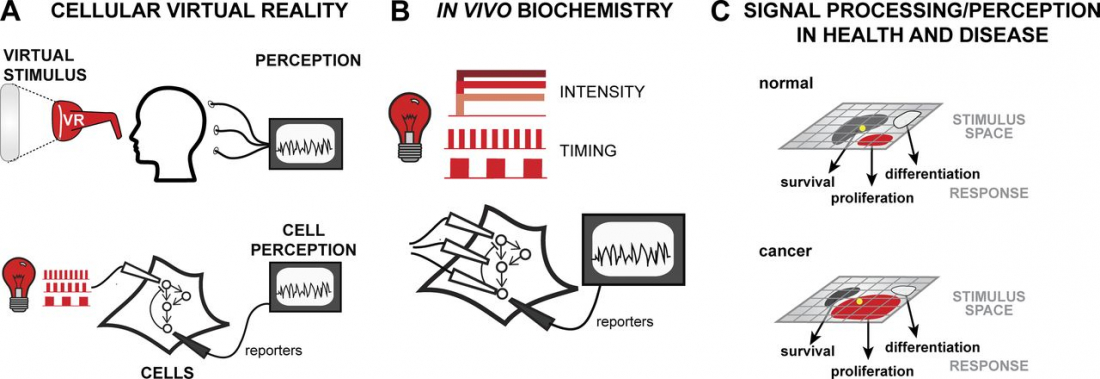
OPTOGENETICS: A Virtual Reality System for Controlling Living Cells Neural Stimulation Through Light-Sensitive Proteins for Biological Manipulation.
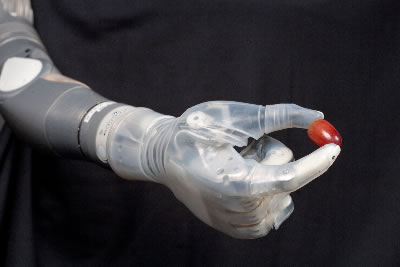
"...The researchers used a tiny optic fibre to shine a blue laser on the amygdala. This prompted the animals to tense their jaw and neck muscles... 'It's not just physiological, it's hunting, biting, releasing and eating. Those are motor sequences that require a lot of information...' [said an MIT neuroscientist]" In 2015, optogenetics was combined with CRISPR to develop a set of photoactivatable tools that enable the editing of an organism's genome through the external use of light. Said tools can control the location, timing and reversibility of the genome editing process, whether that be activating, repressing or modifying a gene. Optogenetics is also mentioned as an integral feature of the DARPA-funded Neural Engineering System Design (NESD) program, a joint effort between six teams who are aiming to create an implantable neural interface over the next four years that is capable of high resolution brain-to-machine communication. Such advancements, for instance, could facilitate the development of mind-controlled prosthetics featuring touch sensation like the DARPA-backed 'Luke' arm (previously known as the 'Deka' arm).
In the past, DARPA has looked to optogenetic memory manipulation techniques for treating veterans with traumatic brain injury and/or PTSD through memory restoration or deletion. More recently, during a November 2017 mental health conference with 30,000 attendees in Washington D.C., optogenetics was noted for the impact it's having on the ability to study the brain. According NPR science correspondent Jon Hamilton, the technology has allowed aspects of human mental health disorders to be reproduced in animals, aiding the mapping of neuronal circuits involved with issues such as depression.
Clinical Trial and Future TechnologiesCompanies interested in the application of optogenetic technologies have begun emerging over the last decade, particularly since the FDA approved the technology in 2015 for use in treating an eye disorder known as "retinitis pigmentosa." The approval prompted a clinical trial and optogenetic developments have since been used to restore partial vision in patients who were described as being "profoundly blind." Chronic pain management, epilepsy and Parkinson's are among many health issues that researchers are experimenting with addressing through optogenetics.
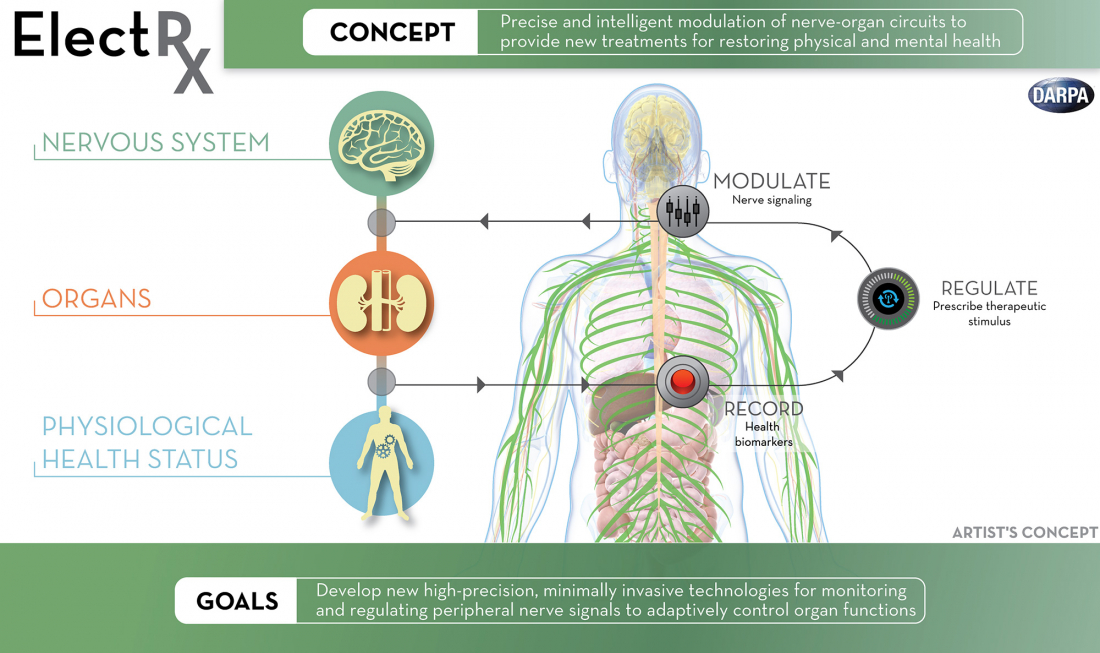
To investigate the therapeutic use of optogenetics, acoustics and electromagnetic fields, DARPA launched the ElectRX (Electrical Prescription) program in 2015, which is capable of stimulating, modulating and monitoring the body's peripheral nervous system. The research agency is also exploring how artificial intelligence could be used in closed-loop brain implants, such as the ability to detect patterns associated with mood disorders. With enough progress, it's believed that optogenetics and its surrounding bodies of research may open the door to real-time brain mapping and biofeedback technologies, which could be used to treat all manner of ailments on the fly through closed-loop neuromodulation signals coming to and from an implanted device, ultimately eliminating the need for pharmaceuticals.
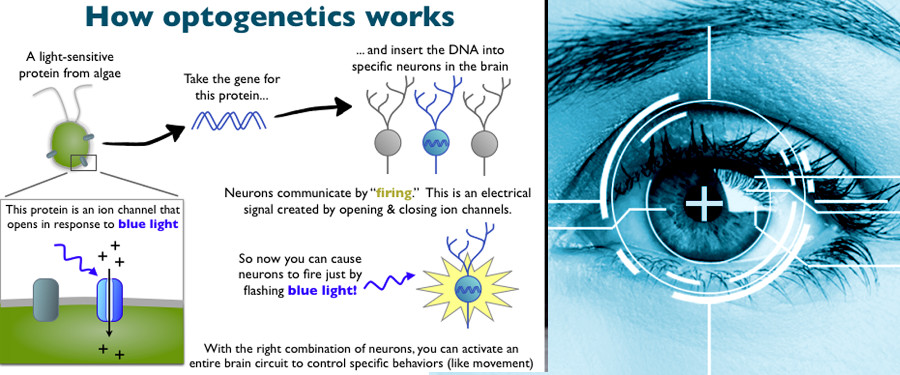
Next-generation optogenetic molecules control single neurons Focused laser beam could help scientists map connections among neurons that underlie behavior.
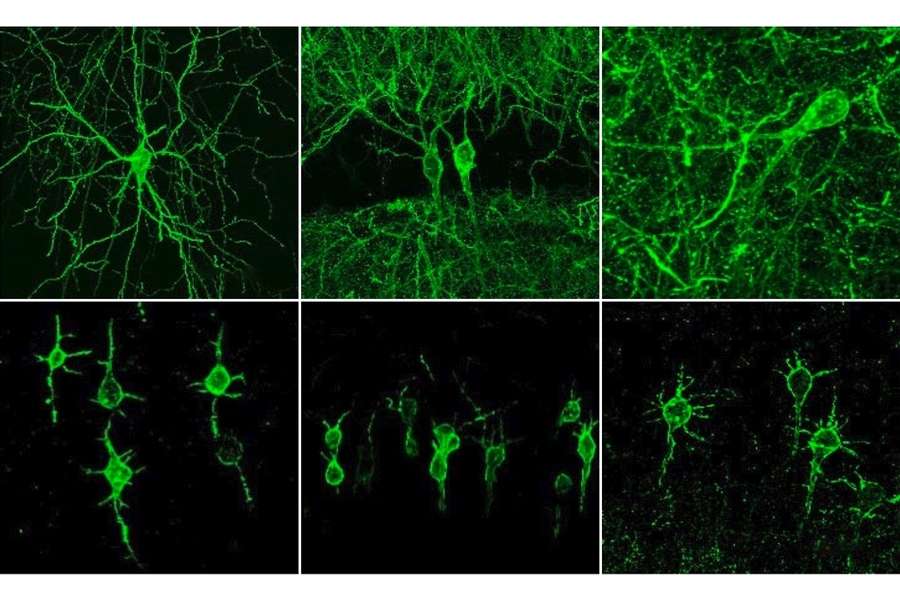
 MIT researchers have devised a way to control single neurons using optogenetics. To help achieve this, they developed an opsin, or light-sensitive protein, that can be targeted to neuron cell bodies (bottom row). Neurons in the top row have traditional opsins that are distributed throughout their axons.
New method visualizes groups of neurons as they compute Fluorescent probe could allow scientists to watch circuits within the brain and link their activity to specific behaviors.
Caption:In the top row, neurons are labeled with a fluorescent probe that reveals electrical activity. In the bottom row, neurons are labeled with a variant of the probe that accumulates specifically in the neuron cell bodies, preventing interference from axons of neighboring neurons.
Astrocytes can both suppress and stimulate the transmission of nerve impulses Scientists have shown that astrocytes, when stimulated by different types of light, either help conduct nerve impulses or hinder them. 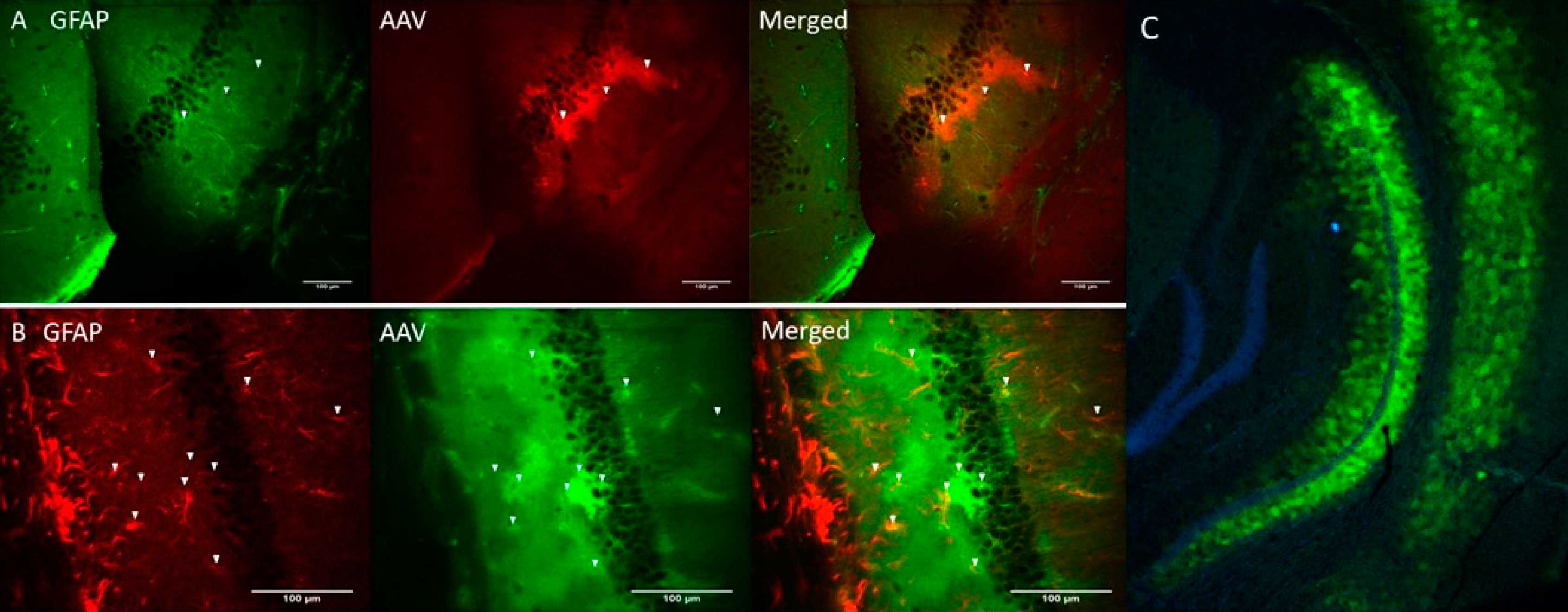 Thus, if proteins were artificially built into the astrocyte membrane — ion channels that pumped calcium into the cell when illuminated — the signal was inhibited. When astrocytes had proteins of a different nature — receptors — the speed and strength of the nerve impulse increased. The data obtained can be used in behavioral experiments to study the mechanisms of memory and learning.
|
||||||||||||||
|
|