|
Coggeshall History |
 |
Welcome |
|
|
History |
|
|
Coggeshall Today |
|
|
Guided Walk |
|
|
Museum |
|
|
Foot path Walks |
|
|
|
|
|
What's On |
|
|
|

Although formerly the site of a Roman encampment, Coggeshall's history of any note began in 1140 with the foundation by King Stephen of a large Cistercian abbey. The monks were extensively sheep farmers and this promoted the wool and cloth trade from the 15th to the mid-18th century on which Coggeshall's prosperity was based. During this time the village rose to prominence and was one of the most industrialised places in Essex, famed on the Continent for a type of cloth called Coggeshall Whites.
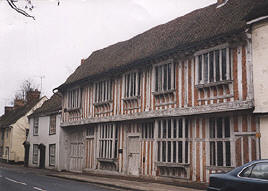
Paycocke House
This
prosperity has left a rich legacy of timber-framed houses and Coggeshall
has almost 300 "listed" buildings.
The
remains of the abbey, the still intact abbey gatehouse chapel and the
large 12th century Grange barn all add to the charm of the place and there
is much to see on a visit to this historic village. About a mile outside of
Coggeshall is
Marks Hall Gardens and Arboretum'
which was the home for more than 300 years
to the Honywood family who were responsible for the planting of the famous
Honywood oaks, one of which still remains today. Mary Honywood is
commemorated in the church in Coggeshall as having no less than 365
descendants at the time of her death!
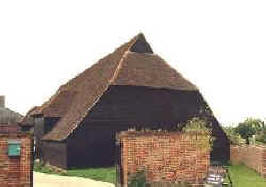
Grange Barn