


| |
|---|
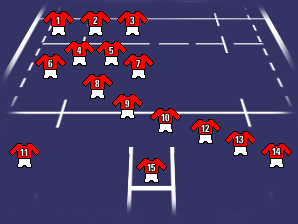
Loosehead-Prop
A loosehead prop is one of the three players at the front of the scrum. They stand on the left-hand side of the hooker. As they take most of the impact in the scrum, a prop should have plenty of strength in their upper body. This is the area of the body where all the power is created for the big push. Most props are quite short and squat - but don't say that to their faces!
Tighthead-prop
A tighthead prop is one of the three players at the front of the scrum. They stand on the right-hand side of the hooker. As they take most of the impact in the scrum, a prop should have plenty of strength in their upper body. This is the area of the body where all the power is created for the big push. Props also love getting stuck into tackles and you'll often find them at the bottom of a rucks or a maul.
Hooker
Out of all the eight forwards, the hooker is the one player with the most responsibility. They have two very important roles to play. Their first duty is to hook the ball for the scrum-half to collect in the scrum. And their second job is to throw the ball in at the line-outs for the jumpers to catch. This is often done under intense pressure - so you need plenty of nerve and confidence in your ability. Like props, hookers need to have a strong back and neck, as well as powerful arms and legs. But they need to be that bit more flexible than their fellow front row mates because they are the ones who hook the ball in the scrum. Hookers are often the smallest member of the forwards, but that doesn't mean they are the least important - far from it.
Second row
f you're tall, powerful and have the ability of catching anything that comes your way, the second row could be just for you. As well as providing power for the big push in the scrum, the second row are the big targets in the line-out. Their duty is to catch the hooker's throw and get the ball to the scrum-half. So you need to be able to leap like a high jumper and have hands like glue. Expect to make plenty of tackles and help your fellow forwards out in rucks and mauls.
Openside-Flanker
The flanker should be an all-round athlete. Strength, speed, fitness, stamina - the list goes on and on. Flankers are always in the heart of the action, winning ball and making the big tackles in open play. The openside flanker is a slightly different player from their partner, the blindside flanker. They are normally smaller in size than their partner, making them more mobile around the pitch. The openside flanker will often be the player with the responsibility to mark the other side's fly-half. They do this by quickly closing them down, reducing the time they have to kick or pass. Because of their high tackle count, flankers are always involved in rucks or mauls either at the bottom or making the big drives.
FBlindside-Flanker
The blindside flanker should be an all-round athlete. Strength, speed, fitness, stamina are all part of the deal. Flankers are always involved in the game, winning balls and making the big tackles in open play. The blindside flanker tends to be bigger than their team-mate, the openside flanker. They have a more physical role and are often a target for the hooker in the line-out. Because of their high tackle count, flankers are always involved in rucks or mauls either at the bottom or making the drive that counts.
Number 8
The blindside flanker should be an all-round athlete. Strength, speed, fitness, stamina are all part of the deal. Flankers are always involved in the game, winning balls and making the big tackles in open play. The blindside flanker tends to be bigger than their team-mate, the openside flanker. They have a more physical role and are often a target for the hooker in the line-out. Because of their high tackle count, flankers are always involved in rucks or mauls either at the bottom or making the drive that counts.