


| |
|---|
Ruck
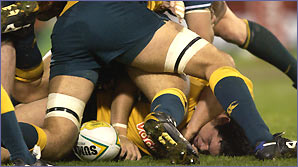
A ruck may sound like a fight in the playground, but it's a very important part of rugby union. If a tackled player goes to ground, they must release the ball immediately. However, the opposition will want to get their hands on the ball, while the team in possession will not want to give it away. So a ruck is formed when the ball is on the ground with at least one player in physical contact with a member of the opposition. To get hold of the ball, both sides will drive over to make it available for their nearest team-mate. But only players on their feet can handle the ball in a ruck. If a player joins a ruck, they can only do so from behind the line of the ball. This means they cannot come in from the sides of the ruck, otherwise the referee will award a penalty to the opposing team. Also, every player must be "bound" in the ruck. This means they must have at least one arm round a team-mate who is involved in the ruck. If the ball does not come out of the ruck quickly enough, the referee will award the team moving forward at the ruck the feed at the scrum. There are very strict rules for a ruck which every player must follow, otherwise they will give away needless penalties. See the rucking and mauling offences section for more details.
Maul
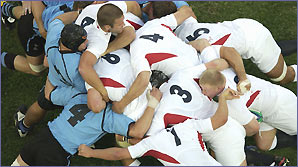
The maul is about physical strength and power. The maul is when at least three players from either side are in contact together, challenging the player with the ball, moving towards a goal line. But what makes the maul different to the ruck is the ball is not on the ground but in hand. But like the ruck, players can only join from behind the last team-mate bound to the maul. And every player in the maul must have at least one arm bound to a team-mate, otherwise the referee will award a penalty to the opposing team. The team going forwards always hold the advantage. So if a maul goes to ground and the ball does not come out quick enough, they will be given the feed at the scrum. But there are exceptions. If a player has caught the ball from a kick-off or a drop-out and is caught up in the middle of a maul inside their own 22m line, the referee will award the scrum to their side if the ball has not come out in time.
Knock On
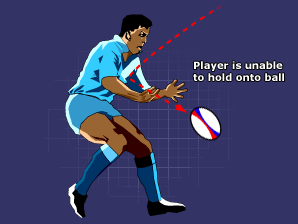
Rugby union is one of the few ball games where the ball can only travel backwards. So that means the ball cannot be passed forwards at anytime. And that includes if you accidentally knock the ball forwards with your hands or arm when you fumble the ball. No excuses in this game. So if you do knock the ball on forwards, the referee will stop play and award a scrum to the other team.
Forward Pass
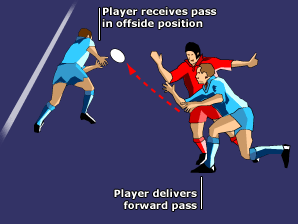
Rugby union is one of the few ball games where the ball can only travel backwards. So that means the ball cannot be passed forwards at anytime. And that includes if you accidentally knock the ball forwards with your hands or arm when you fumble the ball. No excuses in this game. So if you do knock the ball on forwards, the referee will stop play and award a scrum, with the other team getting the put in.
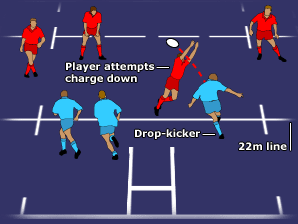
22m Drop Out
This is way of re-starting play when the ball has gone over the dead ball line. For example, if the attacking team kicks the ball too far, beyond the dead ball line, the defending team will get the ball back. The defending team can also ground the ball in their in-goal area if a player on the other side was the last person to touch the ball. They must then kick the ball forwards from the 22m line. Often they can put up a high kick for the forwards to get under. But they also have the option of kicking as far as they can down field. However, both of these situations depend on how good your kicker is.