


| |
|---|
5m Scrum
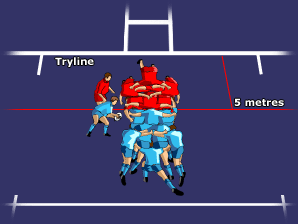
The five metre scrum is one of the best ways of putting loads of pressure on your opponent's defence. It's given to the attacking side after one of the defending team has grounded the ball inside their own goal area. But it will only be given if the defender has carried or handled the ball in their own in-goal area. The other way a five metre scrum will be awarded is if the attacking team gets within five metres of the try line, but are held up by the opposition's defence. Because the attacking team has the momentum going forward, the referee will award them the feed at the scrum.
Mark
Calling the mark is a great way of relieving the pressure in defence when the opposition are on the attack inside the 22-metre line. It was introduced to give protection to full-backs and other players trying to catch high up-and-under kicks in pressure situations. A player can only make the mark when they catch a high ball inside their own 22 metre or In-goal area. As they catch the ball they shout "MARK" at the top of their voice. If they catch the ball cleanly, the referee will give that player a free-kick on the spot where they caught the ball. Only the player who has called for the mark can take the kick. They then have the chance to clear their lines, much to the relief of the rest of the team. One thing to note - a mark cannot be called when a player catches the ball direct from kick-off.
Tackle
Tackling is the only way of legally bringing down your opponent in rugby union. But there are certain laws on how you can tackle an opponent which you must follow, otherwise you will give away needless penalties which your team-mates will not appreciate. If a tackler and the ball carrier go to ground, the tackler cannot handle the ball because they are not on their feet. Only players on their feet can handle the ball. It can be tempting to bring the ball back to your side, but if the referee see this, he'll award a penalty to the opposition. As soon as a tackle is made, the tackler must roll away from the player they have just brought down. Referees have been clamping down on this recently because the tackler can often slow the ball up for the opposition, helping their side to re-group in defence. So if the referee believes the tackler has not rolled away quick enough, he will award a penalty to the opposition. When you tackle an opponent, you cannot make contact with their head. This is entirely for safety reasons. The referee will instantly give a penalty if he sees a high tackle. And he will also have a few words to say to the tackler if he thinks the challenge was dangerous. Expect a yellow card and a spell in the sin-bin or worse, a red card and instant dismissal. So aim for your opponent's chest, waist or legs, you will make a better tackle if you aim for those areas in the first place.
Obstruction
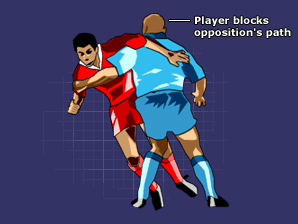
In rugby union, you can only tackle a player in possession of the ball. That means you cannot challenge your opponent at any other time. So if they do not have the ball, you cannot tackle them. Simple. Sometimes, a player will deliberately get in the way of an opponent without the ball because they think the attacker has a good chance of scoring a try. But if the referee sees this, the defender will be in trouble. A penalty will be awarded to the opposition and the defender could find themselves sitting in the sin-bin for 10 minutes after being shown a yellow card.