Truck Driver Training Program
About Our Course
Home
About Our Course
A Brief History
Course Content
Employment
Is Truck Driving For Me?
Course Requirements
Schedule
Instructors
Resources
A BRIEF HISTORY
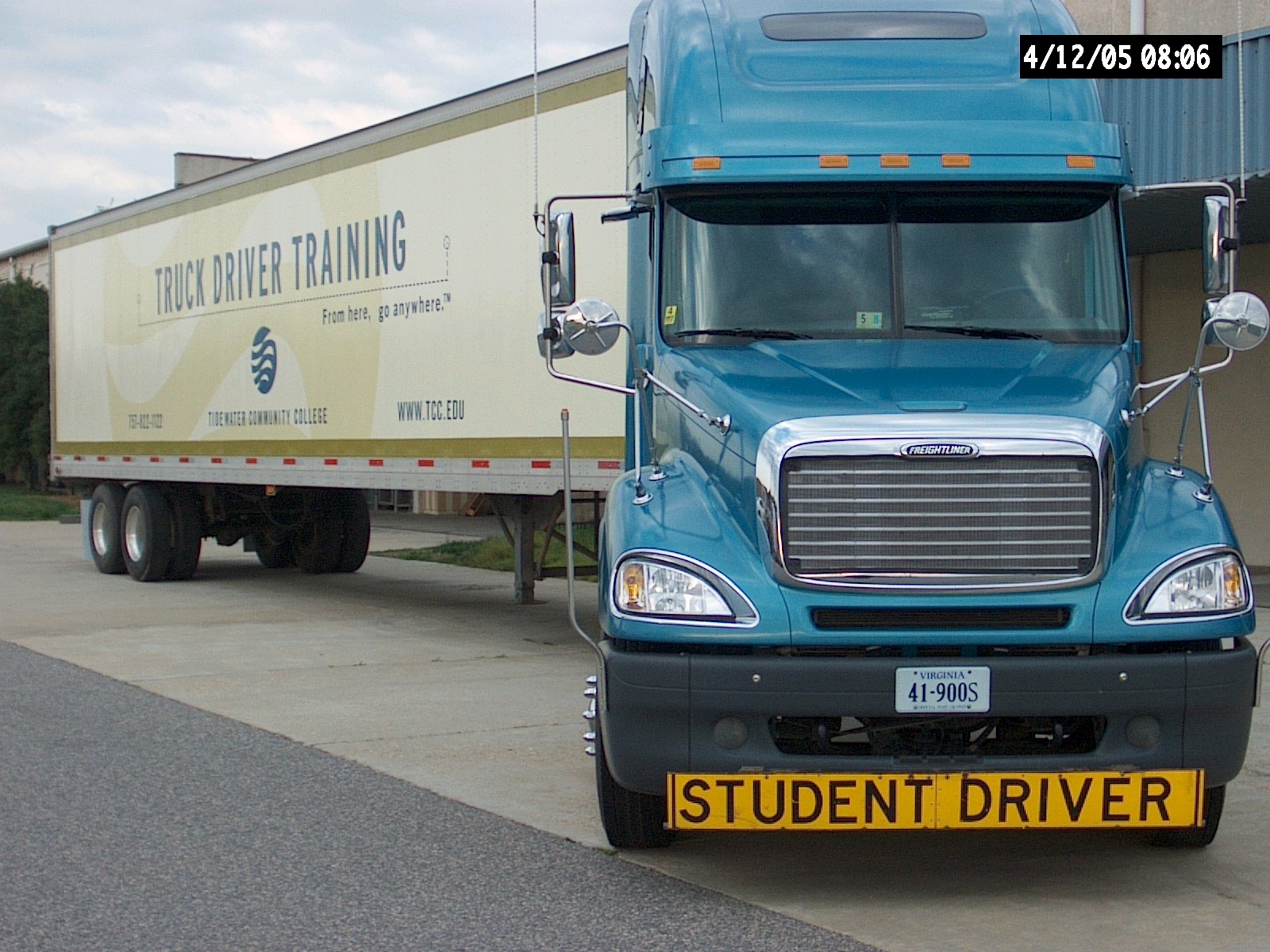
In 1978, the trucking industry expressed a need for better qualified drivers. The Virginia Highway Users Association assisted Tidewater Community College in setting guidelines to follow in order to train students to become professional drivers.
Dr. George Pass, former President of Tidewater Community College, started the Truck Driver Training Program in 1979.
He hired Robert Crabtree to get the program up and running. Robert was sent to Smithfield, North Carolina to look at a program there. He returned with a report for Dr. Pass detailing what was needed to make a program here at Tidewater Community College successful.
Robert Crabtree and Dr. Pass talked with Overnight Trucking about the program and the equipment that would be needed. Overnight Trucking gave Tidewater Community College a 1973 White and a 1968 Brockway road tractor to begin the program.
Today, the program has five road tractors, a 2004 Columbia Freightliner, a 1998 Freightliner Century, a 1998 Kenworth, a 1989 Kenworth, and a 1990 International. The program has six smaller tractors that are used for backing, five 48 foot trailers for road use and six 35 foot trailers used on the backing range as well as other miscellaneous equipment used in training.
In 1979, the program started with only five students. Currently we have an average of twenty students in every class and we offer ten eight-week classes every year.
COURSE CONTENT
The Tidewater Community College Truck Driver Training program consists of seven (7) weeks at the training facility located on the Portsmouth Campus and includes both classroom instruction (30%) and practical experience (70%). Classes meet from 7 a.m. to 3:30 p.m. or 4:30 p.m. to 12:30 a.m. Monday through Friday. The eight-hour school day is designed to simulate a typical work situation. Students are required to attend all classes and punctuality is a must!
The course includes DOT (Department of Transportation) rules and regulations, defensive driving, maintenance, hazardouse materials, backing the tractor/trailer (9 exercises), over-the-road driving and city driving. The 280 hours of instruction are broken down to 120 hours of classroom and personal instruction and 160 hours of practical application.
During the first week of class the students will review the Division of Motor Vehicles Commercial Driver's License manual. At the end of the week, DMV will come out to the school to test the students for their CDL learner's permit.
Throughout the next five weeks, each student will receive three evaluations: nine-day evaluation, a mid-term evaluation, and a final evaluation. In order for a student to receive a certificate they must receive a passing grade in the following courses:
| TRK 101 | DOT Safety Rules and Regulations | (2 credits) |
|---|---|---|
| TRK 102 | Preventive Maintenance for Truck Drivers | (1 credit) |
| TRK 103 | Tractor Trailer Driving | (9 credit) |
| TRK 110 | Dimensions of Truck Driving | (3 credit) |
EMPLOYMENT
Tidewater Community College does not guarantee employment for graduates of the program. The school does make an effort to assist students in obtaining employment after graduation by hosting recruiters from local trucking companies. In some instances, companies recruit drivers directly from the program. Generally, the demand for graduates far exceeds the supply.
Large companies such as Swift and Werner as well as some regional companies understand the need for qualified drivers and offer student training programs for students who graduate from truck driving schools. These programs, which vary from company to company, last from one week to six weeks and are of no cost to the new driver. In addition, some major carriers offer tuition reimbursement. Starting salaries range from $30,000 to $40,000 per year and many companies offer an extensive benefits package.
CRIMINAL RECORD
Motor carrier companies are required to perform a security investigation of all prospective employees. The security check is NOT a requirement for admittance to the program; however convictions for theft or use of narcotics will disqualify a graduate from employment with a motor carrier company. Felony convictions in general must normally be at least 10 years old; however, many over-the-road companies will not hire anyone with a felony record at any time
(Drivers should be aware that companies crossing the border into Canada may not send a driver with a felony conviction on those runs. Canada will arrest the driver and seize the truck. A Canadian waiver or Minister's Permit must be obtained to legally cross the border.)
IS TRUCK DRIVING FOR ME?
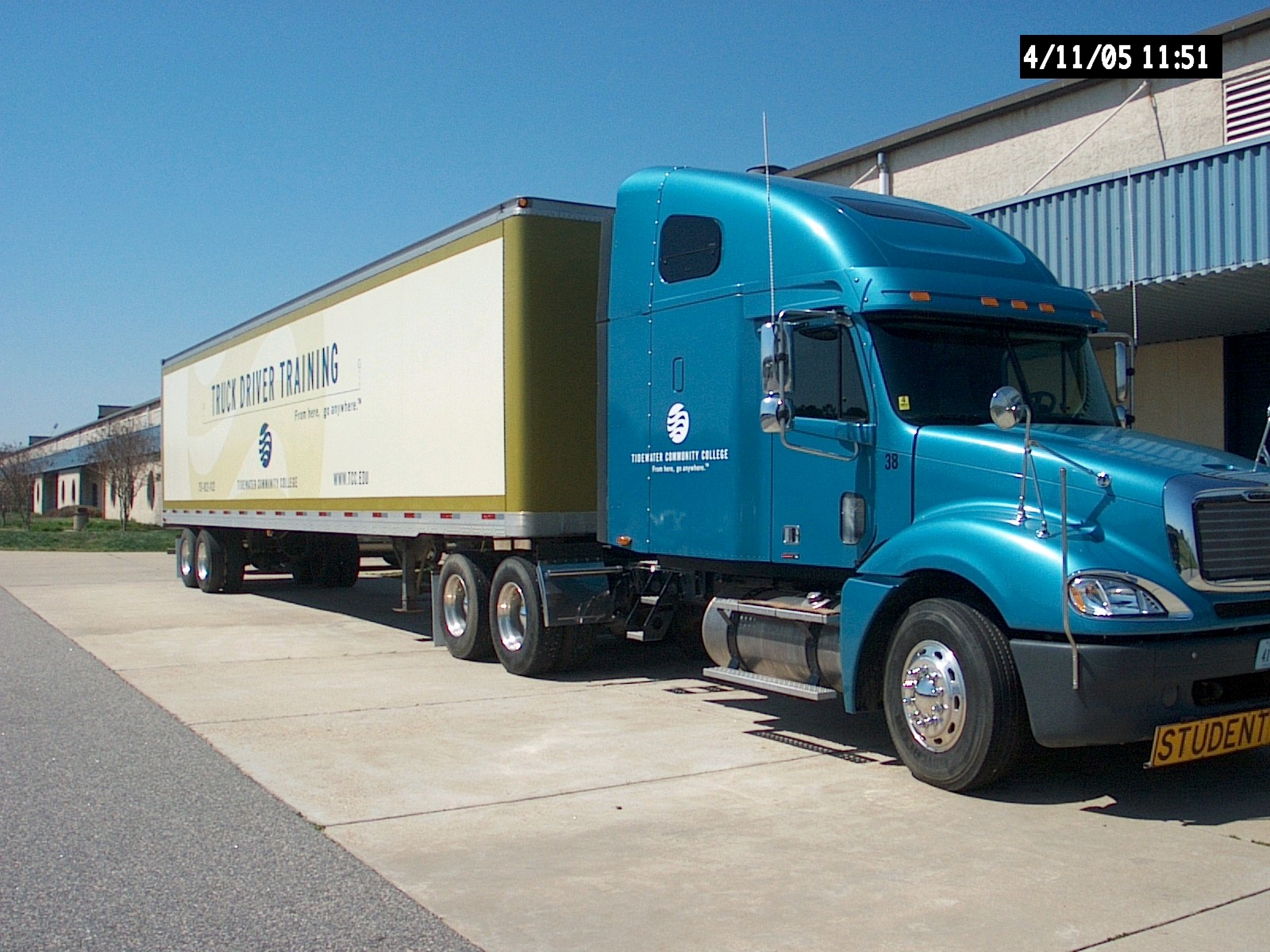
The American trucking industry is rapidly expanding and skilled professional truck drivers are in demand. Three out of every four tons of all freight in the United States is moved by truck. The trucking industry offers above average incomes and good benefits to qualified drivers. Truck driving could be for you:
- if you like to travel
- if you like to meet new people
- if you like to earn a good income
There are several things to consider before pursuing a career in truck driving. The following information applies to the trucking industry as a whole although each company may have varying and more stringent policies on hiring.
JOB SECURITY
The outlook for the trucking industry is excellent. There is a shortage of drivers in general and long distance drivers in particular. With proper training and a valid CDL Class A license, job security in the future is virtually assured. Individual trucking companies that go bankrupt stem from bad management, not lack of business.
TYPES OF TRUCKING
There are three types of trucking:
| Local | Involves mostly loading and unloading at local businesses. Pay is usually hourly and drivers are home every night. Long days are typical (8-10 hours). An example of a local driver is a tanker service that delivers gasoline. Local drivers may only need a Class B CDL to drive such things as UPS delivery trucks or dump trucks. |
|---|---|
| Over-the-Road (OTR) | Delivering freight in all or part of the 48 states and Canada. Pay is usually by the mile, with 2500 miles per week a reasonable expectation. Drivers are limited to driving/working 70 hours in a 8 days, with a maximum 10 hour work session before an 8 hour break. More money is made when less loading/unloading is required (no touch freight), freight is point-to-point rather than multiple stop and traffice lanes. Drivers are away from home an average to 1-4 weeks. |
Additional terms in OTR trucking are:
|
|
| Short Haul | Companies that haul LTL (less than truckload) freight from terminal to terminal (hub to hub). Pay may be mileage based or hourly. Time away from home is usually nights at a time. Some of the best pay and benefits are found in this type of trucking but hiring is very selective and some OTR experience is normally needed. Short haul companies include UPS (double on the highway) and Roadway. |
HOME TIME
No one should enter the trucking industry without being prepared to sacrifice some home time. Even local drivers may put in over 10 hours a day.
The OTR industry will usually give a driver one full day off for every week (7 days) away from home. This makes trucking a lifestyle, not just a career change.
Most good paying local and short haul companies prefer at least a year's experience OTR, thus demonstrating reliability and skill of prospective drivers. The OTR industry will give an out-of-school new driver a training period with an experienced Driver Trainer to get them started (period of 4 weeks or more). Local and short haul usually do not have this extra training.
While solo driving companies (one driver in the truck versus a team operation) often allow a rider in the truck, smaller children are normally not allowed to ride.
A rule of thumb: If you and your family cannot invest one year of your life with an OTR company, trucking may not be for you.
HIRING QUALIFICATIONS
Different companies will have varying policies in all of these areas, but here are some general qualifications:
- AGE - Minimum to drive out of state is 21 years old.
- CDL CLASS A - Required with some endorsements (hazardous materials, doubles or tanker for examle) and training from a recognized trucking school.
- DOT PHYSICAL - Must pass a standard Department of Transportation physical and a drug screen. (Illegal drug use is an immediate disqualification) A history of heart trouble, mental illness or back injury often will be additional drawbacks to hiring.
DRIVING RECORD
A good driving record with no more than three moving violations (speeding, running stop signs, etc.) and/or accidents in the past three (3) years is a median qualification, but there is greater latitude in this area from company to company--some stricter, some more lenient. A DUE/DWI on the driving record in the past five (5) years is normally a disqualification...many companies go back ten (10) years. Reckless driving, leaving the scene of an accident and fleeing a police officer are also strong negatives with regard to employment.
WORK HISTORY
Due to high driver turnover, particularly in the OTR industry, a stable work history is needed. Long periods at one job and military service are strongly desired by major companies. Job hopping without a good explanation is usually a disqualification. Trucking companies must call and verify former employers at least three (3) years back so accurate information is vital.
