|
Building a Campfire
general
safety measures
-
Use only dead and down
wood. Never break branches from standing trees, even if they appear
dead.
-
Keep your fire small, so
it does not get out of control and future campers will be able to
find firewood too.
-
Have large shovel at
your campsite.
-
Bring a bucket for quick
extinguishing.
-
Keep the fire small
& manageable.
making a fire ring
If you must build a new fire
ring, select a level spot away from over hanging trees, bushes, or dry
grass. Avoid the base of steep hills, as fire travels uphill quickly.
Clear a circle 10 feet across down to bare dirt. Hollow out a fire hole
two feet across, and five or six inches deep. Pile the soil around the
edge of the fire hole.
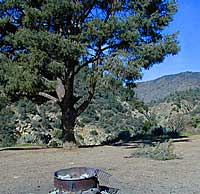
Always use
an established fire ring if available!
Do Not:
to build a
campfire
-
Use an existing fire ring
when available. This advice helps along with the minimum impact
camping techniques. Don't build a new fire against a boulder.
-
Situate your fire at least
10 feet away from tents, trees, roots and flammable items.
-
When creating a new rock
ring: clear leaves, pines needles & all ground cover a minimum 3
feet diameter.
-
Gather firewood and
kindling using only fallen branches or down wood. Check to make sure
the wood is dry & seasoned (not green & freshly cut)
-
Read all signs. Many parks
and forest even forbid gathering fallen branches. It plays an
important role in the ecosystem of the wilderness.
-
Build a pile of kindling,
including paper scraps, dry plant matter and other small, flammable
items. On rainy conditions or existing damp wood you may want to try
the convenient 'fire starter sticks' now sold in supply stores.
-
Create a pyramid of dry
twigs and small sticks around the kindling pile. Add a few medium size
branches on top of the exiting pyramid. Light the kindling with a
match.
-
Add increasingly larger
sticks and then logs as the fire grows.
-
Do not create bon fires
(taller than 4 feet) in the wilderness or build camp fires under
extreme windy conditions.
-
Always leaving enough
space between them for the fire to breathe. You may need to be fan the
fire in order to keep the air circulating within the flames. Paper
plates, cardboard, plastic box lid - all works well for this.
-
Before you turn in for
bedtime, make sure the fire has no flames - embers only & windy
conditions are non-existent.
-
When breaking camp or
leaving camp for more than a few minutes make sure to drown your fire
completely out. Poor water all over it, until no sizzling sound can be
heard. The old left over water at the bottom of the ice chest works
great for this.
put fire
dead out
Even if you had a fire the
night before & the fire seems out. The coals are still cooking way
underneath. Pour water on it & hear the sizzling. Put your fire
dead out at least 1/2 hour before you start to break camp. Let the
coals die down, then pour water over the ashes, and spread soil over
them. Mix soil, water, and ashes until all embers are completely out.
-adapted
from
http://www.totalescape.com/active/camp/firesafe.html
|

 building
a campfire |
building
a campfire |