safety & prevention | back to firefighting | science and history | contacts and sources | back to main
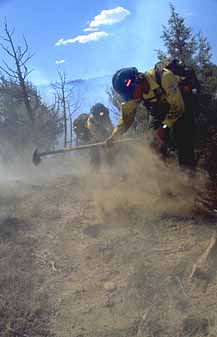
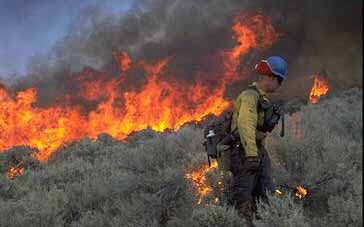
Hotshots This paragraph put the information so well, it wasn't necessary to add anything. "Firefighting involves working under very hazardous conditions for long periods of time and Hotshot crews are expected to accept the most difficult and hazardous tasks. A typical shift is 16 hours and working for 32 hours without relief often occurs. Firefighters often endure hot, smoky, dirty, dusty working conditions with little sleep and poor food. Sleep deprivation is the norm and working with sharp tools, in the dark, on a steep hillside, under hazardous conditions is a common occurrence. Hotshots are frequently required to work for days at a time with only the 40 pounds of equipment carried in a fire pack. The work performed is extremely physically demanding and can be emotionally taxing. Together for 24 hours a day, 7 days a week for 4 months, the crew eats, works, travels, and rests as a unit. Under these condition, compatibility, camaraderie, understanding, and crew pride are an absolute necessity." Hotshots come in after the smokejumpers, via truck (if roads are available) or more likely, by backpack. They hike in take over the position of the smokejumpers, continuing to build clearing to contain the fire. -from http://www.fs.fed.us/r6/wenatchee/fire/hotshot2.htm#duties
For some odd reason, I noticed smoke jumpers get all the credit, for everything. Its a shame. They do work, and lots of it, but so do the hotshots. Yet hotshots aren't glorified on websites like smokejumpers are. So this website is devoted to hotshots, because they get so little attention.
|
safety & prevention | back to firefighting | science and history | contacts and sources | back to main
 hotshots
|
hotshots
|