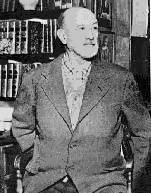
Charles
Ives
Born:
Danbury, Conn., October 20, 1874
Died:
New York, May 19, 1954
Music in early America had
a distinctly British heritage, as much of the music of the American colonists
consisted of English hymns and anthems. Later many American-born musicians went
to Europe for their musical training, where they learned and absorbed the Old
World traditions. Upon returning to the United States, American composers began
infusing these traditional musical forms with styles that were inherent to
America, among them African-American spirituals, blues, jazz, and ragtime, in an
attempt to create a truly "American classical music." Although the
United States produced several popular composers throughout the nineteenth
century (including song-writer Stephen Foster (1826-1864),
pianist-composer Louis Moreau Gottschalk (1829-1869), band
leader John Philip Sousa (1854-1932), and jazz and ragtime
composer Scott Joplin (1868-1917)) the first true great
American composer would undoubtedly have to be Charles Ives. An American
original who composed music using experimental techniques and ideas, Ives made
his living as a prosperous insurance salesman. He studied music formally at
Yale, but much of this music was never performed until after 1930, by which time
Ives had ceased composing. Much of his music, including four symphonies,
many orchestral pieces, piano and chamber works, incorporate traditional
American hymns, songs and dance tunes. Ives sets these, however, using polyrhythms
and polytonality, making much use of dissonant harmonies and tone
clusters. One such work is "Putnam's Camp" from Three
Places in New England, in which one hears a brass band, a march tune, and an
out-of-tune piano occurring at the same time within the first minute of the
piece. Ives was awarded the Pulitzer Prize in 1947 for his Symphony No.
3, which he had composed in 1904. With the late "discovery"
of Ives' music, the path was cleared for a new breed of twentieth century American
composers
TOP
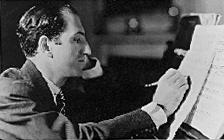
George
Gershwin
Born:
Brooklyn, N.Y., September 26, 1898
Died:
Beverly Hills, Cal., July 11, 1937
The first American
composer to successfully combine popular and serious styles, Gershwin had his
first success at the age of nineteen when he wrote the song "Swanee."
1924 saw the premiere of his first successful effort in jazz-inspired
"serious" music, the now famous Rhapsody in Blue.
Throughout his short career, Gershwin wrote both popular songs and musical
comedies, as well as concert works, such as the Concerto in F for piano.
To both he brought the consummate skill and style of a trained musician, while
at the same time infusing both with the elements of jazz, blues, and Latin
dance-rhythms that were prevalent during the periodin which he lived. One of the
best of his concert works is the symphonic poem An
American in Paris. Premiered on Broadway, Gershwin's folk-opera Porgy
and Bess has now been staged by several major opera companies in the
world, including the Metropolitan Opera in New York City. Of
Gershwin's most popular songs (including "Someone to Watch Over Me,"
"Embraceable You," "I Got Rhythm," and "But Not for
Me"), many come from this opera, including the well-known "Summertime".
TOP

Stravinsky, Igor
Fedorovich
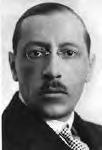
Pronounced As: gr fyôdrôvyich strvinsk
, 1882-1971, Russian-American composer. Considered by many the greatest and most
versatile composer of the 20th cent., Stravinsky helped to revolutionize modern
music.
Stravinsky's father, an
actor and singer in St. Petersburg, had him educated for the law. Music was only
an avocation for Stravinsky until his meeting in 1902 with Rimsky-Korsakov, with
whom he studied formally from 1907 to 1908. Stravinsky's First Symphony in E
Flat Major (1907) is pervaded by the influence of Rimsky-Korsakov's
nationalistic style. The work of Stravinsky interested the ballet impressario
Sergei Diaghilev, and Stravinsky's first strikingly original compositions-L'Oiseau
de Feu (The Firebird, 1910) and Petrouchka (1911)-were written
for Diaghilev's Ballets Russes in Paris.
In the ballet Le Sacre
du printemps (The Rite of Spring, 1913) he departed radically from
musical tradition by using irregular, primitive rhythms and harsh dissonances.
The audience at the premiere of the ballet reacted with riotous disfavor.
However, in the following year the work was performed by a symphony orchestra,
and ever since it has been recognized as a landmark and masterpiece of modern
music.
At the beginning of World
War I, Stravinsky moved to Switzerland, where he composed several works based on
Russian themes, including the ballet Les Noces (The Wedding,
1923). Influenced by 18th-century music, he embarked on an austere, neoclassical
style in such works as the poetic dance-drama Histoire du Soldat (The
Soldier's Tale, 1918), the opera-oratorio Oedipus Rex (1927; text by
Jean Cocteau after Sophocles), and the choral composition Symphonie de
psaumes (Symphony of Psalms, 1930).
The end of World War I
moved Stravinsky's music even further in this direction with L'Histoire du
Soldat, Tango, and Ragtime. In all these scores, he introduces a
pared-down aesthetic and what at first seems like an element of parody but which
turns out to be an element of "objectification," like a Cubist collage
with everyday objects. At the same time, he becomes interested in classical
procedures and updates them for an expanded harmonic language. Masterpieces
include the octet, the "ballet with song" Pulcinella, and Oedipus
Rex, which takes off from the Handelian oratorio. The new style, termed
neoclassicism, again captures the allegiance of most composers. Stravinsky, as Leonard
Bernstein remarked, had called the tune again. Between the two wars, he was
probably the most influential modern composer, especially in the United States
and France. His masterpieces include the Concerto for two solo pianofortes,
the piano and the violin concerti, the ballets Apollo and Jeu de
Cartes, Concerto in D for strings, Danses Concertantes, Dumbarton
Oaks Concerto, Symphony of Psalms, Symphony in Three Movements,
Symphony in C, Ebony Concerto, Mass, climaxing in the
full-length opera The Rake's Progress (libretto by W. H. Auden and
Chester Kallman), a twentieth-century classic.
TOP

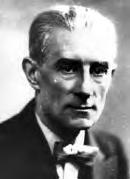
Ravel, Maurice
Although Ravel published
his first compositions in his twenties, he went on studying at the Paris
Conservatoire until he was thirty, polishing an already dazzling technique. He
was a first class pianist and conductor, and took an active part in French music
making before the First World War, giving concerts, writing criticism, and
composing for Diaghilev's Ballets Russes. After the war his health broke down,
and he spent the last ten years of his life in semi-retiremet composing only
another half-dozen works.
Ravel found a style early
in life and kept to it: all his works have the same polish, the same harmonic
pepperiness and the same dazzling exploitation of the instruments they use. He
was particularly interested in developing piano-style, and his piano works (the
major part of his output) explores the instrument's possibilities in a way as
revolutionary for their time as Chopin's music was for its. He was also one of
the most skilful orchestrators in the business: few composers ever invented more
dazzling or original orchestral sounds.
TOP
Works Cited
Brindle,
Smith Reginald. The New Music.
New York:
Oxford University Press, 1975.
Davis,
L. Ronald. A History of Music in American Life. Vol.
2.
New York: Robert Drieger Publishing Company, 1980. 2 Vols.
Microsoft®
Encarta® Online Encyclopedia 2001
http://encarta.msn.com © 1997-2000 Microsoft Corporation. All Rights Reserved.
Pauly,
G. Reinhard. Music in the
Classic Period. 4th ed. New Jersey:
Prentice Hall, 1988.
Ratner,
G. Leonard. Classic Music:
Expression, Form, and Style.
New Yourk: Simon & Schuster Macmillan, 1980.
TOP