

Aside from consumerism, Warhol also explored the American popular culture fascination with celebrity. Warhol understood that the American people would rather worship the legend of a celebrity than the true person (Lucie-Smith 162). Warhol emphasized this in Marilyn Diptych made in 1962. After Monroe�s suicide, Warhol chose one of her publicity photos and silk-screened it repetitively onto canvas. Then, in order to convey the legend of Monroe on canvas, on the left side Warhol painted Monroe�s face like a mask. This portion of the painting is described as, �[Marilyn Diptych] provides no insight into the real Norma Jean Baker. Rather, all viewers see is a mask-a persona the Hollywood myth machine generated� (1096). The right side of the diptych, printed badly and devoid of color, feeds back to Monroe�s career as it reminds the viewer of film cells. Similar to the coke bottles, the fact that the image is repeated reinforces the idea of commodity (Kleiner 1096). Marilyn Monroe ceases to be a real person and transforms into a commodity, another image for business to use to sell products. Warhol did not hold himself above business or celebrity worship. Warhol himself was lifted into the realm of celebrity in his lifetime. Warhol understood icons because he grew up as a Catholic. Warhol accomplished with Marilyn, �Andy hit upon an icon of our secular religion� (O�Connor 93). Warhol was very sensitive to the American state of mind, and after Monroe�s death, he raised her in this painting to the status of an American icon (Hughes �To Shape�). As for business, he held it up as art, just as he held everything from Coke bottles to Campbell�s soup cans as art. Warhol said, ��Being good at business is the most fascinating kind of art�� (Plagens). He understood the growing importance of business. He knew he lived in a consumer culture and produced images to be consumed.
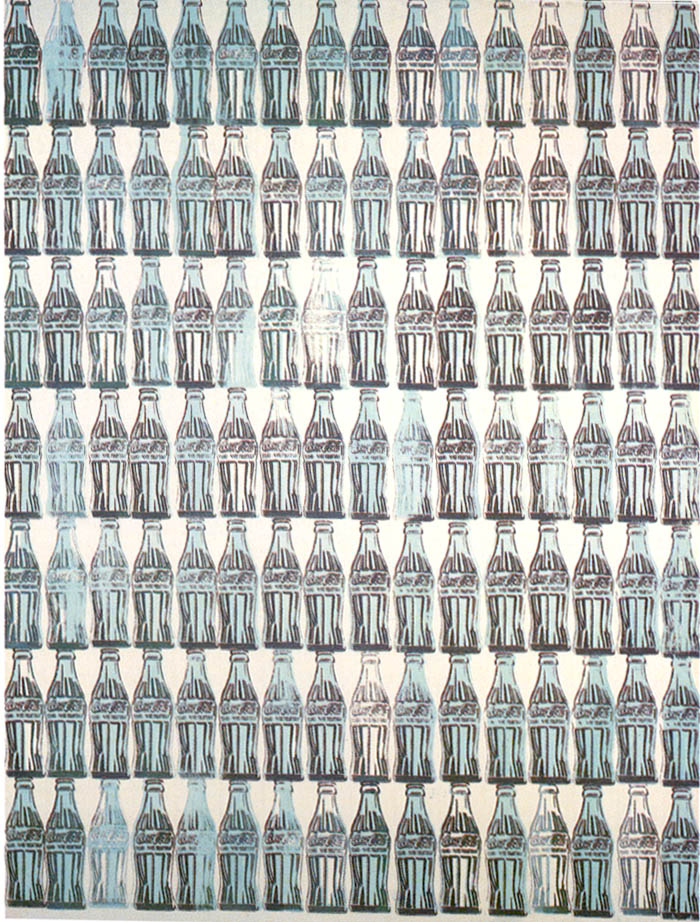
Collection of Whitney Museum of American Art
Kleiner, Fred S., Christin J. Mamiya and Richard G. Tansey. Gardener�s Art Through
the Ages. 11th Ed. London: Wadsworth Thompson Learning Inc., 2001 pg. 1095.
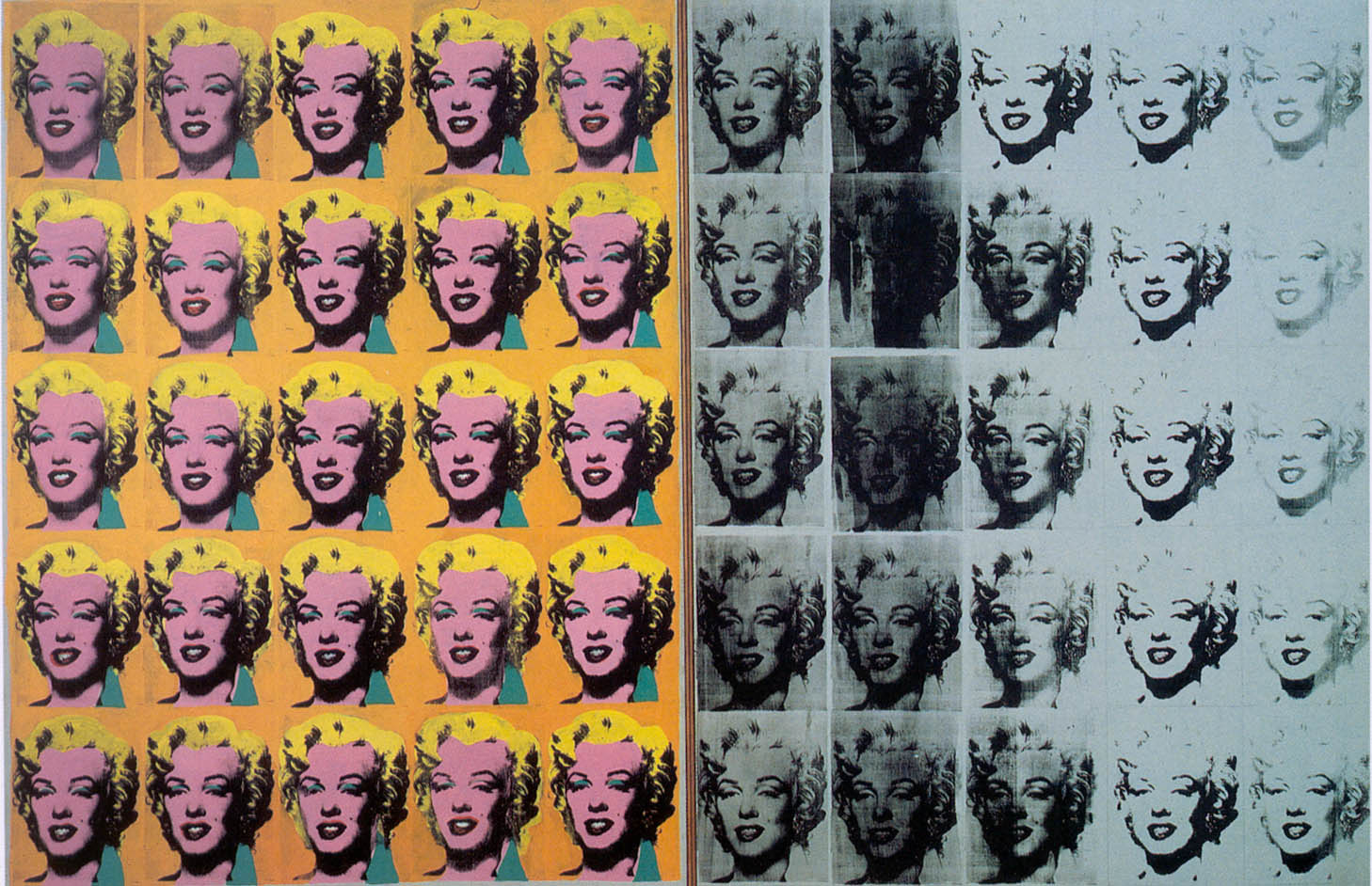
acrylic, oil, silkscreen on canvas
Kleiner, Fred S., Christin J. Mamiya and Richard G. Tansey. Gardener�s Art Through
the Ages. 11th Ed. London: Wadsworth Thompson Learning Inc., 2001pg. 1096.


Andy Warhol, Campbell's Soup Can
1964
Leo Castelli Gallery, New York
Silkscreen on canvas
http://www.jssgallery.org/Other_Artists/Andy_Warhol/Campbells_Soup_Can.htm