
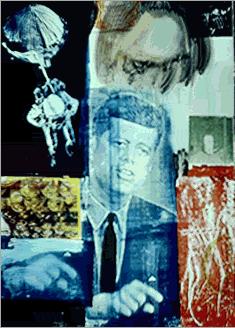
http://www.wadsworthatheneum.org/contemporary/
index2.shtml
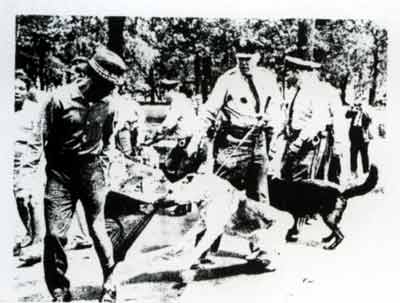
http://www.djtfineart.com/cgi-bin/Warhol/gallery.cgi?category=
Warhol.Early&item=FS-I.4A&type=gallery


|
|
|
|
|
|
|
|
|
|
|
|
|
|
|
|
|
|
| CONCLUSION | |||||||||||||||||
| After examining how the Pop art movement emerged along with three of the principal artists of the movement one can explore how the popular imagery they used in their works truly reflected society of the 1950�s and 1960�s. Lucie-Smith comments on this, writing, �The more closely one examines American pop art, the less it seems a celebration of mass culture, or even a reaction against it� (162). Pop art, in this commentary seems only a use of ready-made images not to reflect society, but because they were already there, ready to be used again for the artists� own purposes. One purpose of the artists was for Pop art to bring art down to a lower level. By choosing their imagery from the lowest art available, the ready-made images, these artists took art down from the upper classes to a level every class could understand. The visual language of celebrities, products, comic heroes, and public symbols was easier to understand than the language of brushstrokes and drips. In the case of Lichtenstein, Hughes writes, �Tragic elevation--or at least the version of it promoted by the rhetoric of late Abstract Expressionism--was exactly what he reacted against� (�Image Duplicator�). On the other hand though, the artists could not use so many images from the collective American conscious without reflecting, intentionally or unintentionally, American popular culture. Hughes even goes so far as to call Pop art �history painting� citing Robert Rauschenberg�s Retroactive II painted in 1964. Rauschenberg created a tribute of a sort to a dead John F. Kennedy in this collage depicting the president. Another example, in Warhol's photography, one can see where this art may be a historical kind of record, and not only a depiction of middle class consumerism. In the photograph, Race Riot made in 1964, Warhol shows the darker side of the 1960�s, but it exists without any kind of commentary or context. The picture is just there, and kind of funny too, with the police dog biting a rioter in the behind. Jasper Johns certainly made his own version of social commentary with his Target and Flag paintings, but it is very cold and mainly leaves the viewer to interpret the paintings in his or her own way. Pop artists in the 1950�s and 1960�s used ready made imagery to change Modern Art from a nonrepresentational mainly upper class interest into a popular phenomenon universal enough to cross class boundaries. In using the imagery of the American vernacular, the Pop artists in turn reflected social and political issues along with popular fads of the time. | |||||||||||||||||
|
|||||||||||||||||
| Robert Rauschenberg, Retroactive I, 1963 Oil on canvas 83 7/8 x 59 7/8 in. Gift of Susan Morse Hilles 1964.30 http://www.wadsworthatheneum.org/contemporary/ index2.shtml |
|||||||||||||||||
|
|||||||||||||||||
| Andy Warhol, Race Riot, 1963 http://www.djtfineart.com/cgi-bin/Warhol/gallery.cgi?category= Warhol.Early&item=FS-I.4A&type=gallery |
|||||||||||||||||
|
|||||||||||||||||
|
|||||||||||||||||