


| Home | Table of Content | Final Report | Cover Letter | Executive Summary | Introduction | Conclusions | Methodology |
Our final recommendation consists of the following three components:
Each of these recommendations and their benefits are discussed in the following section, and the methodology for determining the recommendation is explained in detail in the Methodology section of this report.
�
Recommendation 1: Restructure current inventory storage system
There are several reasons why restructuring their current storage system would benefit Kenworth. Specifically, the first component of this recommendation focuses on the following issues.
Reducing the assembly workers walking distance
First we determined how much each assembly worker was walking. We conducted several employee interviews; however, the employees did not know exactly how far they were walking each day. After speaking with several managers, we learned that previous studies had been conducted, and they showed that employees were walking up to six miles in a given shift. Clearly walking time is wasted money because an employee is not producing value-added work during this time. Therefore, we were interested in determining how to significantly reduce the distance that they assembly workers are walking.
For our analysis we looked at twenty different frequently used parts. These parts are stored on various shelves (some are located next to the assembly line, and others are located on shelves that are forty-two feet from the assembly line). The layouts of these shelves are shown below in Diagram 1.
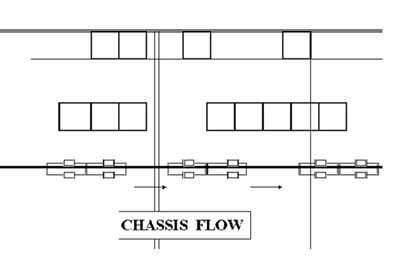
Diagram 1: The layout of the shelves that we analyzed
From our analysis we determine that the workers were walking forty-two feet every time they needed to retrieve a part from the back wall. We determined that this distance could be reduced to nine feet by simply moving these parts to the storage rack that is located next to the assembly line. Additionally, moving the parts to the storage rack next to the assembly line would eliminate 25.8 minutes of walking time from the assembly line workers shift.
Reorganizing the current storage location of the parts
Initially we were told that the parts that are stored along the back wall were the larger, heavier, and infrequently used parts. However, after further investigation of this issue, we realized that this claim was false. Specifically, we analyzed Kenworth�s �grocery list� of parts, and determined the size of each part and how frequently each part is being used. (It should be noted that a grocery list is a list of parts that the line inventory manager orders to be replenished on the assembly line from the nearby warehouse daily.) We found that many of these parts are being replenished as frequently as the other parts, if not more. Although it is true that the larger, heavier parts, this also lead to the realization that the assembly line workers were walking a greater distance to get heavier parts.
The first portion of our recommendation involves moving the parts that are currently being stored on the back wall to the shelf that is next to the assembly line. This would increase the availability of the parts that are stored next to the assembly line, and increase the assembly line workers productivity.
Determining the current storage space utilization
�We sampled eight shelves to estimate the utilization. We determined the utilization by recording how much surface area of each shelf is being used out of the optimum space that was available. This space is defined as readily accessible to employees, this would exclude any storage space above six feet.
After recording each utilization percentage, the average came to be an alarming 62%. It was determined that by changing the storage system that Kenworth is currently using, we could increase utilization by 38%.
It should be noted that the current utilization levels were determined in this component of the recommendation. However, the following components of our recommendation discuss our solution for optimizing the storage space utilization.
�
Recommendation 2: Implementing a rubberized storage system
There are several reasons why a rubberized storage system was recommended, and they are as follows:
Easier to replenish inventory
Currently the inventory is stored in the original packaging (the packaging that the parts arrive in), which is usually a large cardboard box. If the part is large, the forklift will move it onto a pallet so that the forklift can then place it on top of the storage rack. If the part is small, a forklift will place it directly on the shelf (the small parts are also in their original packaging).
A rubberized storage container (for large parts) already has a place for the forklift to lift the container, it eliminates the step of moving it from the shipping dock to the pallet. Instead, it can simply be placed from the moving dock onto the forklift, and then it can be stored as inventory.
Increase utilization
Because containers come in various shapes and sizes, the appropriate size and number of containers can be determine from the size of the individual parts, the distribution of different size parts, and the number of containers that can fit on each shelf. This information, combine with which parts need to be stored on each shelf, can be used to find an optimal storage system configuration.
One of the components of our final recommendation involves determining a new placement for many of the parts. Because of the time constrains of this project and limited access to Kenworth managers, we were not able to determine which parts would need to be stored on each shelf; therefore, an ideal configuration could not be determined.
We were able to show that their current inventory system is not optimal, and we were able to gather data to prove that they could substantially increase the value-added work of their employees by simply redesigning their inventory storage system.
�It should also be noted that the methodology for classifying each part by size and determining the distribution of the different size parts is located in the methodology section of this paper.
Develop standardization
A defined replenishing system does not currently exist; frequently the parts are stored as inventory in the containers that the parts arrived in. Sometimes parts are placed into large wire bins. This is a problem because parts could because of these bins often are under capacity, and take up a large area.
From this investigation, it was determined that part placement is a randomized process. Specifically, observed were several cases where there were no parts on the shelves. Also observed several cases where the parts were not being stored exactly where the part number tag indicated that it should be stored. In some cases, the part was located to the left or the right of the tag, and in other cases the part was located on an entirely different shelf.
A rubberized inventory storage system helps create a defined storage system because the parts will have a specific storage location. Furthermore each plastic container has a space in the entire storage system, and it therefore can not be moved. Because the parts� location is predefined, the workers who are responsible for replenishing inventory are forced to take the inventory to the appropriate location. Additionally, because the parts are static, the workers will always know exactly where to locate each part.
Consistently having the parts located in the same place will help the assembly line workers and the inventory replenishing workers do their job better. The reasoning is will not waste time trying to fine exactly where the part is located. Additionally, there is a systematic replenishing system, and the workers will consistently be replenishing inventory in the same way; therefore, they do not need to think about which replenishment method they want to use. Finally, a systematic storage system will eliminate these unnecessary steps.
Reduce waste��
Currently Kenworth spends approximately $50,000 each month on waste removal. A percentage of this cost is involved with removing the cardboard boxes and the shipping packaging that that the parts arrive in.
A rubberized storage system strategy involves purchasing two to three times as many containers (the multiplier is part specific) then Kenworth needs to create their inventory storage system. The extra containers will be distributed to the part suppliers, so that they can package the parts directly into the rubberized containers and eliminate the process of packaging the parts into cardboard containers. This will eliminate the number steps involved with getting the parts from the supplier to their final destination: resting as stored inventory in Kenworth inventory storage system. Such an inventory storage system will help to significantly reduce the amount their waste bill. (We realize that inventory storage is a problem in itself; however, due to the scope of this project we were not able to focus on this problem as well. Our reasoning for not choosing to focus on inventory levels is discussed in detail in the Methodology portion of this report.)
From our calculations we determined that approximately thirty percent of the waste removal bill is related to cardboard removal. By simply implementing a rubberized storage system, Kenworth can save at least $130,000 each year on waste removal.
It should be noted that these calculations are located in the Appendix.
�
Recommendation 3: Introducing the �personal tote�
Observation revealed the need for improvement in the storage of fasteners used in the chassis assembly stations. This would improve the worker�s use of time as well as ergonomic issues. The situation that presents a problem is the following: as workers assemble the chassis they use various nuts and bolts. Currently workers go back and forth from the fastener storage station to the point of assembly. If more than one bolt is needed to assemble the part to the chassis, the worker was observed getting multiple combinations ready for assembly and then bringing them to the chassis. Each nut-bolt combination was stored on the ground until it was attached to the chassis. The repeated motion of reaching to the floor for the needed nut and bold could be an explanation for the large amount of OSHA back injury complaints.
The recommendation to remedy the presented problem is a personal tote. The current storage location has sixteen bins containing frequently used nuts and bolts which are located at eye level, and less frequently used fasteners which are located on the top and bottom shelves. Each worker uses the same six to ten nut and bolt combinations during a shift. Thus for each worker to have the needed fasteners within reach eliminates walking time and back strain.
After a using decision matrix and performing a cost analysis we recommend the installation of leather totes. We also recommend that the personal tote hangs vertically from the chassis and is secured by a magnetic bar. Illustrations of the proposed personal tote are located in the Appendix. This proposed totes decrease walking distance as well as repeated motion.