D e v i c e s
External memory refers to slower, non-volatile storage. It usually comes in the form of magnetic disk, for example floppy disk, CD, Zip disk, hard drive and tape.
Disk drives are located in a separate box, which connects to the computer and this enables the data to be read.
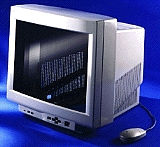
The monitor is the display screen, and allows you to view the information on the screen.
Monitors fit into one of the three classifications:
A floppy disk drive (FDD) can read and write to floppy disks. This machine is external (it is housed in a box which is connected to the computer) and 3.5 inch square disks hold the data, approximately one megabyte.
A Zip disk drive, a product of Iomega Corporation, can be housed internally or externally. It is the device which reads and writes to Zip disks. Zip disks can store 100 megabytes of data and so it is suitable for backup, mass storage or for moving files from one computer to another.
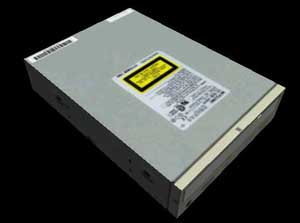
A CD drive reads a CD, or compact disc, which is a thin round disk made of polycarbonate. It is covered in one or more metal layers which are able to store digital information.
Compact discs used by the music industry and CD-ROMS (used to store computer data) can only be read. However CD-Rs and CDRWs, can have their data erased and new data overwritten.
The keyboard allows data to be entered into a computer. It is a set of typewriter-like keys and the standard layout of letters is known as QWERTY, because the first six lettes on the top row of keys spell out QWERTY.
The keys on the keyboard can be classified as follows:
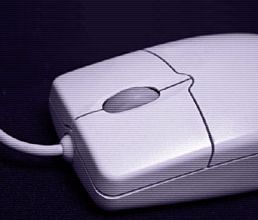
The mouse is a small object which can be rolled on a hard, flat surface. It controls the cursor or pointer on the display screen. Holding it on the inside of the hand, the user moves it in the same direction as on the screen.
The mouse was invented in 1963 by Douglas Engelbart at Standford Research Centre. It was pioneered by Xerox in the 1970s, and was considered a breakthrough in computer ergonomics because it frees the user from constantly using the keyboard.