 |
|
|
|
|
|
|
|
|
|
|
|
|
|
|
|
|
|
|
|
|
|
|
History of Fashion & Dress |
|
|
|
Changes in Wedding Garments, continued |
|
|
|
 |
|
|
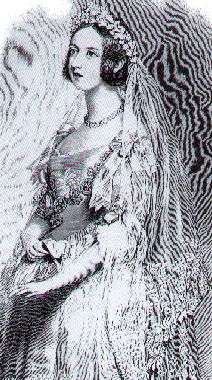
Rather than wear the heavily silver-embroidered,gem-encrusted gown of royal precedent, Victoria wore a relatively simple (for a royal) white satin dress with a veil of Honiton lace and a wreath of orange blossoms. The ideal of a white wedding dress was now firmly established. Queen Victoria�s choice of wedding garments began a popular demand for distinctive, beautiful, white wedding gowns that continuesto this day. The shoes Victoria wore for her wedding are pictured here. |
|
|
|
|
|
In the 53 years between Lizzie Thompson�s dress and Mom�s post-WWII dress there were sweeping changes in the world and that is reflected in the great changes in women�s clothing. |
|
|
|
|
|
By the middle of the 19th century, just prior to the making of Lizzie�s dress, the Industrial Revolution was in full swing. This resulted a redistribution of wealth, creating a large middle class as well as a nouveau riche upper class, ready and able to afford new clothing. The sewing machine, made practical in 1846 by Elias Howe, improved and marketed by Isaac Singer, revolutionized the dressmaking industry and made fashionable clothing more readily available to all classes. In 1850 Paris, Charles Worth became the world�s first couturier when he opened his fashion house. |
|
|
|
|
|
|
Fashion magazines, each issue having an article on wedding dresses, proliferated. After Queen Victoria�s wedding, fashion plates showing white wedding gowns became a regular feature. One 1889 Delineator article wrote about the fact that most brides planned their wedding dress to be reused. Since wedding dresses closely resembled the fashions of the day, with minor changes, the wedding dress was fine to wear for other occasions. Even Queen Victoria re-used part of her wedding dress, having the overskirt removed and worn on a garment for her 50th jubilee. |
|
|
|
Railroads developed and with the increase of railroad travel demanded a silhouette more practical than the hoops and crinolines of women�s clothing. Charles Worth is credited with moving the fullness of the crinoline skirts to the back of the skirt, creating the bustle. In the 1880�s the infant ready-made industry began marketing seasonal dress styles. Within another decade, department stores had clothing departments, and could advertise one stop shopping for the whole home and family. |
|
|
|
Twentieth Century
With the 20th century came the clothing trend that leaned towards an ease of wearing that started with the dress reform movement of the 1800�s, the likes of which had not been seen since ancient times. Consider the difference between the stiff, boned, close-fitting bodice, the long, heavy, originally bustled skirt of Lizzie�s dress to the light, airy, �floaty� feel of the parachute silk dress. |
|
|
|
Changes in the world situation continued at a fast pace between 1895 and 1948 and each of thise changes impacted the clothing worn, women's dress in particular.
In 1913, the 16th Amendment to the Constitution made the income tax permanent
In 1914 the �war to end all wars� began. One of the fashion results of this was
that it was considered appropriate and necessary for women to wear functional clothing, as opposed to the restrictive garments of the Victorian era. Corsets disappeared almost overnight.
In 1919, with the end of the war, for the first time in history, women showed their legs with the rise in hemlines. While this has no effect on the wedding garments in my study, it was at this time that Coco Chanel introduced the short wedding dress. It was white.
In 1920 women were granted the right to vote.
In 1929 the stock market crash initiated the Great Depression that continued until World War II (1939-1945). With the war came rationing, and the restrictions on clothing as on everything else. During wartime, many brides felt it was their patriotic duty to forsake a traditional wedding. Indeed, since so many engagements lasted hours, days and sometimes weeks instead of months, there was no time to plan to wear anything other than their best suit. |
|
|
|
After World War II, with soldiers being discharged from the service the wedding industry began to boom and has yet to slow down. In the years just after the war, while fabric for wedding dresses became more readily available, very nice fabric was still hard to come by in rural areas. This brings us back to my second study garment of Mom�s parachute silk wedding dress. |
|
|
|
Next Comparison of Study Garments |
|
|
Previous Page |
|
|
|
Index |
|
|
|
|
|
|