
Already noted is the weight of the garments due to the different fabrics.
Differences in cost: An 1868 article in Harper�s Bazar noted that while satin, at $7 to $15 per yard, was the first choice for a wedding dress and the popular quality, 27 inches wide, was sold for $8.00 a yard. The next choice after satin was faille, at about the same price, $8.00 per yard. Contrast this to the fact that after the war and the shift to nylon instead of silk for parachute material, a surplus parachute could be had for $2.98. My mom told me that the price of the parachute used for her wedding dress was...50 cents! From looking at similar vintage patterns, I estimate that the 1895 dress would have taken approximately 9 yards of fabric, at 36 inches wide. A vintage pattern similar to the 1948 dress called for 6 yards of 36-inch wide fabric.
Accessories: Lizzie did not wear a veil. Instead her hat was her headpiece. I do wish we knew what the original colors were, as it does not look at all coordinated to the dress in its current faded and battered shape. The fact that she wore a hat instead of a veil, and the brown color of the dress leads me to conclude that hers was not a formal church wedding. Was her wedding planned in haste, with no time to prepare a formal white dress? Or was it due to the family circumstances such as a death in the family, maybe within the year before her wedding? Or other family matters that precluded a large expenditure of money, as would be needed for a fancy white wedding dress? We have no information on this, no family history to call on. Neither do we know what else she may have carried or worn to her wedding.
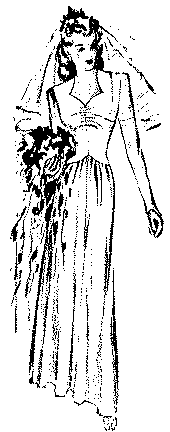
By contrast, we can see from pictures of the time and the parts of Mom�s wedding gown that survive, that she had separate lace sleeves, she wore a headpiece and veil and carried beautiful flowers.
The many stories of brides and their wedding dresses, the large number of gowns that have been saved, whether a suit, in a color other than white, or the dress of one�s dreams, all these facts remind us that the magic of wedding gowns remains unchanged through the years.