 |
|||||||||
Site of Bob |
|||||||||
|
|
|||||||||
Professional |
|||||||||
|
|
|||||||||
| send email to Bob |
|||||||||
|
|||||||||
|
|||||||||
Site of Bob |
|||||||||
|
|
|||||||||
Professional |
|||||||||
|
|
|||||||||
| send email to Bob |
|||||||||
|
|||||||||
by Robert van de Walle
Using LOX/kerosene or RP-1, and technology that has already been developed, it is possible to build an SSTO that will deliver between 2000 kg and 20,000 kg to LEO, depending upon the dimensions you choose for vehicle. Using the XRS-2200 engine as a baseline (it's been test fired for several minutes, after all), a 10m diameter vehicle could develop as much as 1.4 million lbf of thrust. Using a non-cryogenic fuel makes a cheaper infrastructure, and allows easier turn-around. Tankage can be built using composites and integrated into the airframe, as in the DC-X and Roton designs, allowing for lighter dry weight.
Rotary Rocket worked out most of these issues, but they wanted to add some complexity by building a human-rated vehicle.
Kistler Aerospace is using bell-shaped nozzles, which sort of requires a staged vehicle since a bell nozzle's thrust varies the wrong way with increasing altitude.
Here's the plan:
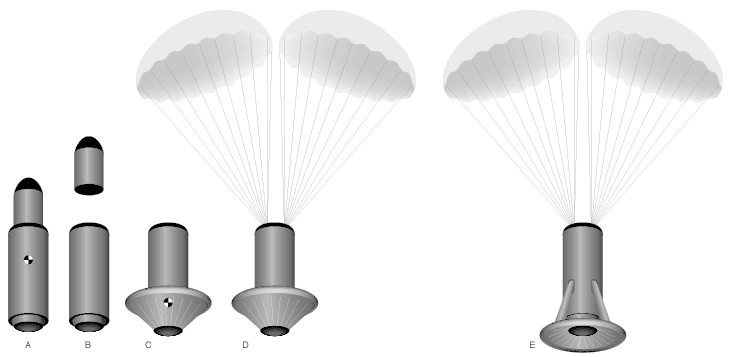
A) Launch vehicle with cargo mated to top. Base of vehicle shows a radial aerospike engine. Remarkably effecient at all altitudes. CG (center of gravity) is forward, due to loaded propellants and cargo module.
B) Cargo released on orbit.
C) Inflatable heat shield is released from within the base of the engine cavity. An aerospike engine's nozzle ramp can be mostly empty space inside. The blunt base of the engine, which already must withstand high temperatures and pressures for lift-off, now serves duty as the nose of the re-entry configuration. The now empty launch vehicle has most of its mass located near this blunt end- this weight "penalty" in the X-33 and Venture Star becomes an asset in this design, orienting the heatshield properly.
D) At a low enough altitude, drogue chutes and parachutes are deployed.
E) For landing, inflatable booms deploy from within the launch vehicle and force the heat shield down past the base of the engine, creating an inflated landing ring. A feedback and control loop allows the booms to act "intelligently" to damp landing forces upon contact. A heavy-lift booster might require a compressed gas system to allow the vehicle to settle gently, as a hovercraft does. The parachutes are released upon landing to prevent dragging the vehicle.
©2001 Robert van de Walle