Previous Events: Chestnut Blight and the Gypsy Moth
News
The Forest Destruction Has Ended - For Now
June 14, 2000. The Gypsy Moth Larvae Have Pupated
July 15, 2000. Second Spring Underway; Egg Laying Just About Finished.
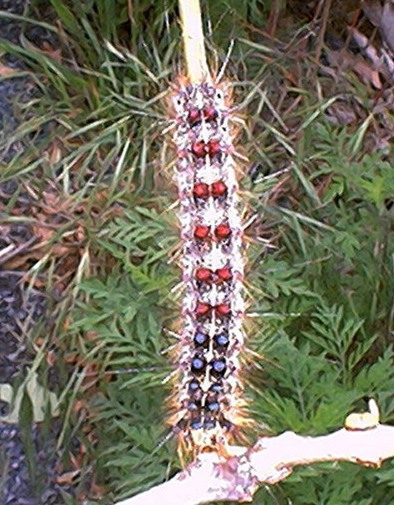
The final stage (just before formation of a cocoon or pupa) of a gypsy moth larva (caterpillar). Head pointing downward. About 1.5 inches long. Note the paired black then red spots on the back: these are diagnostic of the gypsy moth larval (caterpillar) stage. Click to enlarge. June 14, 2000.
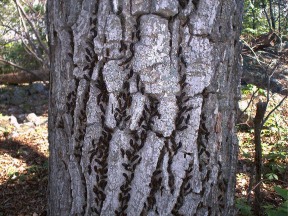
June 24, 2000. Gypsum moth pupae (cacoons)on trunk of a chestnut oak along the Mill Mountain trail near Wolf Gap. Click to enlarge.
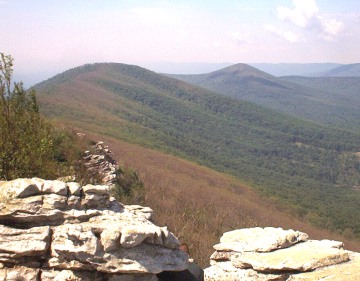
June 24, 2000. Trees stripped of their leaves on the crest and west slope of North Mountain, looking toward Wolf Gap (south) from the Silurian Tuscarora sandstone outcrops of Big Schloss.
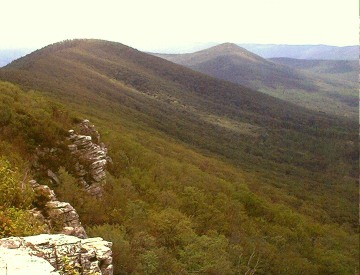
The Second Spring, the re-sprouting of leaves on trees defoliated by the Gypsy Moth larvae. Same view as above but on July 14. Repeated strippings year after year can lead to the death of many trees. The white, ghost-like oaks killed by the major Gypsy Moth outbreaks are grim reminders of the first major onslaught several years ago.
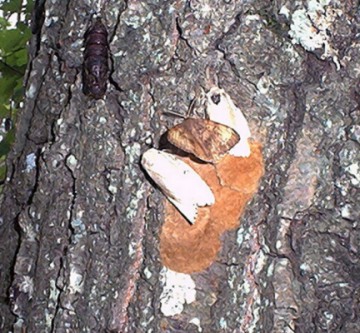
Male (brown) and female (white) gypsy moths with eggs (orange), and an empty cocoon (upper left). Near Wolf Gap, July 14, 2000
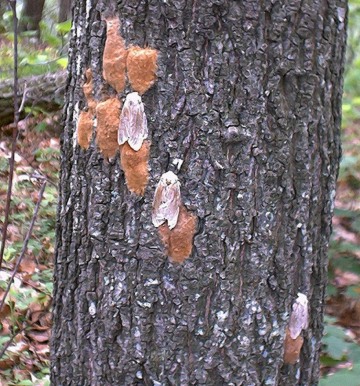
Gypsy moth females laying eggs on red oak: getting ready for next Spring. July 14, 2000.
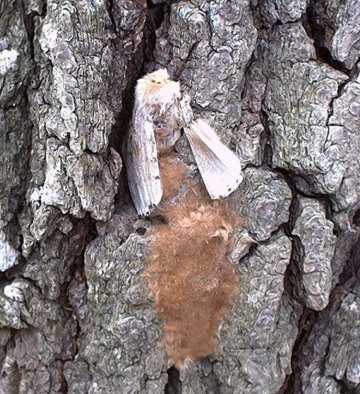
\A successful journey's end: a gypsy moth dies after laying her eggs. July 14, 2000.
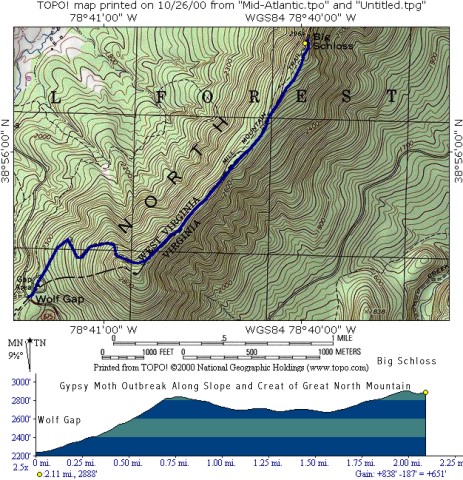
On June 24, 2000, I ascended from Wolf Gap to the summit of Great North Mountain. In but two weeks, the forest was silent, except for the occasional bird call. No longer the rain of leaf fragments from chewed leaves, or the clicking sound from the rain of fecal pellets from the gypsy moth larvae caterpillars swarming in the trees, mainly chestnut oaks.
On July 14, I found the "second spring" underway: leaves were sprouting from the defoliated trees. How many more second springs could the trees survive? There were a few male gypsy moths flitting around but most had died. The gypsy moth had left its small brownish hairy egg masses on tree bark and rock all along the ridge crest and its upper slopes. There they will remain, surviving the Winter freezes.
The Gypsy Moth is a northern species introduced from Europe and has evolved so as to survive cold northern Winters. The population loss from disease, including the NPV virus, was immense. Yet millions of eggs are on trees and rocks.What will unfold next Spring Stay tuned!
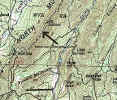 Click on Image to See Location Details
Note 070300 . Updated October 10, 2000, with occasional corrections/improvements after that.