
Network Topology
The layout of the computers and
devices in a communication network.
Physical Topology : The configurations of
cables, computers and other peripherals.
Logical Topology : The path that data
travels between computers on a network
Types of Network Topology
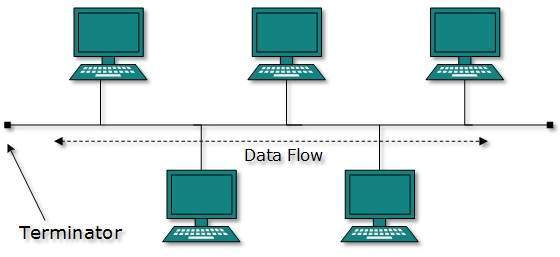
Physically : A bus network consists of a single central cable (backbone/trunk), to which
all computers and other devices connect (node).
Logically : It transmits data, instructions and
information as a series of signal in both directions
Advantages
 Failure of one device usually does
not affect the rest of the bus Network
Failure of one device usually does
not affect the rest of the bus Network
Bus network are inexpensive and easy to
install
Disadvantages
The network will be malfunctioned if
the single central cable breaks down
If more computers are connected, the
performance of the network will become slower because of data collision.
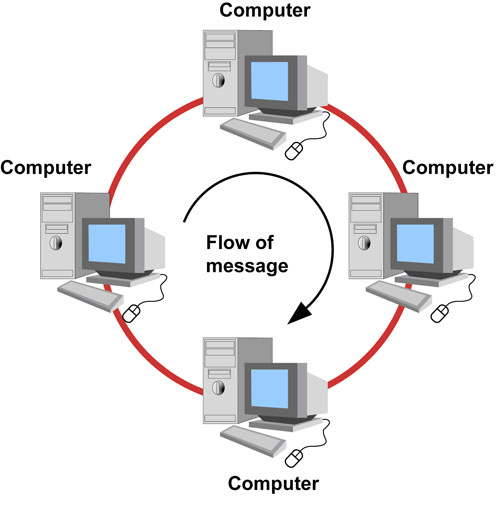
Physically : a cable forms a closed loop (ring) with
all computers and devices arranged along the ring.
Logically : better text me take Chavez from
device to device around the entire ring in one direction (clockwise or counterclockwise)
until it reaches its destination by using token
Advantages
All computers have equals access to
the resources in the network
Cable faults are easily located, making
troubleshooting easier
Disadvantages
The network will be malfunction if
the devices (pc/devices) breaks down.
Data packets must pass through every computers
therefore this makes it slower.
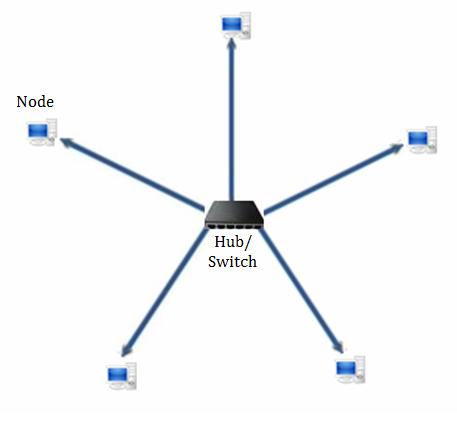
Physically : all the computers and devices on
the network connect to a central device which is hub or switch, thus forming a star.
Logically : data, instructions and information's
transfer from one node to another node passes through hub or switch
Advantages
Devices can be added to or remove
from Network with little or no disruption
Easy to troubleshoot and isolate problem.
Disadvantages
The network will be malfunction is
the hub or switch breaks down.
Requires more Cable than most of the
other topologies.