NETWORK TOPOLOGY
|
NETWORK ARCHITECTURE
|
CLASSIFICATION OF NETWORK
|
LAN
|
|
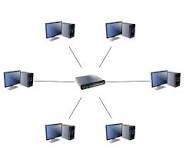
A
local area network may serve as few as two or three users (for example,
in a small-office network) or several hundred users in a larger office.
LAN networking comprises cables, switches, routers and other components
that let users connect to internal servers, websites and other LANs via wide area networks.
|
MAN
|

|
A metropolitan area network, or MAN, consists of a computer network across an entire city, college campus or small region. A MAN is
larger than a LAN, which is typically limited to a single building or
site. Depending on the configuration, this type of network can cover an
area from several miles to tens of miles. A MAN is often used to
connect several LANs together to form a bigger network. When this type
of network is specifically designed for a college campus, it is
sometimes referred to as a campus area network, or CAN.
|
WAN
|

|
A wide area network, or WAN, occupies a very large area, such as an
entire country or the entire world. A WAN can contain multiple smaller
networks, such as LANs or MANs. The Internet is the best-known example
of a public WAN. |