CLIENT-SERVER
The client–server model
is a distributed application structure that partitions tasks or
workloads between the providers of a resource or service, called
servers, and service requesters, called clients. A server host runs one or more server programs which share their resources with clients.
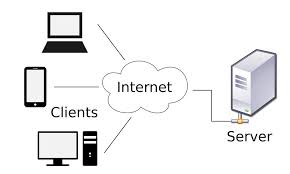
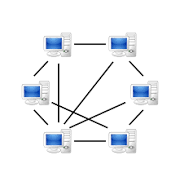
Peer-to-peer (P2P) is a decentralized communications model in which each party has the same capabilities and either party can initiate a communication session. Unlike the client/server model, in which the client makes a service request and the server fulfills the request, the P2P network model allows each node to function as both a client and server.