 |
 |
||||||||
|
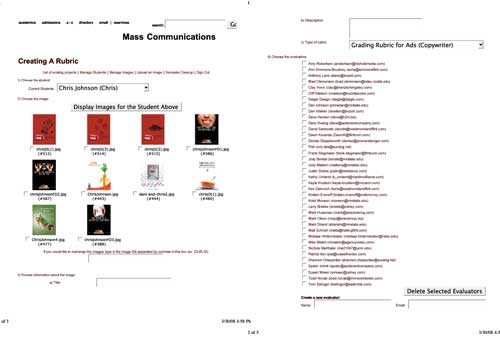
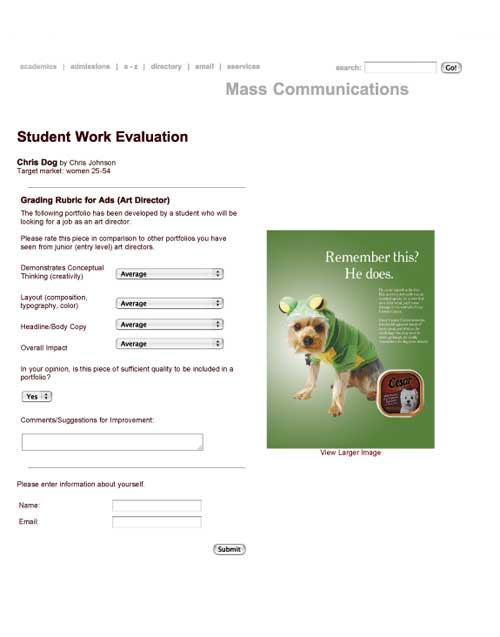
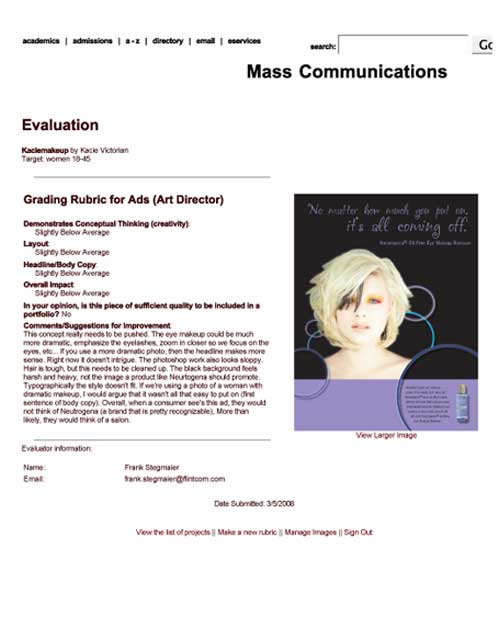
2008 GIFT GRAND PRIZE WINNERDr. Jody Mattern, Minnesota State-MoorheadForging Critical Links Between Academics and Professionals How to acquire input from working professionals on student advertising portfolios INTRODUCTION I have developed a Web site where students upload their work and I am able to send it out in e-mail form to a network of advertising professionals. I have recruited 38 evaluators on local, regional and national levels so students can see how their work ranks at the different levels. Evaluators receive a link by e-mail where they can go to evaluate the piece. The evaluation form and the student�s uploaded image appear together and the submitted evaluation returns in email form to me, which I forward to the student. RATIONALEForging connections between students and working professionals is beneficial from both inside out and outside in perspectives. With this program, students receive concrete advice on how to improve their work, plus they are able to get a better idea of what the expectations will be when job seeking. Students who continually receive poor reviews from evaluators are also learning a valuable lesson. They may find that they need more work in a particular area or they might also realize that they should consider other career options. These valuable lessons are best learned while still in school, rather than after graduation. The program is also an excellent public relations tool for our department. I have received many positive comments from reviewers about the fact that our department is reaching out to the professional community for feedback. I have heard many times from reviewers that the portfolios they see are generally weak and they are happy we are trying to do something about it. IMPLEMENTATION
IMPACT
|